We are often sold the dream rather than the truth. There is nowhere where this is more true than the European city break. The promise of cheap food, flights and drinks lure so many only to be replaced with the reality of overpriced tourist traps, dodgy food and hugely inflated budget airline flights because of high demand. However, one country has so far bucked this trend.
As keen as any other Brit on the budget Eastern European city break, I have been to Poland twice. I have also been to other hotspots (think Budapest, Prague, Bucharest etc.) but, for me, this country has always stood taller than its neighbours for a number of reasons.
For a country so strongly associated with its recent history behind the iron curtain, you would be forgiven for assuming the city centres are chock full of dreary, grey Soviet-style blocks, each one identical to the others barring perhaps some state-sanctioned graffiti that’s been applied to break up the monotony of the city since independence from Russia. You would be wrong.
“I was surrounded by tall, narrow townhouses, jostling for attention”
In my two trips, I visited Gdańsk and Kraków, both of which were bombed and shelled to smithereens by first the West and then the USSR during World War II. Usually this was a death sentence to interesting architecture and the end for unique buildings but, in Poland, some were rebuilt.
The vividly colourful façades of Gdańsk, in anything from greens and blues to reds and yellows both clashed against each other yet were coherent together. Walking through the Green Gate (which, ironically, was significantly less colourful than other buildings but even more ornate) into the main square, I was transported to a city which felt distinctly like Amsterdam as I was surrounded by tall, narrow townhouses, jostling for attention as the most spectacular or grandest among their neighbours.
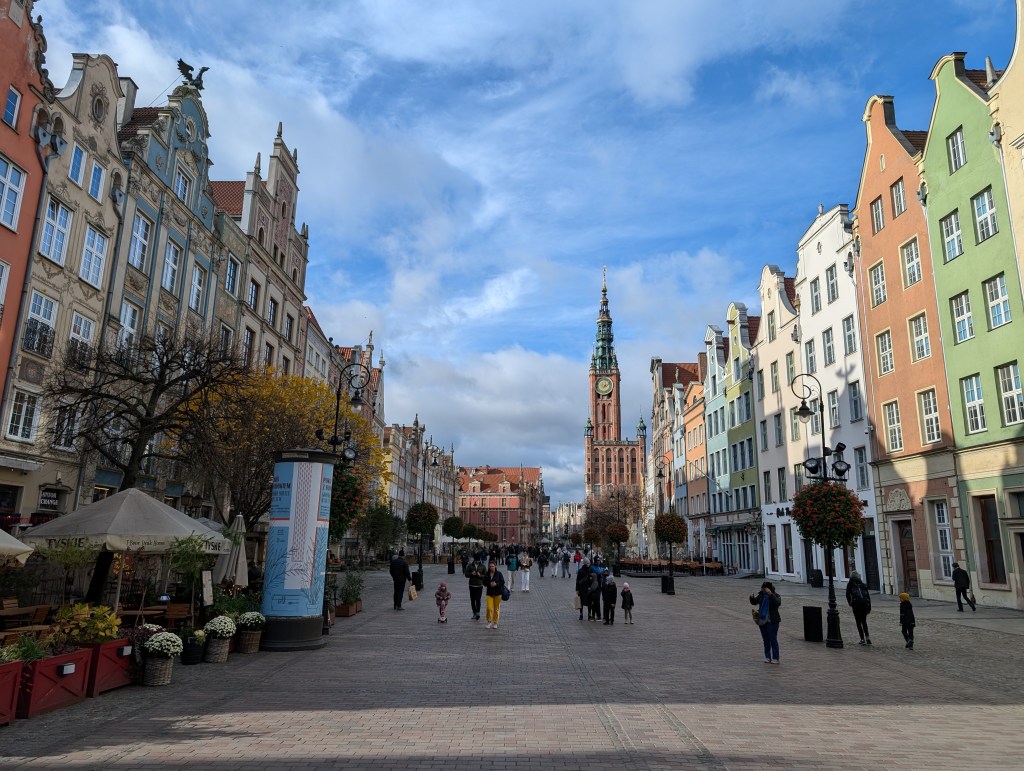
The Amsterdam connection was no coincidence. During the 14th and 15th Centuries, groups of merchants from across Northern Europe, from as far afield as St Petersburg to London, got together to form the Hanseatic League. This sort of pseudo-EU allowed for free trade between the different ports and Gdańsk, which acted as a state independent of Poland and Germany, was a major player.
Immense riches ensued and allowed for the construction of buildings which still existed as I visited. These included the town hall, complete with improbably tall and over-the-top clock tower and the imposing Gothic-style church just a few, narrow streets apart. Also in the main square, the Artus Court was the primary meeting place for merchants at the height of the League’s powers. It was no coincidence, with the maritime nature of this organisation, that a statue of Neptune, god of the seas, stood outside (and was Gdańsk’s most famous monument).
Though the centre of the city, due to its post-WWII reconstruction resulting in almost impossible perfection, did feel a little like Disneyland, Gdańsk was proudly modern. Around this rebuilt quarter, modern interpretations of the needle-thin townhouses, made with steel, glass and occasionally brick ruins of old structures, encroached. These were surprisingly well blended with the multitude of styles a stone’s throw away, leading to coherent waterfronts and streets packed with busy restaurants and bars.
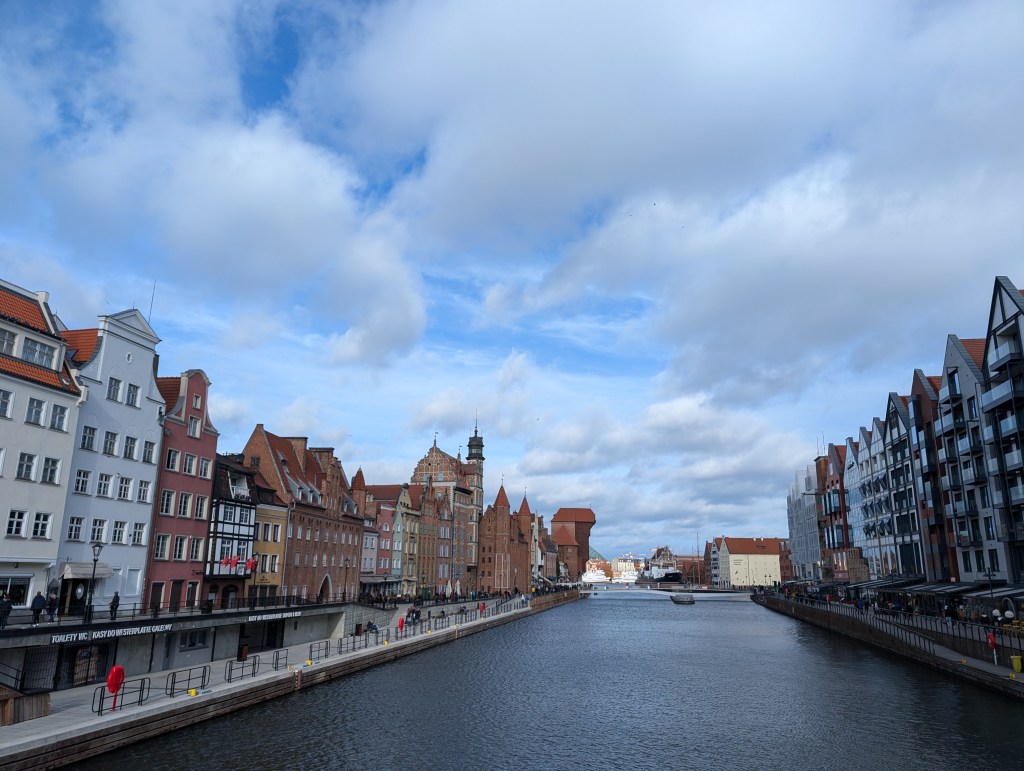
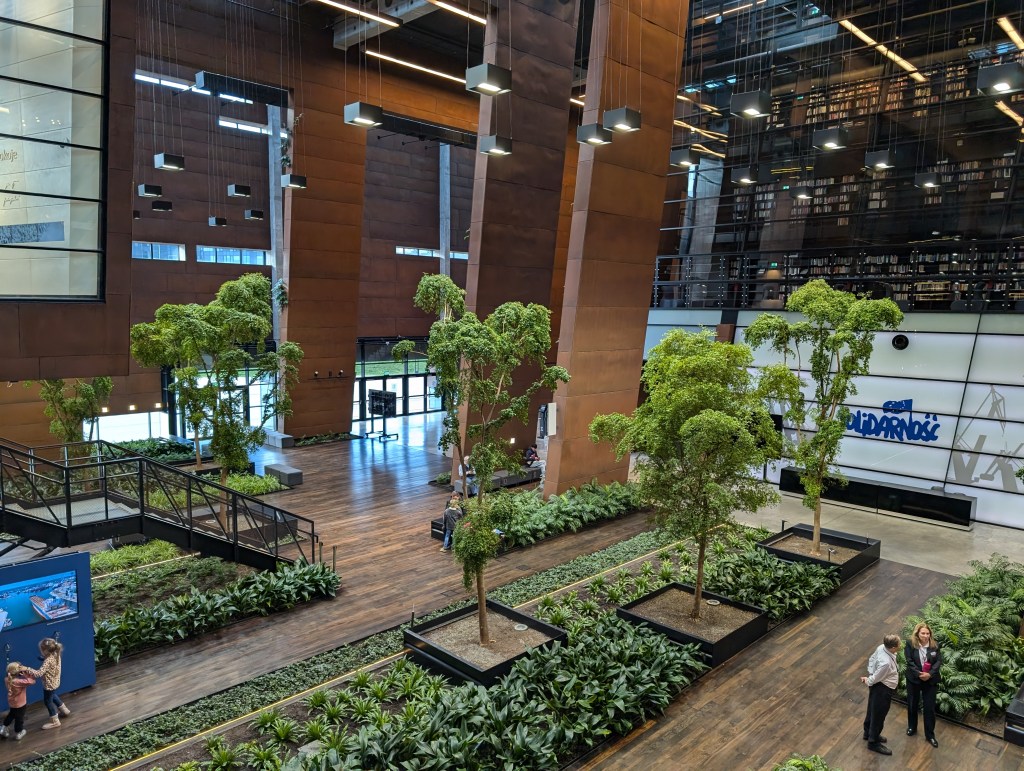
Further out, modern architecture became more dominant and housed two museums of particular note: on WWII and the Solidarność (or Solidarity) trade union movement pioneered by Lech Wałęsa. Both were extremely informative, exceptionally well put together and reflected a city which was open about the darker days that it had only recently emerged from.
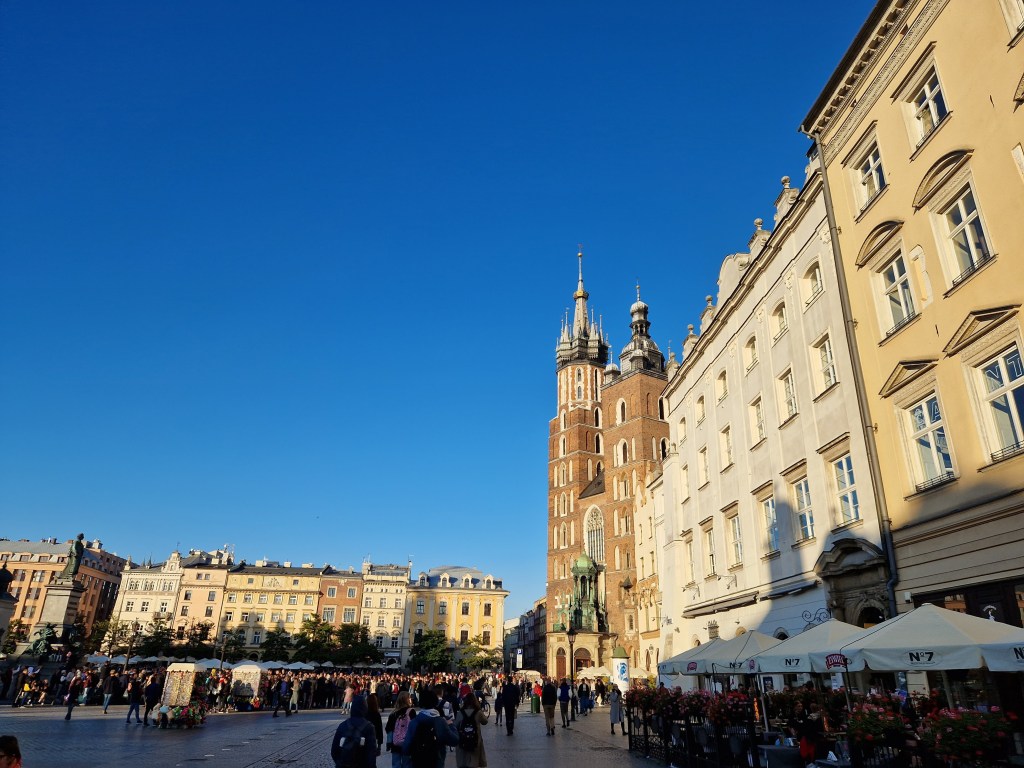
Though Kraków was only on the very edge of the Hanseatic League’s influence (as it is situated miles further inland), there were a few similarities with Gdańsk, its coastal counterpart. For example, the church which dominated the main square in Krakow with its two, opposing and ridiculously extravagant brick towers bore more than a passing similarity to Gdańsk’s town hall. Equally, the Cloth Hall, which lay in the shadow of those two great towers, was a centre for the merchant trade upon which the city was built in medieval times.
“The rate of cultural growth in Poland far outstrips Britain”
The Polish influence in both cities also ran deep. Indeed, in both cities, I found myself drawn to many pierogarnia – restaurants which served exclusively pierogi, a Polish speciality. These delicious dumplings, similar in some ways to Central Asian manty, were usually stuffed with various meats, cottage cheese or spinach and boiled. Though it didn’t sound like a recipe for perfection, it felt pretty close in both cities and were certainly suitable for some of the colder temperatures you may expect in Northern Europe.
A standout attraction of Kraków over Gdańsk was Kazimierz. This area, named after King Casmir III in the 14th Century, was the city’s historic Jewish quarter. Under Nazi occupation, this area fell into disrepair and has only recently started to thrive as a neighbourhood once again. The many art galleries, leafy trees which mottled the sunlight on the creamy yellow walls and smaller, lower buildings, gave it a welcome cosy feel after the grandeur of the old town.
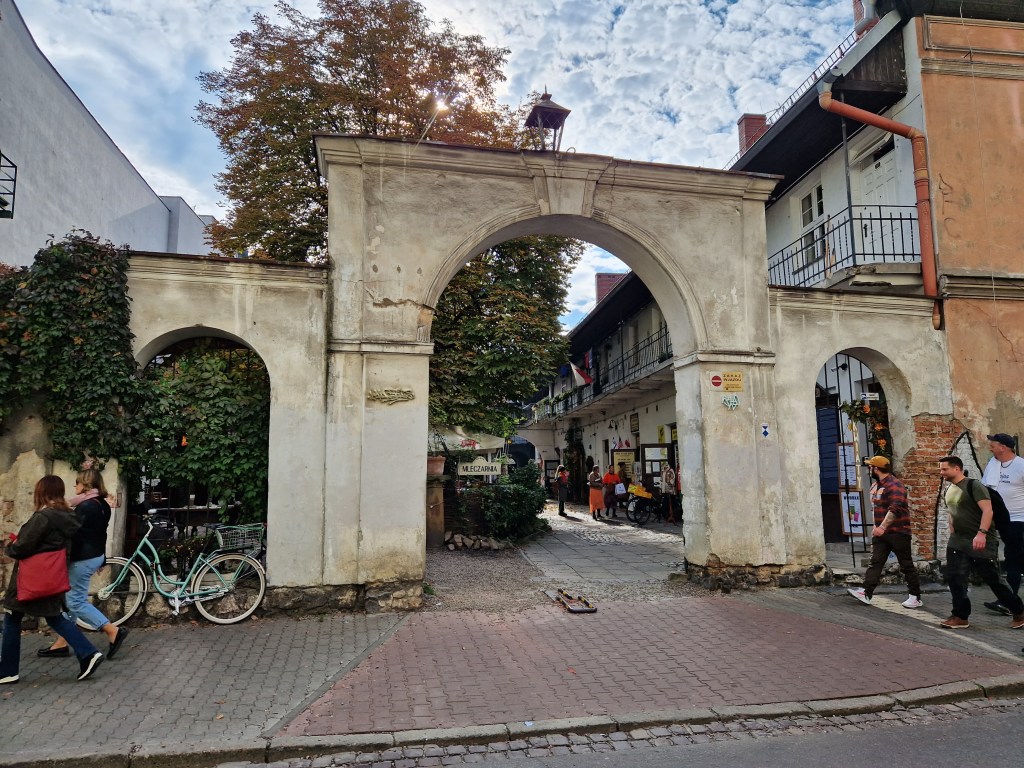
Wandering the streets of Kazimierz, a film buff would perhaps recognise a number of the streets around them as being shown in Spielberg’s timeless feature, Schindler’s List. This was no coincidence; just a few miles from the locations in Kazimierz is the factory which Schindler used to save thousands of Jews from the horrors of the Nazi Holocaust. Not only was the factory another filming location itself but it was home to an incredibly informative and well put together museum on the treatment of the Jewish population in the city under Nazi rule.
This was a theme which Kraków was still coming to terms with. The unavoidable reality was that Auschwitz-Birkenau was about two hours drive away from the city centre and, with the irreparable loss of almost all of the city’s Jewish people and culture, a hole was left in its heart. That is not to say it was still dragged down by the darkness of its past but more that the trauma it experienced ran deeper than that in Gdańsk. Like all of Poland, the direction of travel was firmly forwards as the country gained a greater foothold on the European stage – though the acknowledgement of the past, mainly through museums, was second to no other country I’ve ever visited.
This was a key reason for me deciding that Poland was the new keystone in the European city break scene. The country has clearly invested in culture in recent years in a way that few others have worldwide. It was in a position to educate and inspire those visiting at least either of the two cities I experienced. Though there would be more culture in a city such as London, the rate of cultural growth in Poland far outstrips Britain. This was regardless of how positive or negative a chapter the subject was in Polish history; the Hanseatic League glory days sat directly beside the WWII and Soviet dark times.
Of course, many people do not go on a European city break because they want to truly experience a country’s past and present. Some just want to find a bar and sit there all day, to which I say two things.
The first allows me to get onto my moral high horse and say that I think it is an essential part of any trip to have cultural experiences like these so you can truly understand a country. I am well aware of the cliché but, without understanding the past we are doomed to repeat it, the consequences of which don’t bear thinking about. These two cities had, between them, some of the best and most obvious examples of places to learn about the past. At no point did I find myself surfing the internet for more than five minutes wondering how I could learn more about what was around me (which has been an issue in other places).
For the second point, I’ll get off the horse and join in the drinking. Gdańsk in particular had excellent bars, with many a night spent with friends in the slightly suspect sounding Red Light Bar. Trust me when I say this was not just a place for the tourists to get ripped off and drink until they could drink no more – this was evidenced to me when I was pushed off a table which had been reserved for a team of Polish olympians.
If you were prepared to cope with budget airline flights, likely from one of Ryanair or Wizz Air, you would find that Poland is ridiculously cheap to get to from the UK. Almost any mid-size airport will have connections and flights to Gdańsk in particular regularly drop to around £30 return. These are the pieces I have so often been promised by these airlines to fly to better-known cities yet have almost never found.
Poland is the European city break’s last stand. Nowhere else is still able to combine the holy trinity of cheap flights, cheap food and drink and world class attractions in the same way. From the Hanseatic houses of Gdańsk to Kazimierz in Kraków and all the bars and pierogi in between, I have developed a strong connection with the country: my return is only a matter of time.
 Into The Elsewhere