I tried my best to hammer my left foot into the ice. Shards splintered away from the wall as the crampon struggled to gain a foothold on the slick wall as it eventually stuck. I felt the ice axe, heavy in my hand from the exhaustion of being at altitude and from the exertion of the climb.
I was not a practiced mountaineer. The highest peak I had ever summitted at that point was Ben Nevis at 1,345 metres, during an extremely pleasant, COVID-19-enforced roadtrip round Scotland’s most northerly coastline. Though anyone who has completed it will no doubt tell you that the UK highest peak is hardly equivalent to a walk in the park, I knew I would never be satisfied.
I had to get higher. This led me first to Kyrgyzstan and then Peru’s Inca Trail. These experiences are almost certainly stories for another time and, though I didn’t actually reach the summit of any mountains, I had truly caught the bug. I loved the mountains, seeing them both as perhaps the most beautiful type of landscape on this planet and a challenge to submit myself to. The peaks which seemed so unconquerable, at such an altitude, would be mine.
“I had my mission but to say I was naïve … was an understatement”
I was never going to be Edmund Hillary, mind you. There are limits to my adventurous side and the idea of scaling previously unscaled peaks didn’t appeal. I was more obsessed about height. How would my body cope at 5000, 6000, 7000 metres? As someone who up to this point spent most of their life very close to sea level, would I get altitude sickness (a death sentence to most summit attempts for those unlucky enough to succumb)? Or would the significantly thinner air at those altitudes cause my body to reach its limits as it, quite literally, was starved of oxygen and gave up on me?
I wanted answers and Bolivia seemed like an ideal country to find them. This is a country which is home to some of the highest cities in the world – the largest city (though technically not capital), La Paz is perched up at around 3600 metres.
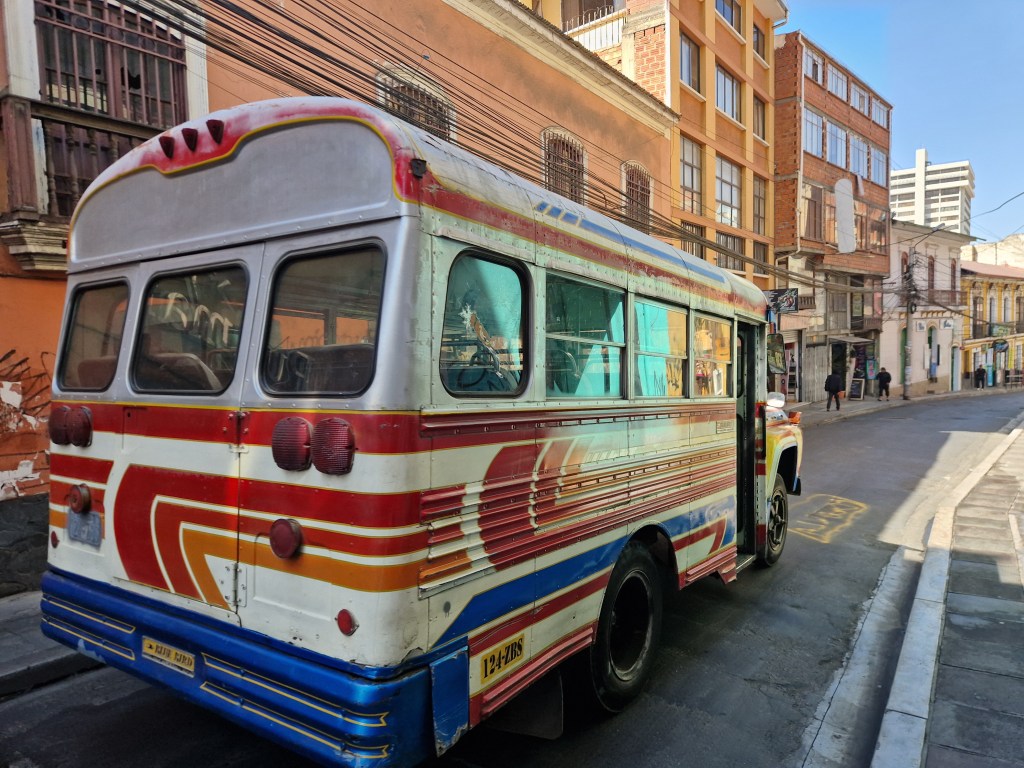
La Paz was a city which tried to kick me like no other as I wandered its narrow and extremely colourful streets between stalls selling anything from barely-believable animal parts, including foetuses, for bizarre medical rituals to mountain biking experiences down “Death Road”.
It was in La Paz that I was pickpocketed for the first and so far only time. This interaction, alongside a brief stop in the El Alto suburb which was renowned as a place where you don’t want to be caught at night, proved to me that this was a tough city. Kill or be killed. Weirdly I would still recommend you visit to experience a more untamed side of South America, away from the very clean and tidy tourist districts of Lima or Cusco for example.
While in La Paz, I learnt of Huayna Potosi; a 6088 metre tall mountain just a short drive out of the city and billed as one of the world’s most “accessible” peaks over the 6000 metre mark. I knew I had my mission but to say I was naïve about the scale of the challenge was an understatement.
In the tour company shop I was a little surprised about the amount of kit handed over. There were the predictable thick gloves and helmet to protect against falling rocks or ice. Slightly more alarming were the crampons and ice axe, the full harness and the multiple further layers of clothing to pack in our bags. This was no Ben Nevis.
The following morning, a typically South American combi van picked us up from outside the shop that had provided the kit the day before. Around 12 of us were crammed into the claustrophobic and noisy interior, complete with kit and supplies, as we delved into the chaos of the city’s traffic, to the tune of straining engines, blaring car horns and blasting reggaeton.
I was relieved as the bus wove up impossibly steep roads as it exited La Paz. This was free altitude – the stuff we wouldn’t have to climb. In the bus there was a sense of anticipation and nervousness from its passengers, including myself.
Conversations revealed that Huayna Potosi’s reputation as a simpler peak to get to had preceded it. We were all novices: nobody had their own kit, any idea whether they would make it to the top, what the consequences may be or whether they actually enjoyed this sort of thing. With the odd exception we were all European, from about as (not) far and wide as France or Germany. Even so, we were all about to go much higher than even Mount Elbrus, Europe’s highest mountain.
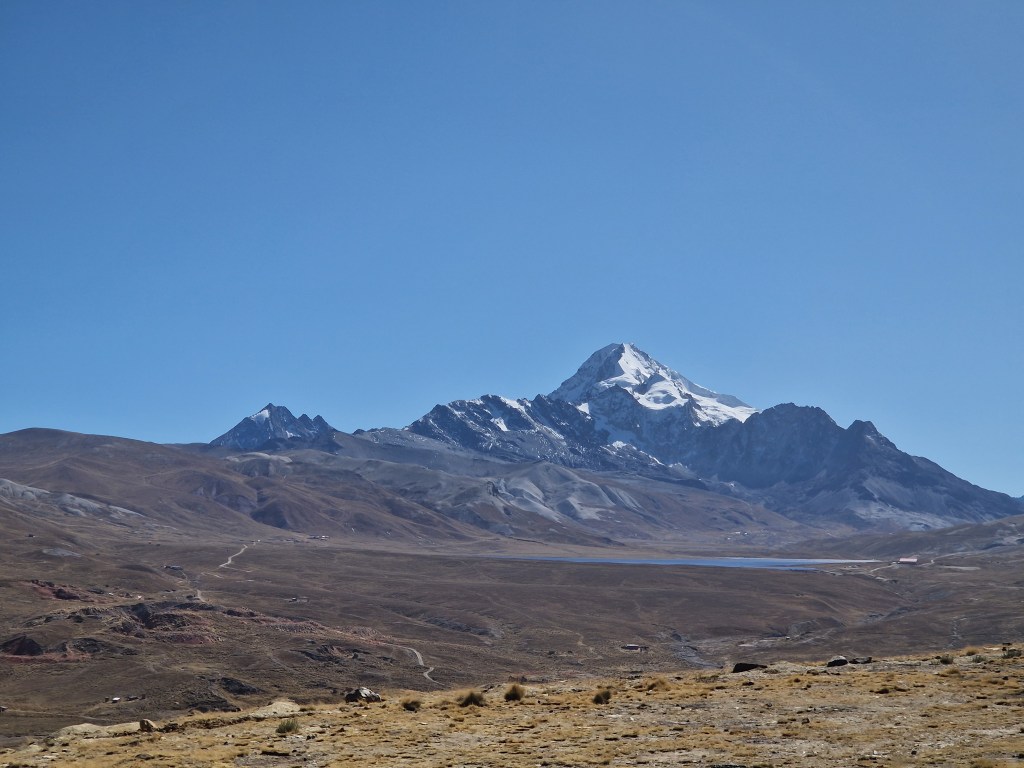
The first sight of the mountain came after around an hour of bouncing and bumping along potholed roads. It loomed above the glacial lakes at its foot, a single, vast point exposed on all four sides. Its snowy white faces seemed at odds with the brown, desert-like landscapes we drove past in the bus, accentuating its altitude as it stood proud of all surroundings.
At this point, my spirits were high – though this is something I had never done before I felt safe in the hands of the guides and knew that I should be fit enough to make it. Up to this point, I had also avoided all symptoms of altitude sickness travelling around other places in the Andes range. The omens were good and this seemed to be reflected through the bus, which was full of smiles and chatter.
“I was astounded by how hard it was to climb the slick ice walls”
I did, however, have an inkling that, no matter the quality of the guides, equipment or my imagined mountain climbing prowess, this was dangerous. I had heard a story from a fellow backpacker who had climbed the same peak a few weeks before and been told to run for his life as an avalanche had torn through the middle of the party. It was only a matter of luck that nobody had been seriously injured or killed.
Having stopped to take photos at the first sight of Huayna Potosi, the bus rumbled on to a checkpoint and then a hut, which was our accommodation for the night. The expedition would take 2 nights: the first day spent learning how to use the equipment we had been provided with the night at the “low” altitude of 4500 metres, followed by a walk to high camp (more like 5100 metres), another overnight stay and then the summit the following day.
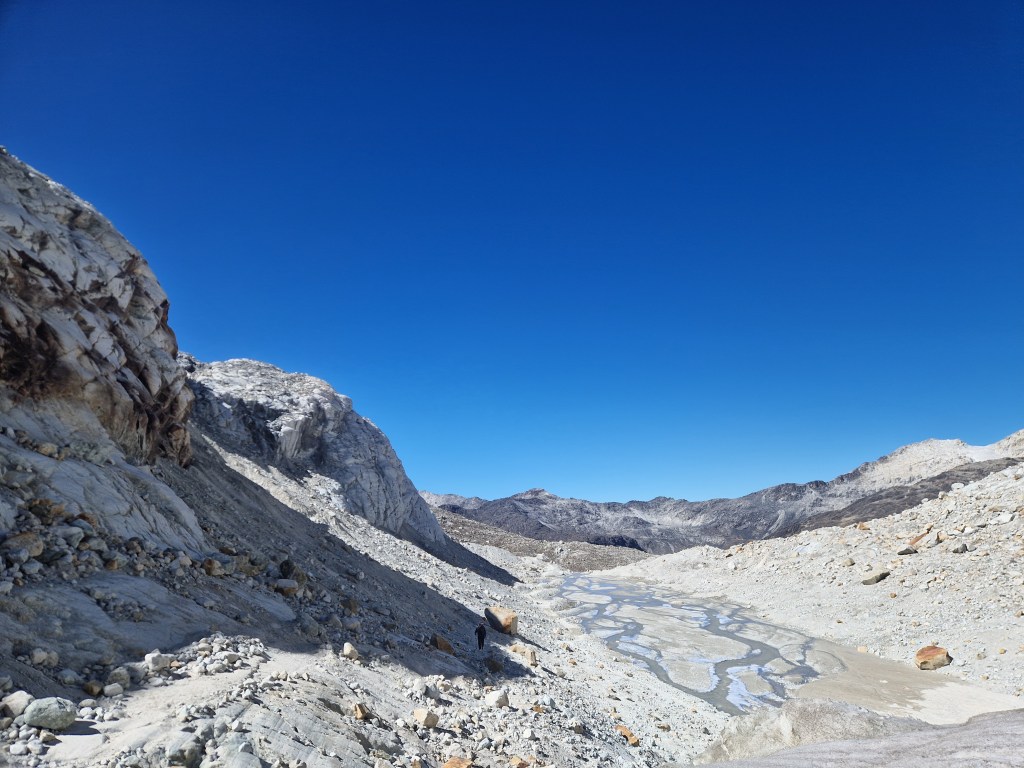
The reasoning behind providing so much ice climbing equipment was soon made clear as we were told that the path we would take was up the glacier that cascaded down the side of the mountain. This was apparently the safest and best-trodden route. All I could think of were cravasses, gaping cracks often obscured by snow that form as the glacier moves down the mountain which you could fall into. If you’ve ever read Joe Simpson’s Touching the Void, you’ll know what I mean (and if you haven’t I recommend you do).
It was clear training was going to be necessary and I was relieved to have signed up for the two night expedition, with its day of training, rather than the one night, head-straight-up-the-mountain-and-hope option. It was perhaps the only sensible decision I made during these few days.
As an inexperienced climber, I was astounded by how hard it was to climb the slick ice walls of the lower glacier. There was no semblance of hand or footholds so instead I was forced to rely upon my ice axe and crampons, smashing these into the shiny white wall in front of me. As I did so, shards of ice cracked and splintered, tumbling down to the remainder of the group below as they watched me make my way uneasily upwards. Though it was just training, this was brutal work.
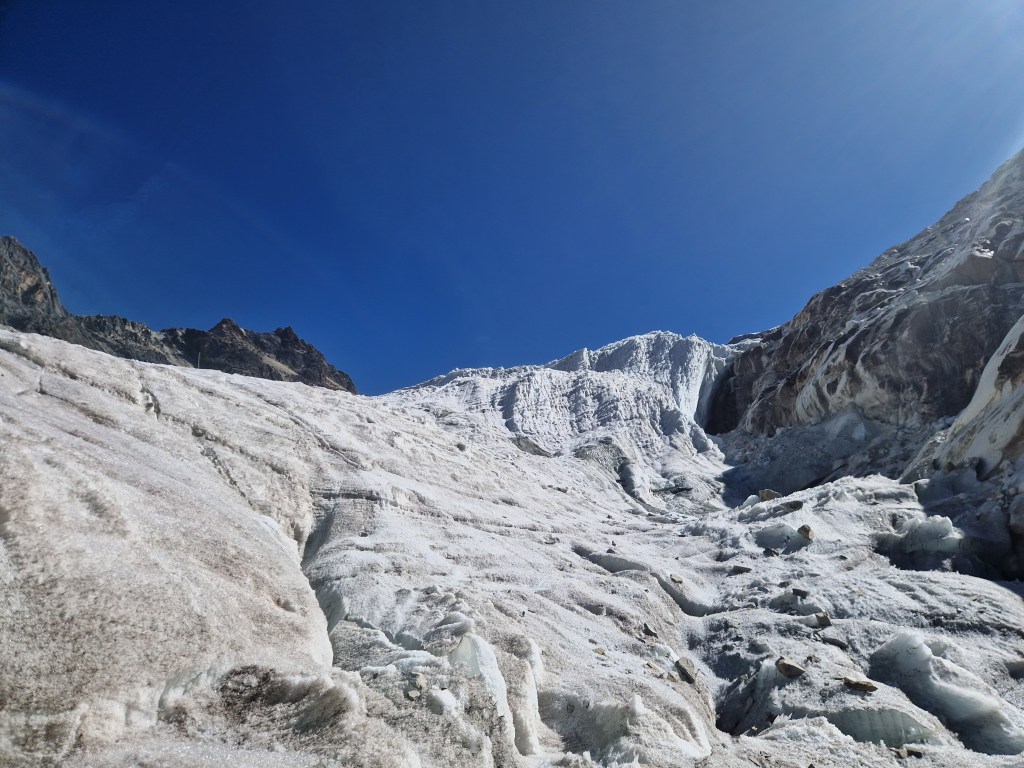
Even for this short climb of about 30 metres, safety was paramount for our Bolivian guides. Before any of us had a chance to attack the ice face in front of us, one of them had scampered up to the top with embarrassing speed and ease to fix an ice screw to the top of the cliff, through which a safety rope was threaded to arrest any falls. Having seen the screws attached to the guide’s belt before his ascent, this seemed to be precious little to prevent a full size human from tumbling down a sheer sheet of ice and sustaining significant injury.
Still, I climbed. As a tourist generally unused to the altitude we were now at or the idea of climbing mountains taller than Ben Nevis, I was struggling. Each time I hammered my crampons into the ice, I could feel the energy sap out of my legs. The ice axe also felt heavier with each swing though it was, at that moment, finding purchase and I was making progress.
I swung again, shards spraying around me from the axe’s sharp tip and, again, I felt the serrated blade find grip in the ice. I pulled on the handle to haul myself up and kick my crampons a step higher but all I heard was a screeching sound, like chalk pressed too hard into a blackboard, followed by a cracking. Then, I was hanging.
Part two of this article will be released on Sunday 25th May at 9:00am. Subscribe for alerts and to get it straight to your inbox.
 Into The Elsewhere