For those not in the know who consider the world’s culinary capitals, South America would often be brushed over with an assumption made that the meat, rice and potato-based diet of the continent wasn’t even worth exploring. Why would you bother when cities such as Tokyo, London or Copenhagen so obviously offer a cornucopia of cuisines, fine dining and foodie innovation.
Until I actually traveled to South America, I lived under the same rock of ignorance. Though I was as much a fan of what I assumed would be salty, starchy and filling potato-based dishes as the next person, I knew that, without a visit to Argentina (with its famous beef) planned, I was unlikely to have my mind blown by anything in particular – I went to see the sights instead of eating my way round a country like someone may do in Vietnam.
I think this was partly down to the relative obscurity and scarcity of South American restaurants in my native UK. Their numbers were dwarfed in the face of the Indian curry houses, Thai noodle restaurants or American burger joints. In fact, considering my assumption of an absent local cuisine, I was expecting a lot of the latter of the three as I was on the flight over.
On the plane to Lima, I briefly had a chance to flick through the guidebook which had been sitting neglected in the bottom of my bag for the previous six or seven hours. What I found was totally at odds with how I had pictured the city to be.
“It wasn’t necessary to splurge on crisp white tablecloths and overly-attentive waiters to see the best of Lima.”
At the very end of the section of where to eat in Lima, it listed a restaurant named Central, which had been awarded the coveted three Michelin stars. As if this wasn’t enough, I later learnt that many whispered about it being the best restaurant in the world. Though I knew immediately that I couldn’t afford to eat at a place with such a reputation, even if I could get a next-day booking (which I definitely couldn’t), the effect of such a restaurant on a city would be seismic as it flowed down to other surrounding establishments.
Even so, I imagined that it would only be by importing culinary cultures from other countries that these restaurants would have become world-renowned. In effect I was finally correct in this line of reasoning: Peruvian food and culture has, in many ways, been influenced by Japan. In the realm of food, this influence led to the rise of Nikkei Peruvian cuisine.
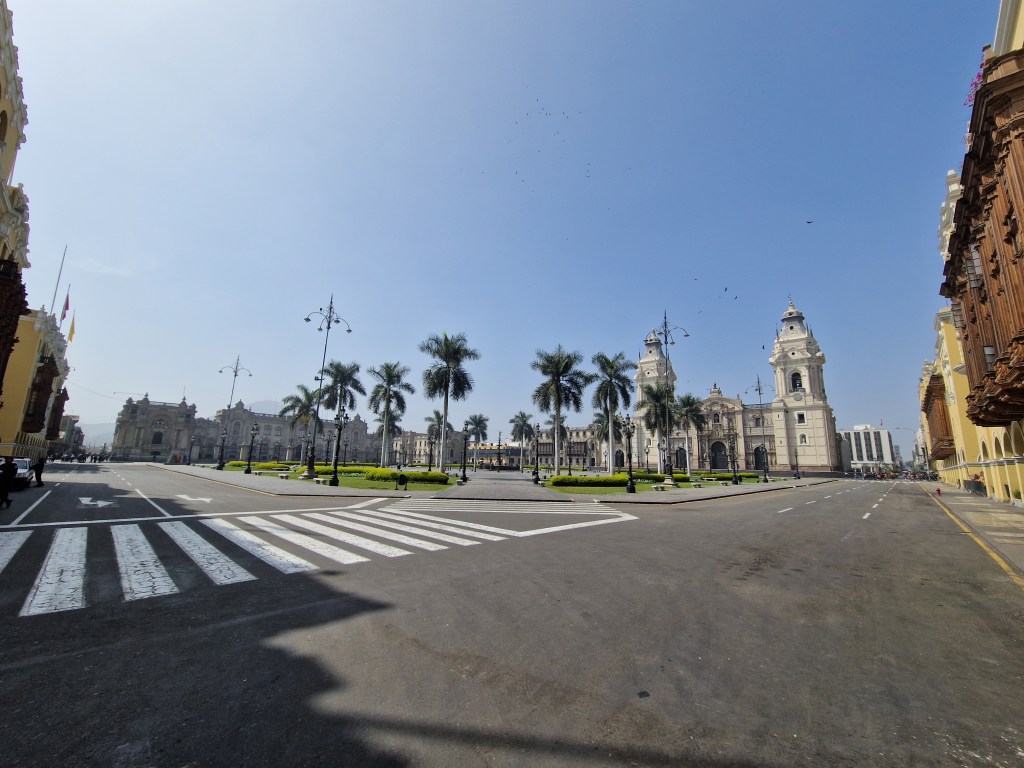
Nikkei food married some of the staples of Peru, such as corn, with a distinctive and unique Japanese twist, often involving ingredients such as soy sauce. The conduit for this unconventional combination was most obviously fish and Lima, as a cliff-top, coastal city, was the perfect church in which to unite the couple, leading to the birth of the favoured child, Central.
Once actually on the ground, I walked along the coastline, watching the waves of the Pacific crash against the black cliffs below me as I made my way from my accommodation in the cosmopolitan, modern Miraflores district to the no less upmarket but more colonial feeling Barranco.
It was here that I first experienced this Asian twist on the country’s staples as I wandered into a nondescript vegetarian café and, having heard it was something of a speciality, ordered a quinoa tofu chaufa.
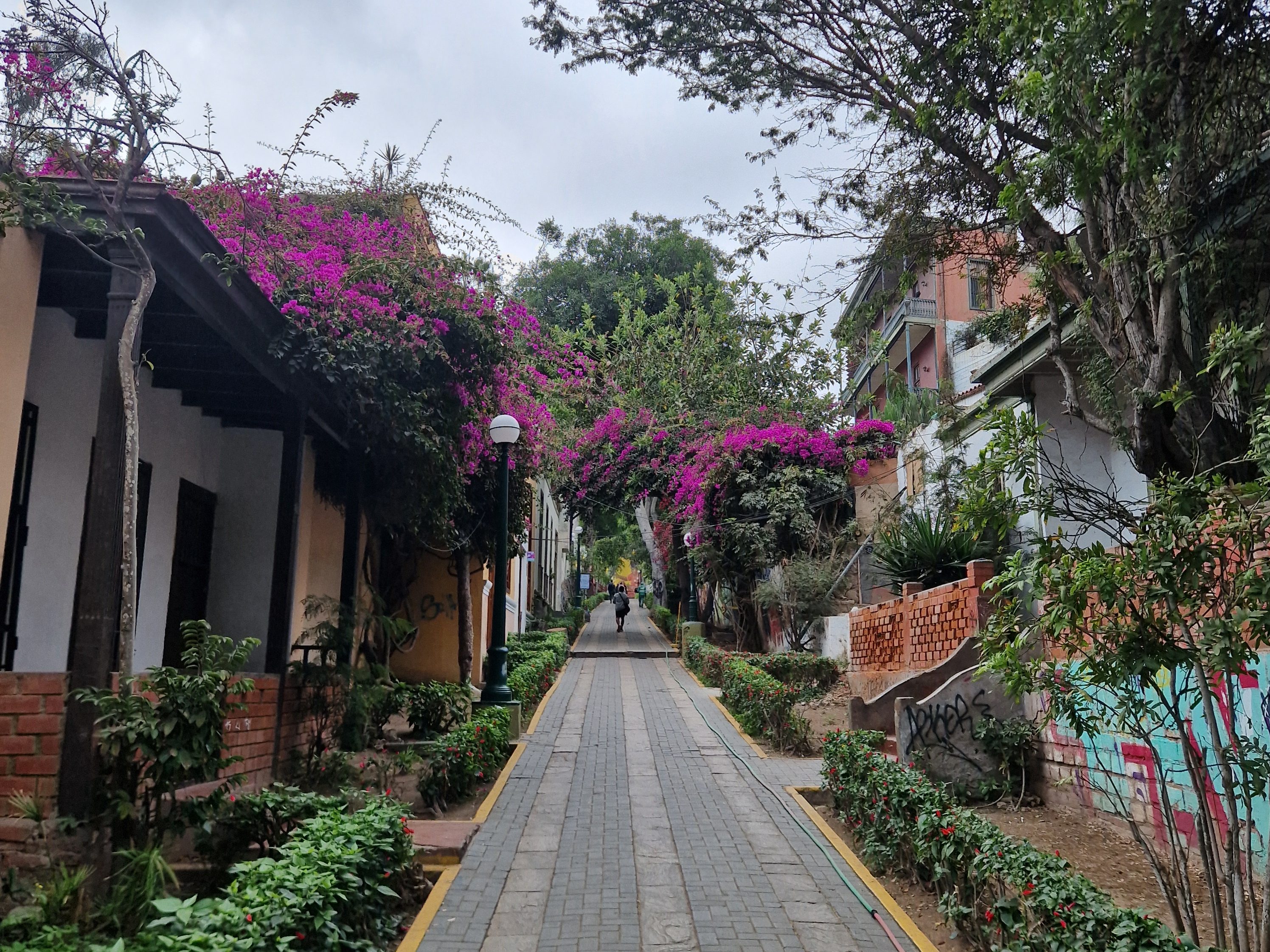
A chaufa, usually made of rice rather than quinoa and with chicken rather than tofu, was the Peruvian answer to fried rice. It was perhaps the most widespread of all the options that I came across in the country, available in smart city restaurants or truck stops on the side of busy main roads.
This first introduction was a revelation to me. Gone were my ill-judged prejudices around this trip being an exercise in eating to survive rather than to enjoy the food as I wolfed down the steaming bowl of quinoa with its lightly fried cubes of tofu and steaming vegetables, all brought together by wonderfully salty soy sauce. This was the perfect food for the place – Lima wasn’t warm and had an almost unshakeable ocean mist hanging over it. I could feel the chaufa warming me from the inside out.
Sure, this wasn’t Nikkei food (despite the Asian influence) and it certainly wasn’t posh. At that point, though, I realised that the flow down from the top restaurants was in fact very real and more extensive than I had imagined. It wasn’t necessary to splurge on crisp white tablecloths and overly-attentive waiters to see the best of Lima.
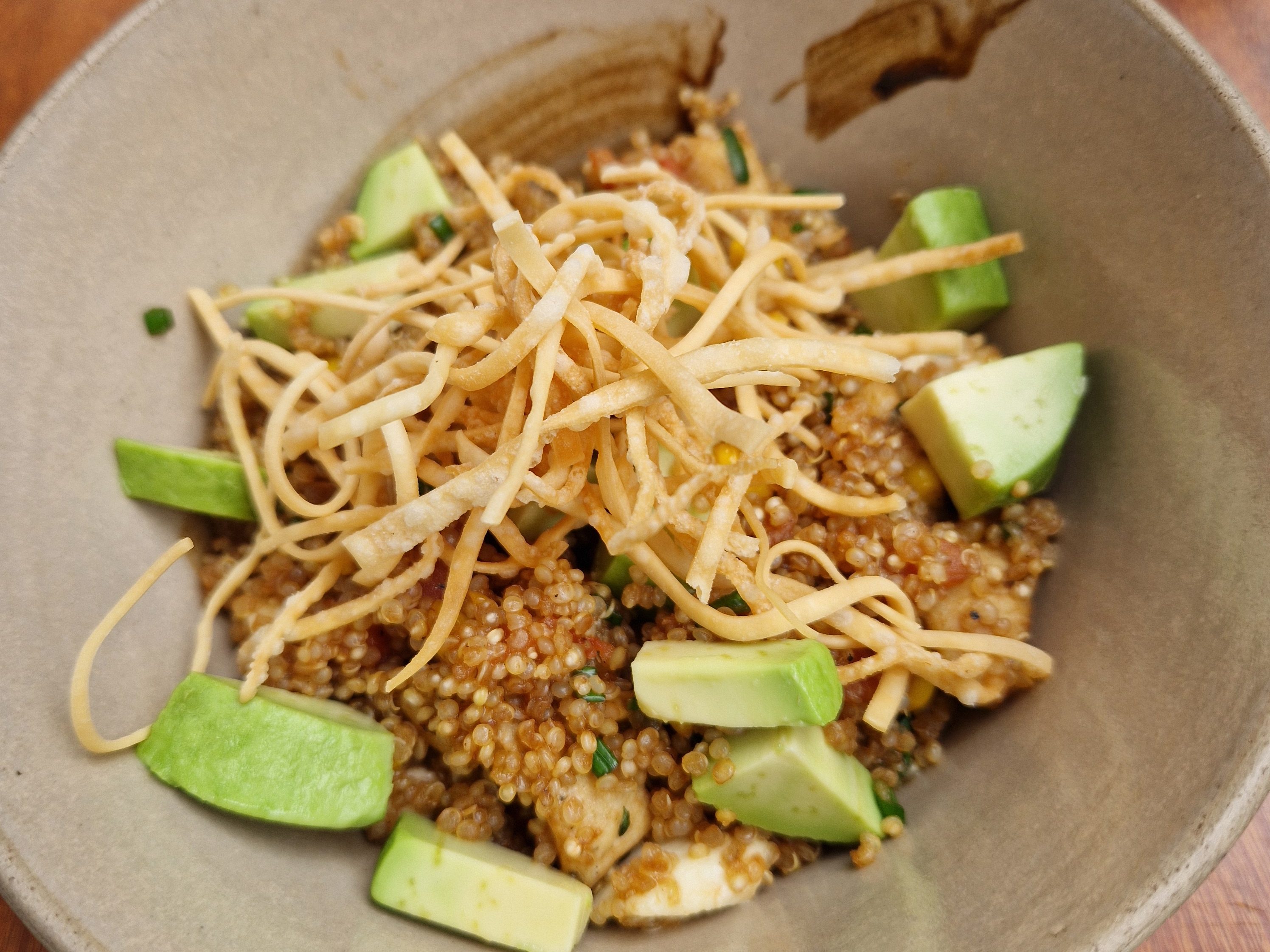
The following day, I set out on a walking tour of the city centre with some other tourists from my hostel and another nearby. As a complete novice to the culinary culture in Peru, I was grateful to the guide for devoting significant chunks of his time to ignoring some of the more obscure aspects of the church behind him, instead talking about food.
Words such as anticuchos, chicharrones and ceviche swirled around my mind, each a new possibility to discover what I had previously been so ignorant of.
We sat down at Restaurant El Pacifico at the recommendation of the guide. Though concerningly close to the main square, we had been assured that the restaurant (and its neighbours along the street) were in fact not tourist traps but some of the best places to sample the local food on a budget. The guide wasn’t wrong.
The almost comically cheap set menu saw a large plate of anticuchos placed down in front of me for my starter. These beef heart skewers were perhaps not for those who were squeamish with their food but, for those willing to take the plunge, unquestionably rewarding.
The smoky flavour from the grille permeated through the thin and lightly charred pieces of meat. As I took a bite, I was expecting the meat to be tough and sinewy, considering how hard a cow’s heart must work during its lifetime compared to, for example, the muscles which make up a fillet. Again, my assumption was wide of the mark as I chewed easily on the tender meat, which had a flavour more intense than I would ever expect from a steak.
This was followed by a plate of freshly fried fish which felt somewhat similar to the British institution of fish and chips, though this came with additional rice. The fish was fresh and the portion was so large even I, with a large appetite, didn’t have a hope of finishing it. The meal cost less than five pounds.
“This was a type of cooking which was remarkably simple”
After the tour and having been filled up to bursting point, I concluded that would be the end of my exploration into Lima’s restaurants for the day. However, equally important to the culture of Peru’s capital is the myriad cafés that are dotted on street corners and squeezed between shops and apartment blocks.
The cafés offered perfect refuge from the hectic streets, predictably with blaring car horns, endless traffic and stalls selling anything from popcorn to light-up flying toys for children. Inside, their calming music and aromatic coffee beans provided me an opportunity to recharge my batteries and people watch out of the large windows before diving back out to visit another restaurant or one of Lima’s many historic sites or museums.
Towards the end of my time in the city, I visted Cevicheria Miramar in the middle of Miraflores, just a stone’s throw from my accommodation who had advised me that this restaurant was perhaps a bit more expensive but definitely not to be missed, as it churned out large plates of what was probably Peru’s most well-known dish: ceviche.
Upon entering, I was greeted with a large menu mostly occupied by various combinations or raw fish marinated in “tiger’s milk”, which was a tangy liquid largely made up from the juices from the fish, lime and chilli. This was a type of cooking which was remarkably simple, relying almost entirely on the freshness of the fish and how a chef was able to delicately balance just a few contrasting ingredients. Though it was unquestionably Peruvian in nature, I couldn’t help but realise the obvious parallels to Japanese food, clarifying the reasons behind the rise of Nikkei in my mind.
I decided, seeing as I was almost a complete newcomer to ceviche, to keep things simple and chose the classic combination of sea bass, tiger’s milk, sweet potato, choclo (a type of large corn) and red onion.
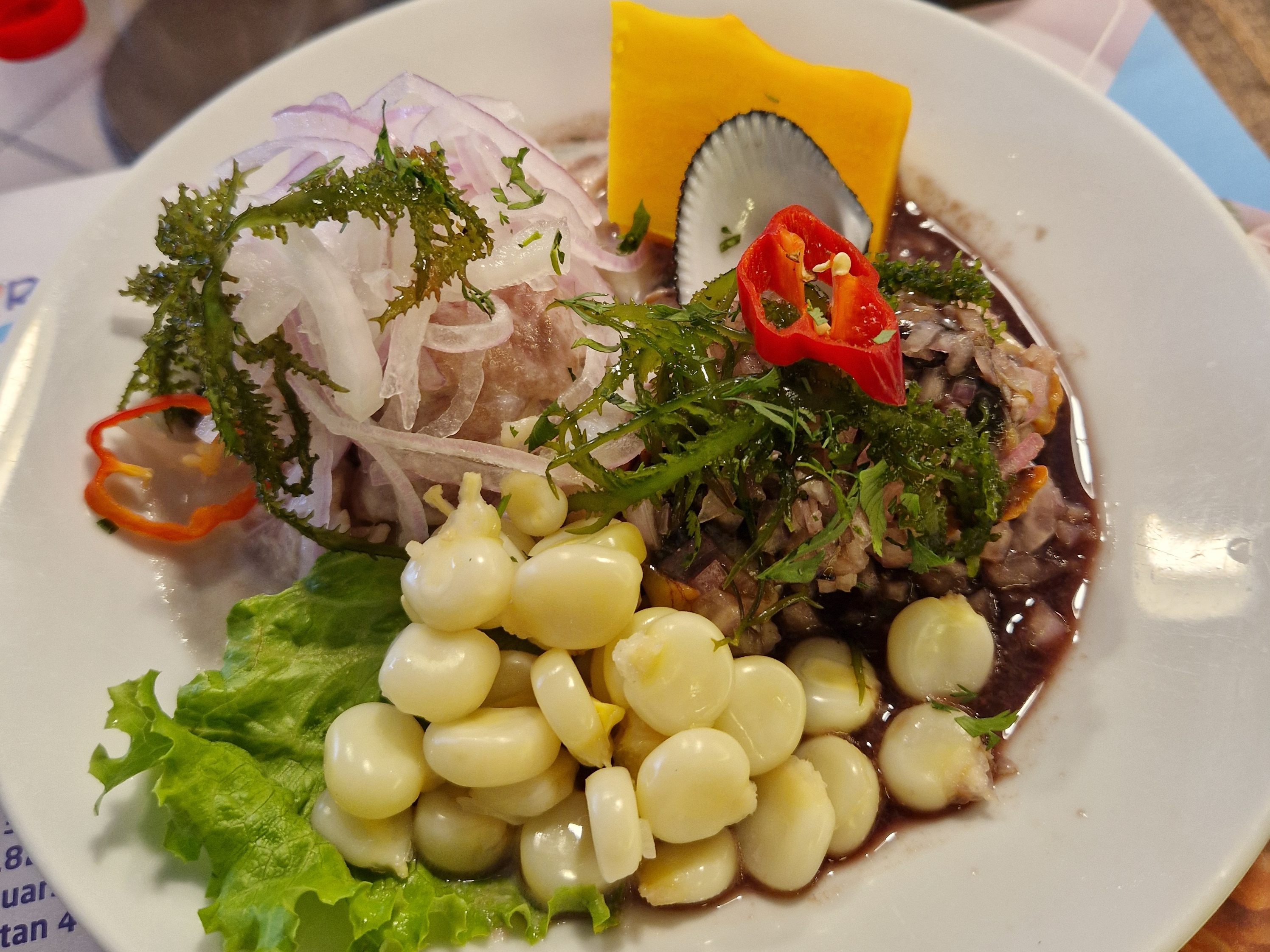
This was perhaps the culmination of my time in Lima in culinary terms. The sharpness of the tiger’s milk was perfectly balanced by the richness of the fish and sweetness of the sweet potato. Though the portions were large, the acidity of the food prevented it from feeling heavy in my stomach as I ate, washing it down with a Cusqueña beer.
For me, Lima was an extraordinarily surprising city; where I was expecting an overgrown metropolis where its sense of culture was yet to catch up with its bulging population, I was delighted to see that it had found a very distinct identity through food. Though I may not have been in the know to begin with, it reversed my expectations entirely on Peruvian identity, eroding my ignorance and replacing it with a deep appreciation of a city which, in culinary terms, sits among the world’s greatest.
 Into The Elsewhere