Just occasionally, a place can act as a time capsule. In a world of smart devices, instant connectivity and endless possibility, they can serve a reminder that things were not always this way, be it 50, 200 or nearly 1000 years ago.
Such places stand in defiance of their surroundings, secluded away, perhaps hiding from the modern reality which has come to surround them. They are the last survivors; still inhabited monuments to the past, demonstrating both the beauty and harsh reality of life long ago.
When I departed the cosmopolitan city of Tbilisi, in Georgia, for the Svaneti region in the country’s north, my body was braced for an arduous, 12 hour journey involving both a Soviet relic of a train and then a bus weaving it’s way up the mountain roads.
“It was as if the cold mountain air had frozen Ushguli in time”
My destination was Ushguli, a UNESCO World Heritage site so high into the mountains that many sources called it Europe’s highest inhabited village.
Stepping out into the clean mountain air, the transformation in the world was almost indescribable. Where there was once Tbilisi’s mixture of bustling bars, bath houses and overall sense of hurriedness, a sense of calm and serenity prevailed.
The first thing anyone arriving in Ushguli would be hard pressed not to notice was the backdrop to the four Hamlets which comprise the wider village. Lush, green wild flower meadows containing all manner of species from oxeye daisies to orchids gave way to soaring white mountain peaks.
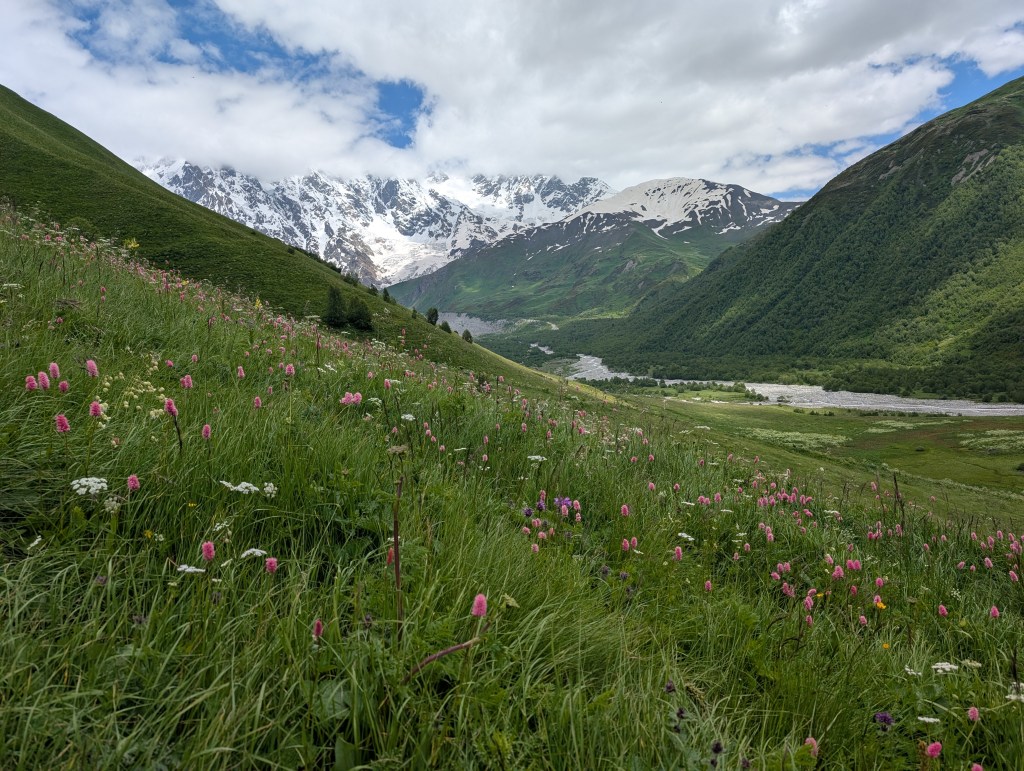
Walking the muddy roads which wove between ancient stone homesteads (and seemed to be home to as many cows and stray dogs as people), I was enchanted by the unique atmosphere which hung around the historic alleyways, chapels and courtyards.
This was a time capsule in the truest sense – it was as if the cold mountain air had frozen Ushguli in time. There wasn’t a supermarket in sight; instead people could be seen milking their cows in cramped and muddy farmyards. Only the toughest of vehicles could access the buildings towards the top of the village, crawling and scraping their way along the narrow and uneven roads.
Sitting down at one of the few bars which were there for the handful of tourists who visit each year, I began to contemplate how exactly somewhere like this had remained so true to it’s roots in respect to its traditions, structures and overall way of life and how that may change into the future.
Throughout Georgian history, the Svaneti region had always been the hardest to occupy. Compared to the dead flat and open expanses of the lowlands to the south, the high mountain passes posed a challenge even to some of the most infamous occupying forces in history. Indeed it was well-documented that the Mongols, despite originating from north of Georgia, decided to invade from the south after colliding with the impassable peaks of the north. They never reached Ushguli.
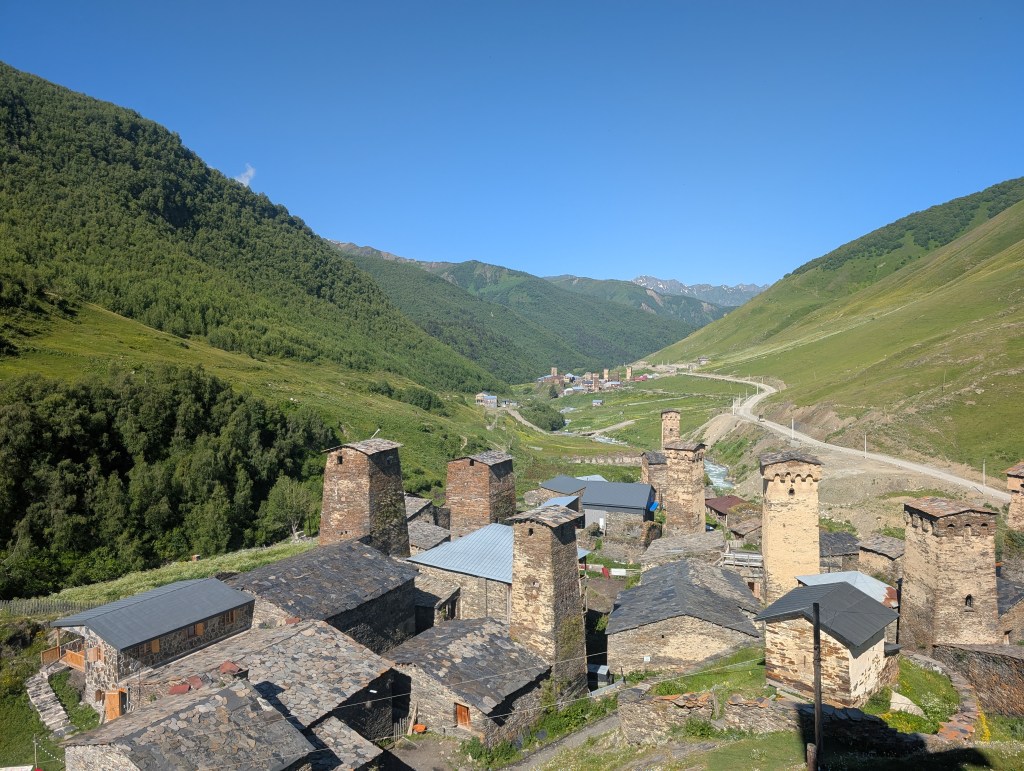
Ushguli’s positioning at the very top of the valley only reinforced this feeling of impenetrability. Perched atop the mountains overlooking the village were watchtowers, preserved through 1000 years of history. These were joined by the multitude of defensive Svan towers dotted around the village.
The flip side of this extremely effective defensive position was that Ushguli was left behind as the rest of Georgia slowly modernised during the 20th Century.
Where cities like Tbilisi, Kutaisi or Batumi received regular train and bus services to connect them with the rest of the country and occasionally beyond, Svaneti remained an isolated area, simply too difficult to connect to elsewhere.
Bizarrely, nothing demonstrated this better than khachapuri, a delicious bread either stuffed with or covered in salty, melted cheese; it was perhaps Georgia’s best known food export. Even so, not all khachapuris were created the same throughout Georgian history – there were three types which still remained as I visited: Imeretian, Megrulian and Adjarian (with the latter being the one which has found fame in the west).
Each of these breads were initially associated with a separate region of the country. Adjarian khachapuri, for example, originated in the coastal city of Batumi. After 1000 years though these boundaries blurred. Adjarian khachapuri could be found in Tbilisi as easily as it could be in it’s coastal birthplace. The only exception? Svaneti.
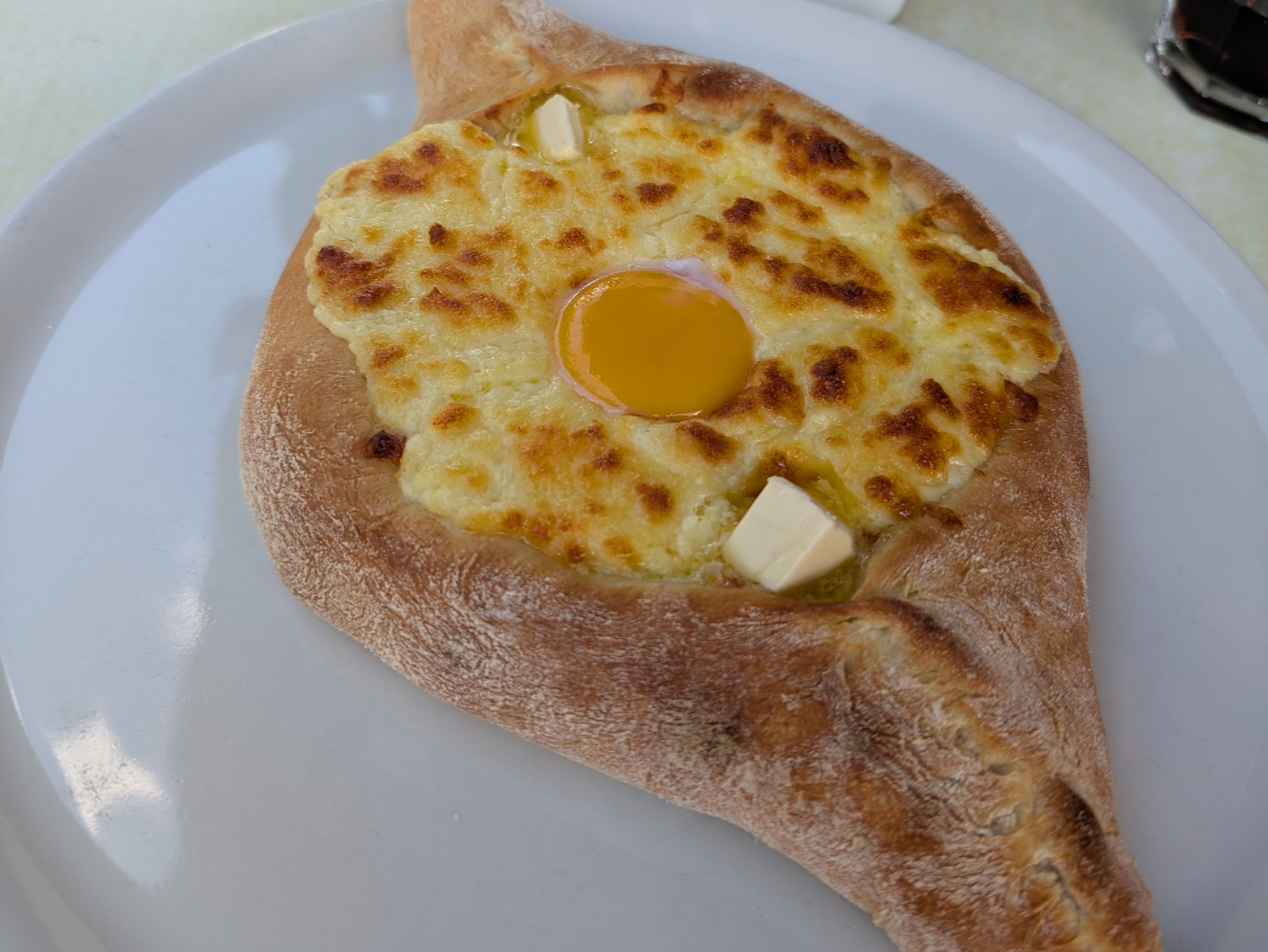
Particularly in Svaneti’s more isolated settlements, only Imeretian khachapuri, the most basic of all the types, was available. Where it had benefited from using the mountains as a natural defence, Ushguli and the surrounding area had suffered as the same mountains had cut it off from the rest of Georgia.
It was the same story linguistically. Though through the ages Georgia had multiple languages and alphabets, all of which were strikingly distinct from anywhere else in the world, as I visited it was linguistically uniform. There was a single Georgian language.
The only caveat to that rule was Svaneti, where the Svan language, indecipherable to anyone from another part of the country, was still used. This was to the extent that a film, named Dede, was recently shot in Ushguli, showcasing the Svan language and picking up awards worldwide in the process.
To me, this told of an isolated community who, though they may have had to overcome some unique obstacles to integrate into the wider world, frankly had no interest in doing so. Regardless of some of the benefits, the Svan people were singularly proud, actively seeking to preserve their culture and prevent it from being consumed into the wider Georgian tradition.
Despite this, it felt like the push to maintain cultural separation was a battle that could be lost in the near future.
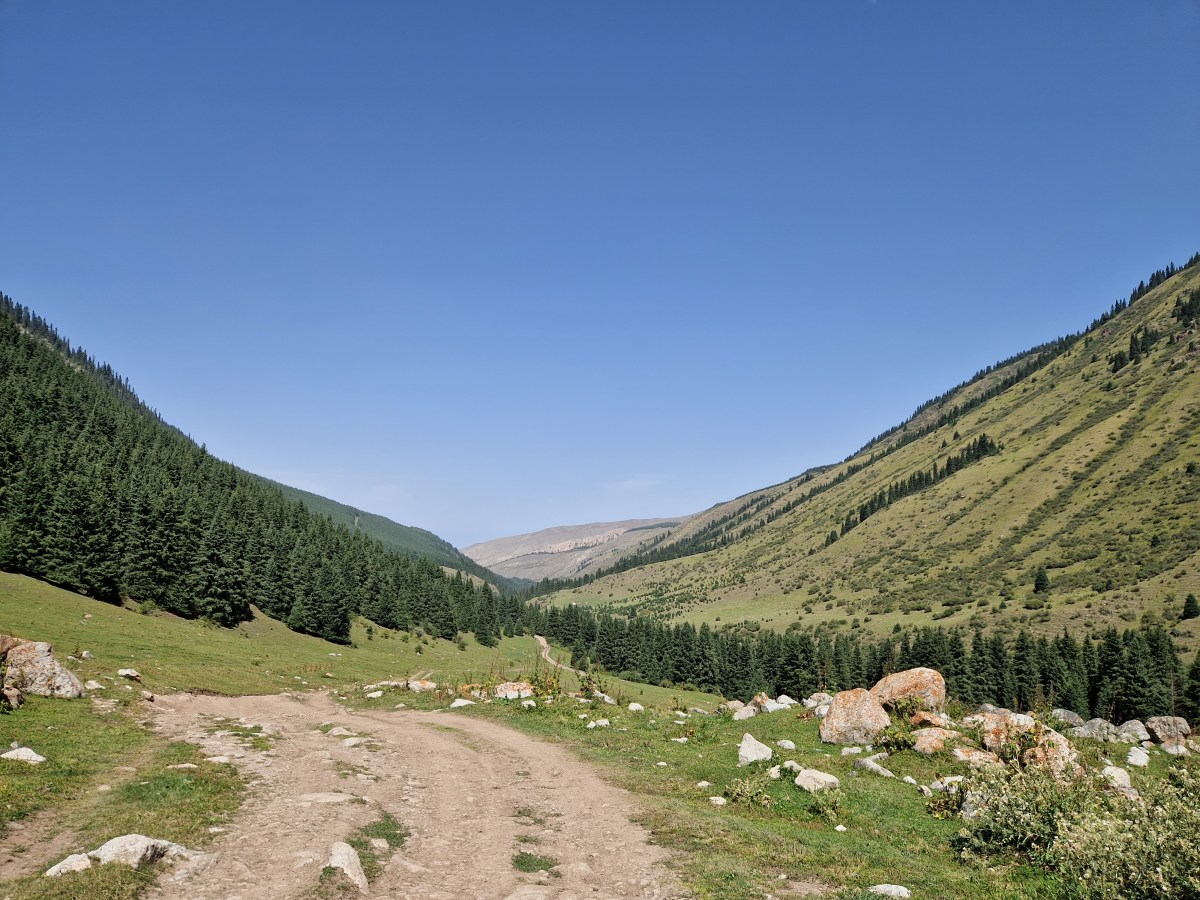
Until recently, Ushguli could only be accessed by walking long distances from Mestia, the region’s main town, or using a 4×4 along a dirt track which was all but impassable between October and May as it was blanketed in thick snow.
This required a would-be visitor to be committed to getting to Ushguli. It was a place where half measures and last minute arrangements wouldn’t cut it. Multiple days in the mountains, no doubt in uncomfortable conditions, would have been required.
As I visited in summer, the idea of hiking the mountain ranges under the warm sun was appealing (and in fact something which I happily did). On the other hand, during the long and snowy winters this would be an entirely different story, again effectively isolating Ushguli from the outside world.
However, the steady process of paving the road between Mestia and Ushguli was beginning to alter and reduce how committed a tourist must be to experience the majesty of the Svan towers set to the background of white mountain peaks and wild flower meadows.
“Through the last 1000 years of history, the Svan people have overcome almost every challenge imaginable”
That said, Ushguli seemed remarkably resilient to any increase in the number of people visiting. The centre of the village was still extremely rustic, harking back to a millennium of history rather than looking forward into the next, potentially very prosperous, decade.
This was what made Ushguli so enchanting. Many of the oldest buildings were ruined, giving those that still stood the feeling of a living museum. Streams still ran unchecked and unbridged across roads.
There was also no real hint of a new town or outskirts, offering cheap accomodation in a comfier environment (either for tourists or locals priced out of the centre) also contributed to the village’s appeal.
It was this abrupt boundary between the village and the mountains that enhanced Ushguli’s connection to the landscape – one which has been so instrumental in shaping it’s unique culture and heritage to date. In turn, the still sometimes limited access and efforts of the local community in preserving their distinct language and culture has meant that this magic has been preserved so far.
Through the last 1000 years of history, the Svan people have overcome almost every challenge imaginable, whether by building towers among their houses to defend themselves, finding ways to shield themselves from the harshest mountain winters or navigate the high mountain passes to neighbouring villages.
The newest challenge that they face will be different to their ancestors in every imaginable way. The preservation of Ushguli and it’s unique culture, whether through food, language or buildings will be vitally important in ensuring the prosperity of the Svan people. Without it, Ushguli will lose its authenticity and tradition which made it so captivating as I visited.
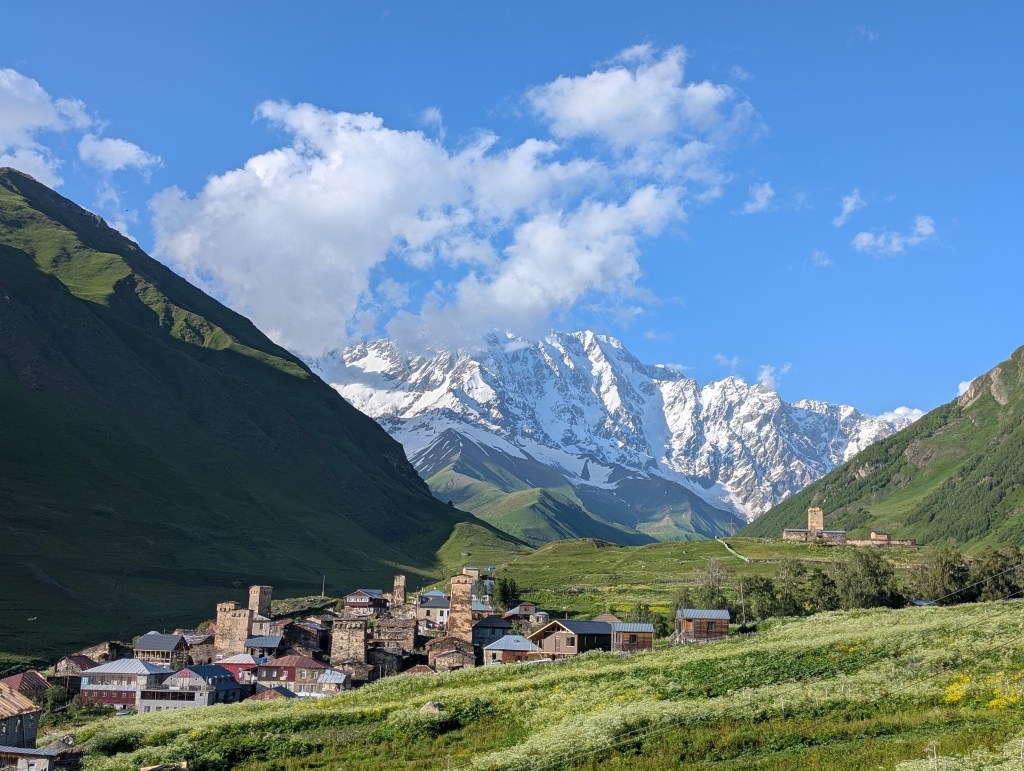
In doing so, they will be forced to tread a fine line between accepting tourism without allowing it to invade Ushguli. Though they were able to resist the Mongol hordes in the 13th Century, I wondered whether they would be able to do the same when faced with some of the many temptations of the 21st Century.
If a single village is capable of resisting such a temptation, the fiercely independent Ushguli may just be it. It was a place determined to do things their own way, harking back always to their traditions and heritage. Long may it continue.
 Into The Elsewhere