North Macedonia’s capital city was crazy. As dusk set across the main square, crowds milled around the giant statue of Alexander the Great, proudly claimed by the country’s citizens as one of their own. The vast paved expanse was peaceful, perfectly obscuring the almost complete revolution in their surroundings over the last two decades.
The question facing most cities in Eastern Europe is how do they make themselves unique; a tourist destination so unmissable that they could be considered the equal of the region’s foremost destinations such as Budapest? Maybe even the equal of cities further afield such as Paris?
“Just occasionally … a city decides to take both geography and history out of the equation”
The responses over the years have been several and with varying levels of success: from Gdańsk’s modern and jaw-dropping museums to Sarajevo’s distinctive east-meets-west culture and architecture, there would be an Eastern European city out there for virtually anyone with any number of tastes and hobbies covered.
Partly, this would be as a consequence of the geographic placement of these cities as well as who ruled them when and their general historic importance. For example, if your city was just a small village up until the start of the 19th Century, good luck finding Roman ruins to equal Sofia. Equally, it would be difficult to recreate the mountains and stunning Lake Bled (from which Ljubljana benefits so much) in a generally flat country like Poland
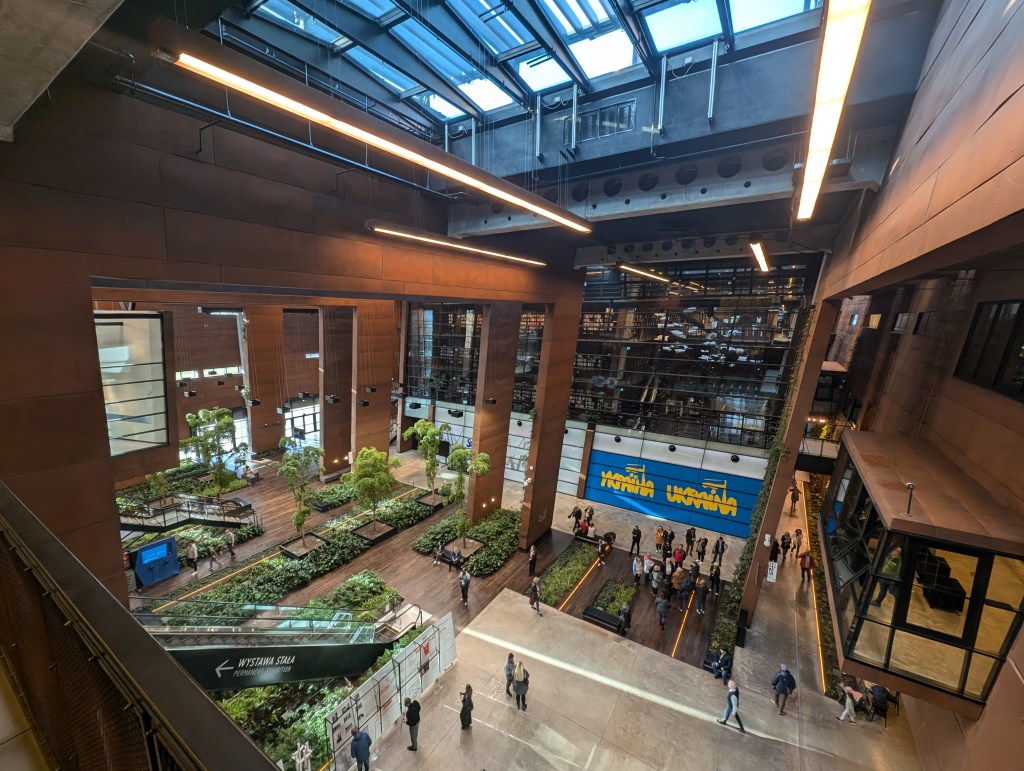
Just occasionally, though, a city decides to take both geography and history out of the equation. To some extent, Bucharest managed this during the reign of Ceauşescu, as the city was largely remodelled as a brutalist utopia (or dystopia, I’ll let you decide). Historic monuments were replaced with even larger structures like the People’s Palace.
Though Bucharest would be a good example of this, it doesn’t take top spot. This almost undoubtedly belongs to Skopje, North Macedonia’s relatively diminutive capital.
With a population of just over half a million, Skopje had, up until recently, been occupied throughout its history by forces such as the Romans, Ottomans or as part of Yugoslavia. In a lot of cases this would have proven to be enormously culturally beneficial to a city, as different empires brought different ideas and initiatives.
In fact, walking the streets of the capital, I had very little doubt that this was true. The city had a small but extremely atmospheric quarter which felt very Ottoman. The streets were crammed with shops selling any number of multicoloured Turkish sweets, hookah bars and cafés selling tea and coffee rather than beer or wine.
There were also many jewelry shops whose golden wares caught the midday sun, tempting locals and tourists inside as they sought wedding necklaces or bracelets and holiday souvenirs alike.
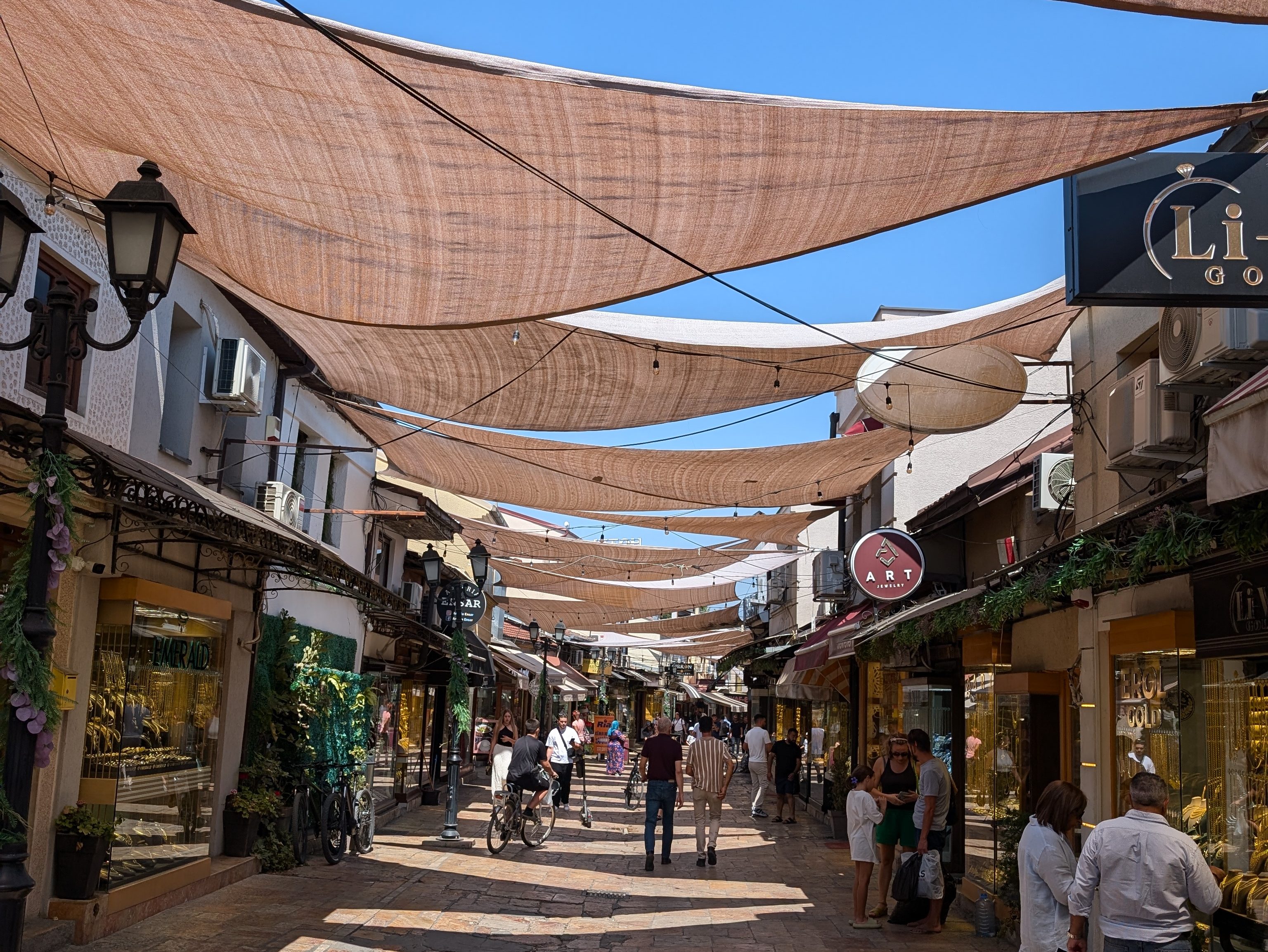
Dotted throughout this historic part of the city were many mosques, again harking back to the Ottoman occupation of the city which lasted hundreds of years. Equally, though, they told of a still strong Muslim tradition within the city even in the modern day.
A historic centre like Skopje’s, with its extremely attractive single-storey Turkish architecture comprising whitewashed houses with terracotta roofs, would likely have been enough for most cities to decide their unique selling point. Skopje had different ideas.
“Parisian-style plaster frontages painted in whites and yellows had taken over the dull grey apartment blocks”
The first part of this process can be dated back to 1963, when an earthquake destroyed large portions of the city. As it was then under Soviet rule, blocks were levelled and streets rerouted and widened. Large public squares were paired with identikit brutalist concrete blocks. Besides the Ottoman quarter, much of the city’s history was lost.
As time passed and the brutalist movement faded in popularity and in 2010, this was finally recognised by the government as they announced Project 2014 for the city. This was to be transformative, dragging Skopje out of the ex-Soviet doldrums and straight into being a 21st Century tourist hotspot that would make Macedonians proud and neighbours jealous.
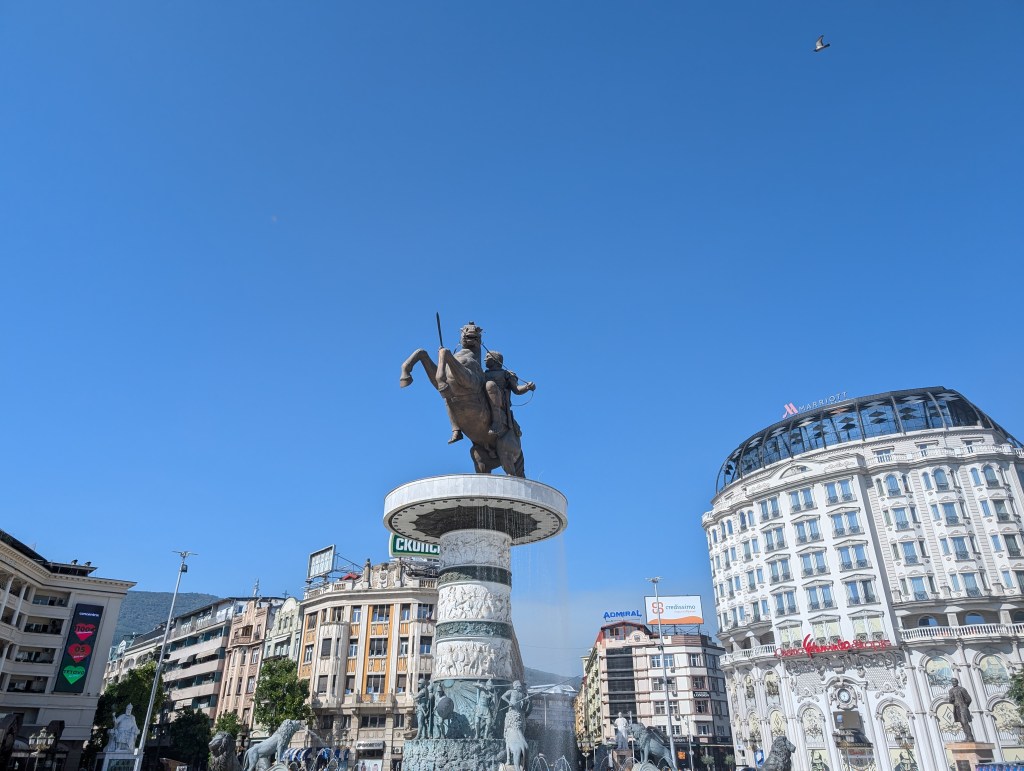
It was Project 2014 that was responsible for the gigantic statue of Alexander the Great, sitting in the middle of the city’s main square and just across the river from the old town. At nearly fifteen metres tall, it imposed itself over the rest of the city in a way that the Statue of Liberty could only dream of in New York. Fountains sprayed out from its base into a large pool, complete with further sculptures.
Just as the contents of the square had been remodelled, the façades of the buildings had been altered beyond recognition in an effort to hide some of the more concrete-y elements of the 1963 rebuild. Parisian-style plaster frontages painted in whites and yellows had taken over the dull grey apartment blocks.
Still, none of this so far could be described as particularly crazy. At most, it could be thought of as a dramatic departure from the city’s Soviet past in an attempt to modernise and attract greater tourism. However, this was just the first part of the government’s vision.
As I walked away from the square along the river, I was somewhat surprised to see what appeared to be a Spanish galleon moored on the riverbank. What made it more confusing to me was that, given its enormously tall masts, it was a mystery as to how it could have navigated under the extremely low and narrow bridges which lay either side of it.
Looking more closely, I saw that this galleon was in fact a hotel. More surprisingly, I quickly realised that this wasn’t a boat at all, as it was firmly attached, complete with foundations, to the riverbed. The whole thing had been built in the last fifteen years at the whims of the government.
What made this more ironic was that North Macedonia was landlocked and didn’t have a navy or naval heritage to speak of. Even the country’s national hero, Alexander the Great, was known to have a weak navy. The explanation for the galleon was unclear.
Walking further, I came across an ever-increasing number of monuments, each a mimic of another, better-known, version from elsewhere in the world. The Brandenburg Gate, Arc de Triomphe and Wall Street charging bull all featured.
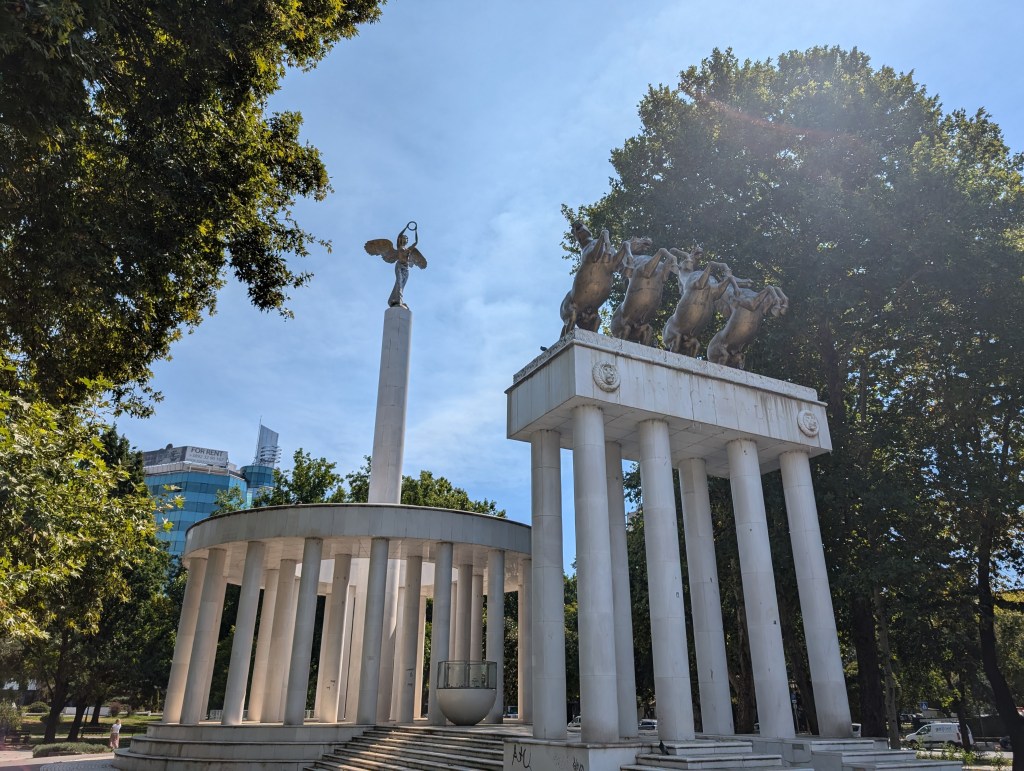
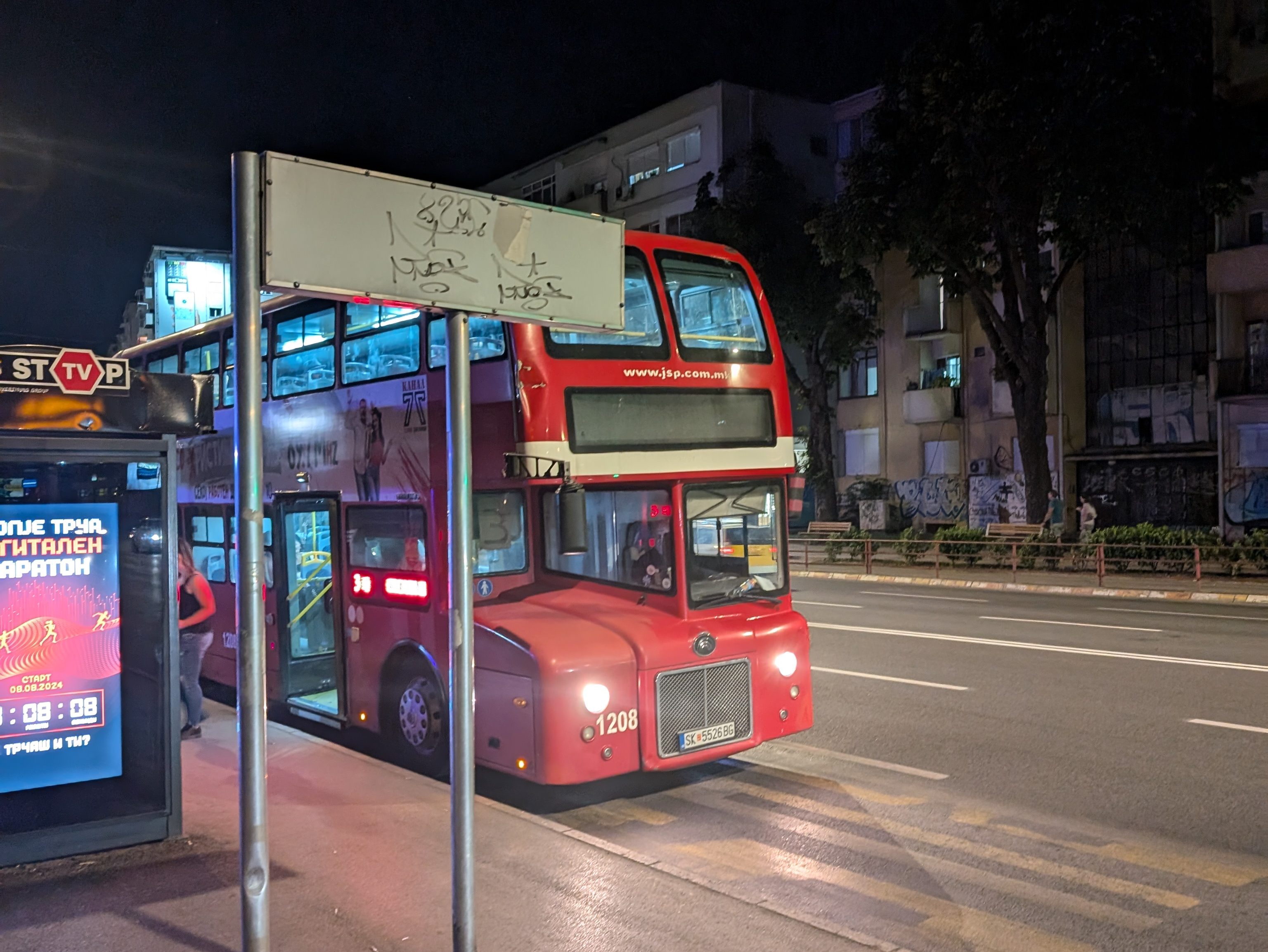
The wide, Russian-built boulevards were also home to many red buses, built to resemble London’s iconic Routemaster and, at one point, I passed a replica red phone box.
By this point, I was bemused and confused in equal parts. Undeniably, the monuments replicated within Skopje could easily be classed among the world’s most famous and recognisable, though at the same time, they were only recognisable and famous because of their setting. Taking the Brandenburg Gate and putting it into a city that isn’t Berlin meant that, to me, the allure of the attraction was lost.
I understood the purpose of Project 2014 – it was clear that Skopje, before the project was announced, was only a minor European destination. The issue was that, as I visited, it still felt the same way and that the millions poured into the remodelling could perhaps have been spent more effectively elsewhere.
That is not to say that Skopje was an unpleasant place to visit. I found it quirky and entertaining as I walked around, between the hundreds of statues and monuments. They did add something to the experience, though it paled in comparison to the far more atmospheric (and preexisting) old town.
Some estimates have priced the project at more than half a billion pounds. The positive effect that amount of money could have had on preserving and exhibiting the country’s varied and interesting history could have been enormous, let alone the potential benefits it could have brought to the country’s more impoverished communities.
What was most galling was that most of the monuments were already crumbling, with whispers that some may have to be taken down in the not-too-distant future. Some of them had already gone after changes in governments brought about a halt and subsequent reversal of some of the scheme.
The project as a whole betrayed a country struggling to come to terms with itself. Its national identity and history was disputed with its neighbours such as Greece, who also claimed Alexander the Great as their own and, in 2019, forced the adoption of the “North” moniker into the country’s name to acknowledge Greek Macedonia and keep North Macedonia’s EU and NATO accession plans on track.
This struggle for national identity was also possibly as a result of a long history of occupation, stretching back into the Roman period. Only since the fall of the Berlin Wall had North Macedonia enjoyed such wide-ranging freedom and autonomy as it was while I visited.
That said, the narrative of occupation wasn’t dissimilar to many of its nearby neighbours, such as Bulgaria or Montenegro. The difference was that these countries seemed more at ease with their independence and identity, willing to make the most of their existing culture and history instead of trying to artificially write a new chapter.
Out of all of Europe’s capitals, Skopje was an unforgettable experience for me. The only issue was that this wasn’t necessarily for the right reasons.
 Into The Elsewhere