“Where are you going?” “Come with me, I’ll take you to a hotel.” “Come this way, the exit is this way.” I was overwhelmed as I stepped off the train at New Delhi’s main station only to be swamped instantly with an onslaught of colour, noise and hassle.
Bewildered and still barely two steps from the metro train which had just whisked me from the airport to the city centre, I looked to wrestle back control of an increasingly out of hand and panic-inducing situation.
“I was scared and felt isolated, totally ignorant to the cultures and customs around me”
Pointing to one of the many faces surrounding me at a distance I would normally consider uncomfortable, I asked to be taken to Paharganj by tuk-tuk. The crowd soon dispersed; the winner of my fare was happy to be giving a lift to a westerner at inflated prices, the rest waiting for the next opportunity.
Having just arrived in India for the first time, I felt I was in at the very deep end and now struggling to stay afloat. Once outside the relative peace of the station confines, this feeling was only exaggerated.
Led by our driver, we wove between the endless ranks of parked tuk-tuks, all largely painted in the customary green and yellow of the city. I couldn’t hear myself think above the blaring horns, shouts from street sellers and general and indeterminate hum of the city.
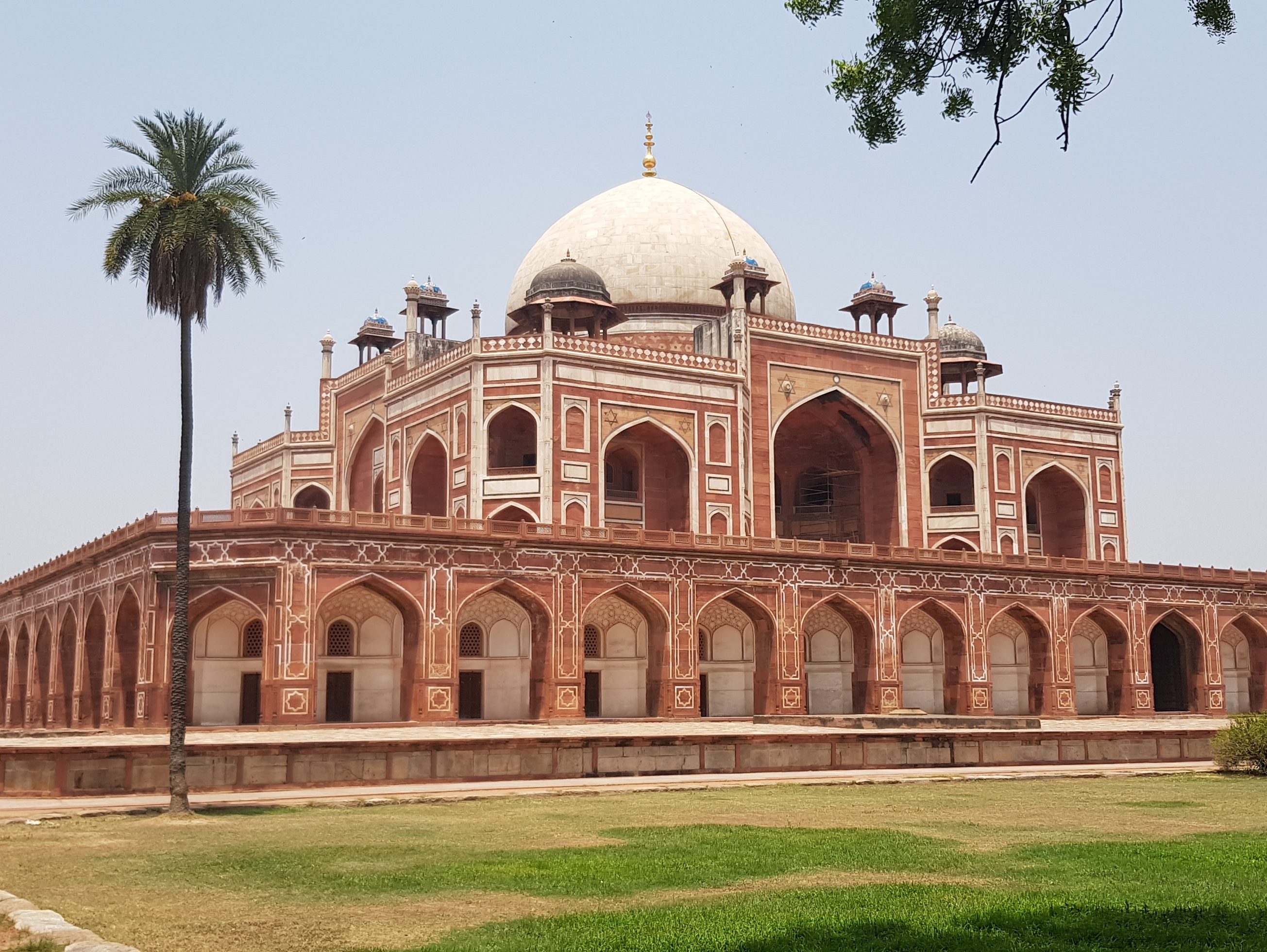
The city was louder, dirtier and more oppressive than any I had ever visited. I was scared and felt isolated, totally ignorant to the cultures and customs around me.
As the tuk-tuk spluttered into life, we careered into the throngs of traffic on the main road. Large and overloaded trucks and buses bore down on us menacingly, only screeching to a halt inches before oblivion, followed by a lengthy sounding of their piercing horn, usually with multiple notes to form some sort of rolling tune.
This introduction to a new country could only be described as less than ideal. However, it was about to get worse as my tuk-tuk dived down a narrow side street with a police road block set up at the far end. This was the end of the road.
I lent out the side of the tuk-tuk, hoping naïvely that I somehow may be able to pick up some of the Hindi that the driver was rapidly gabbling to the officer manning the barrier. Hindi wasn’t a language I spoke even a word of beyond a timid “namaste”. It was no surprise I got nothing.
After a few more exchanges, it was my turn to explain myself to the now English-speaking officer. However, what was said immediately took me aback.
“Sir, I am afraid the road ahead is blocked due to political protests for the elections. You need a permit to get to your hostel on the other side of the protest.”
I was immediately incredulous. Though I had just arrived in India, I had heard plenty of its scams and wasn’t totally ignorant of the fact that I looked like an easy target, wearing western clothes, carrying a large backpack and with my white skin. A back and forth ensued. We went nowhere.
“I would return in a heartbeat”
Out of frustration, I enquired where I had to get a permit from. Almost instantly, the tuk-tuk was reversed and we were careering back down the main roads to the tourist office to obtain one.
Arriving at the shabby tourist office, my incredulity grew. We were ushered inside to the thankfully air conditioned space and I was quickly told that there were no permits remaining for the day. I would have to go to Jaipur that evening as I would be unable to stay at my hostel in New Delhi. Helpfully, they were able to arrange a taxi at the office to get me there as fast as possible.
I walked out, knowing now that, though the elections were definitely on, this was a scam (though I didn’t have an internet connection to verify it there and then).
Via one other similar tuk-tuk experience again taking me nowhere near Paharganj, I made it to the hostel with the third driver of the day. Though I felt vindicated and relieved to have avoided the scams, I was utterly exhausted and, in a sense, wished that I had taken up the offer to escape to Jaipur, no matter the cost.
New Delhi had got the better of me and I was dreading my inevitable return for my flight home. The next morning I took the train to Jaipur, wary as ever of people telling me it was cancelled at the station gates, and resolved to spend the bare minimum of time in New Delhi upon my return. I hated it.

In hindsight, I was extremely fortunate that the trip didn’t play out how I had planned in my head upon leaving New Delhi. I arrived back there nearly six weeks later and was wiser to Indian customs, culture and scams alike. I had three nights.
What I saw was still as loud, dirty and polluted as before, though now I was able to enjoy the dynamism and, without straying into exaggeration, New Delhi was probably the most dynamic of all of India’s cities which I visited.
Where I once looked to take control of situations, I was far happier to roll with the inevitable punches. As long as the trucks and buses stopped short of actually hitting the tuk-tuk I was sitting in, I had turned from terrified to calm.
I was able to look out the open sides of the vehicle and marvel at the streetside scenes, where people and animals from every walk of life mingled with each other, from shopkeepers to beggars to holy men.
Nowhere was this more apparent than Hazrat Nizamuddin Dargah. Almost impossible to find down a series of increasingly narrow covered alleyways, I wandered, hoping vaguely that I was headed in the right direction.
As I walked, endless men at the sides of the passage encouraged me to take off my shoes. Eventually, I did so, aware that this was a Muslim site and, with the number of other shoes lining the walls, this seemed to be the right thing to do.
To my relief, the alleyway quickly became carpeted, saving my bare feet from the pain of New Delhi’s streets. Then the carpet and alleyway both gave way to a large walled courtyard, filled with throngs of people.
To this day I’m not entirely sure what was going on in the courtyard, though I had no doubt that I had stumbled across a very holy site indeed. Many people were eating as I walked among them. Then, walking to one end, I found the tomb of Nizamuddin himself.
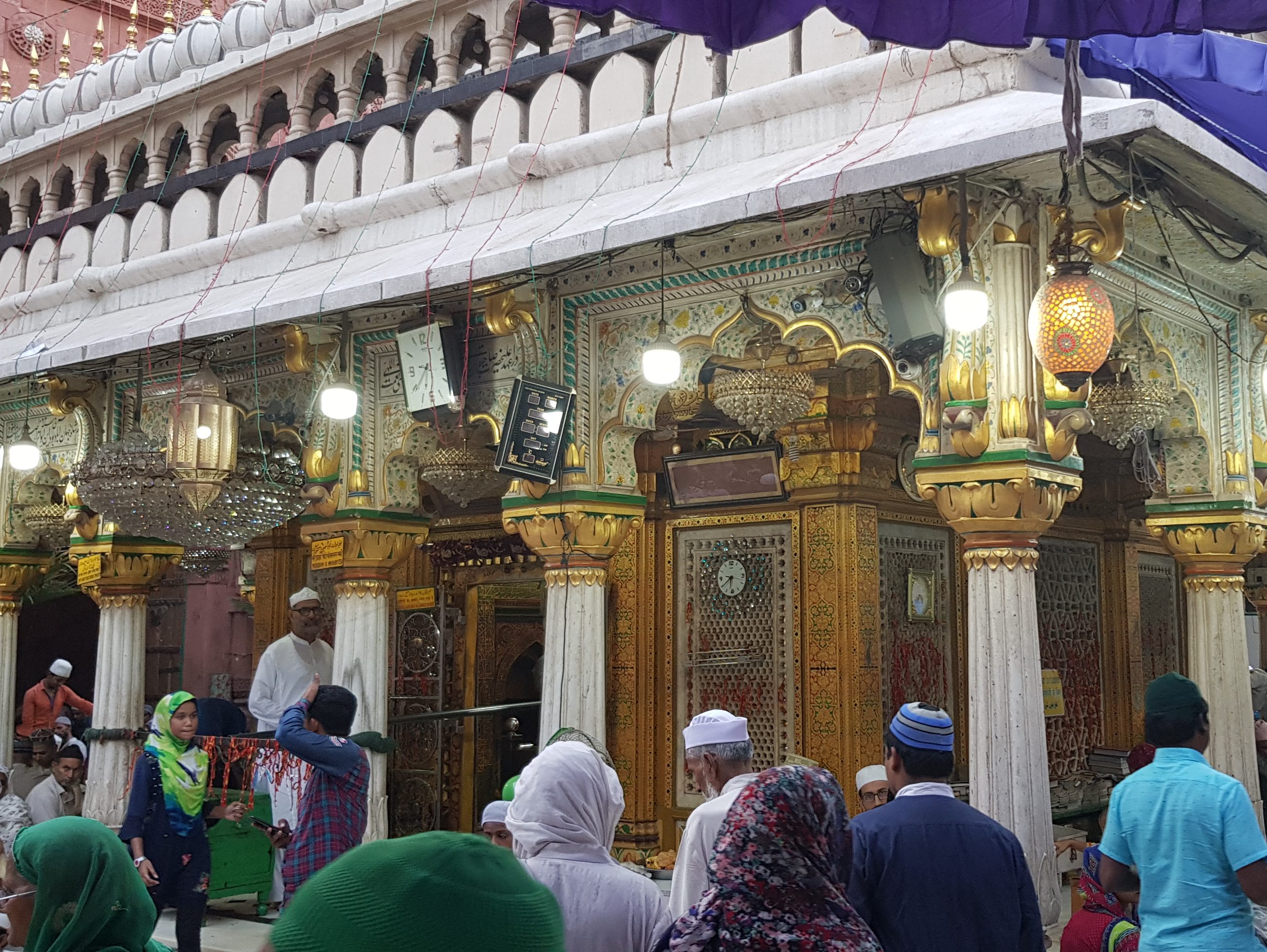
The whole place was set amongst multitudes of minarets and Islamic domes. The ornate nature of the buildings served to ignite my interest in Islamic buildings and architecture, leading to trips to places like Central Asia to further explore the genre.
Much like I enjoyed the noise and dynamism of Hazrat Nizamuddin Dargah, I grew to love Paharganj with its many streetside restaurants, most of which would have made a western food inspector convulse with terror, and its bright neon signs advertising them and the many hotels dotted among the streets.
The city as a whole, despite the overwhelmingly oppressive heat, was a place where things were happening, often too fast for me to comprehend.
The fact that I would never truly understand New Delhi was something I was unable to accept when I first landed in India. Despite never having been to a city with a larger population, I initially felt I should immediately be able to gain my bearings and bend the city to my wishes.
In reality, the reverse was actually true – I had to change for the city to accept me. I knew this would never be completed as a transformation (many years growing up in the UK had put paid to that) but I was delighted that I had changed to the point of being able to enjoy what this great city had to offer.
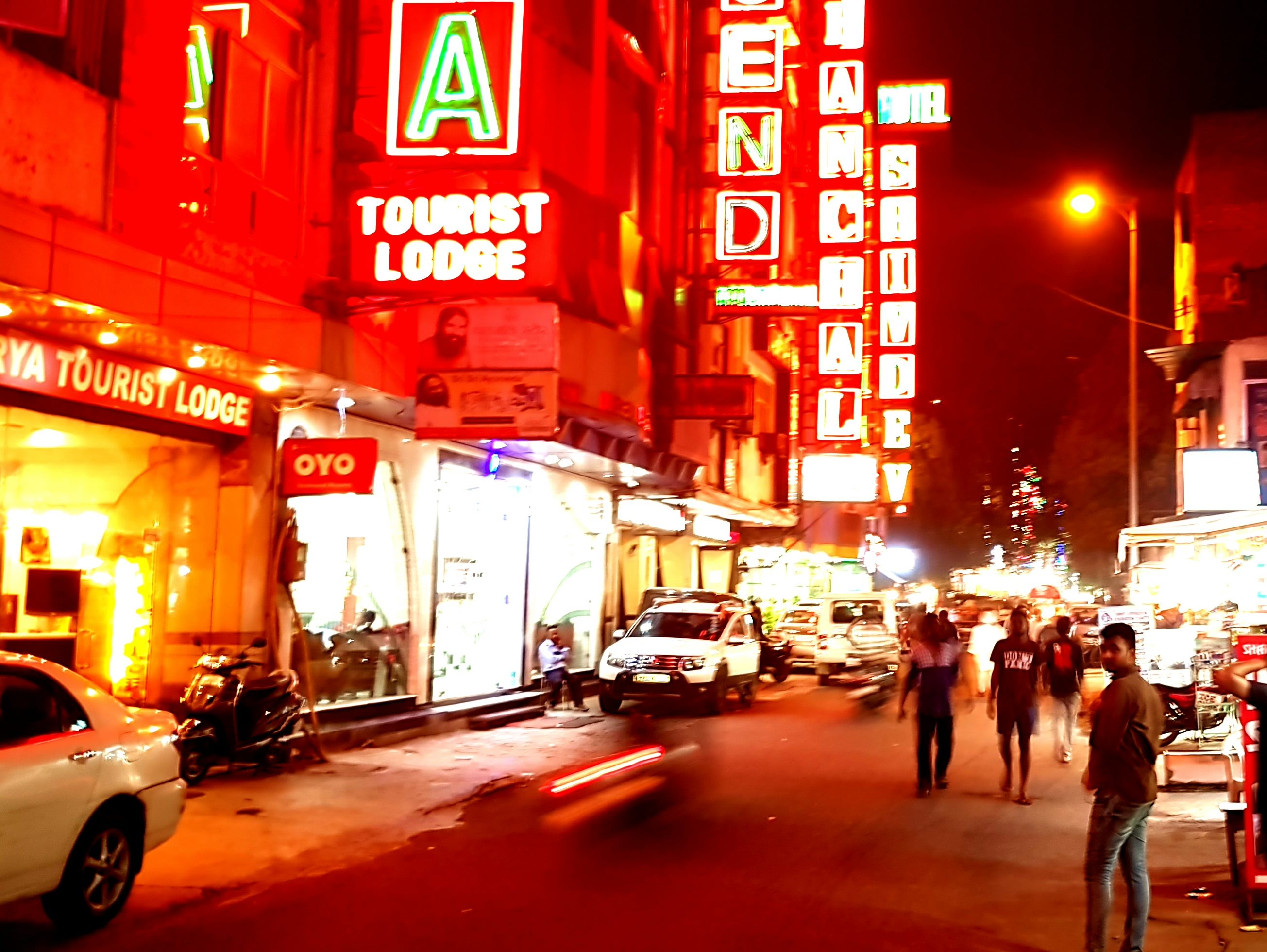
Despite what I have written about my initial experiences of New Delhi, I would return in a heartbeat. I dearly miss the madness of its streets, the chaos as cows roam freely and the endless hassle of someone trying to sell me something I never knew I wanted.
It goes to show that an initial impression of a city is often only skin deep. Writing this now, I wonder how many other places I have been where I have dismissed them out of hand, saying they’re “boring”, “scary” or “ugly”, simply because I hadn’t spent enough time there to actually appreciate (or even discover) what made them unique or special?
New Delhi was a whisker away from being thrown onto that list, though of course I would never have realised it. As it happens, I’m extremely happy that I was forced to return against my best wishes. It was, quite simply, one of the best in the world.
 Into The Elsewhere