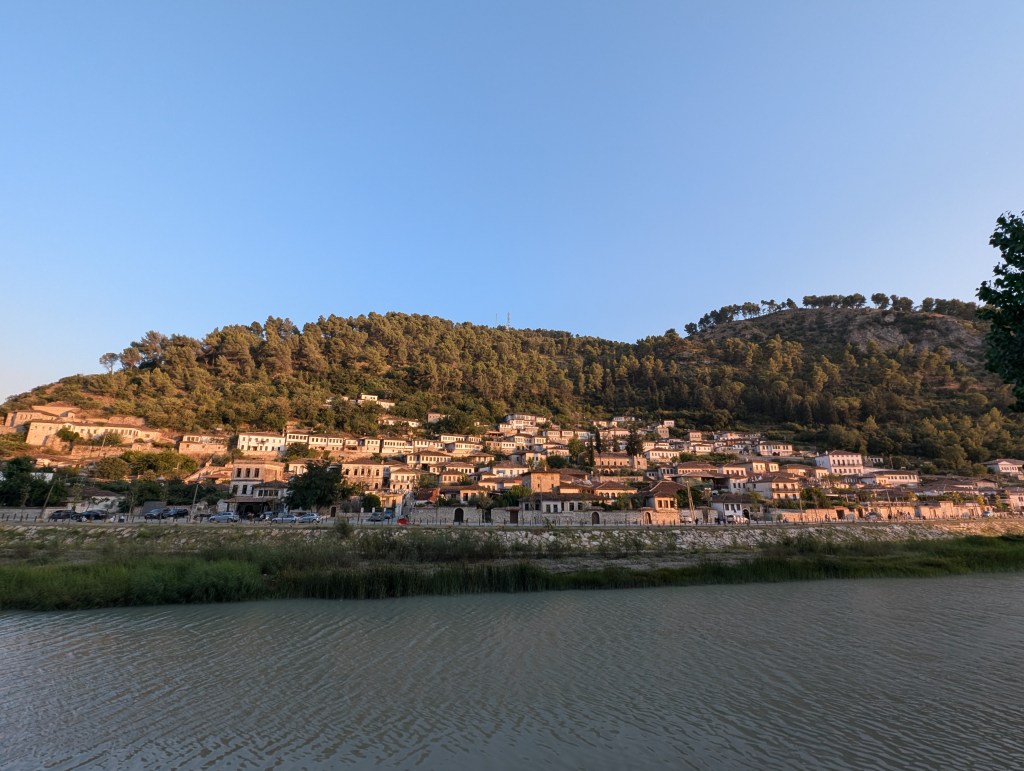
The setting sun set the town ablaze, an orange glow ricocheting off windows and onto whitewashed plaster walls. As the heat of the day faded away, I sipped a cold beer and gently appreciated how the Albanian town of Berat had managed to maintain all of its charm despite the wider tourism boom engulfing the country.
Realistically, Albania is known to many as a coastal destination. At least it’s either a coastal destination or a place with cheap booze and fun bars for those more interested in a city break in the country’s capital, Tirana.
Both of those types of experiences have their place. I must personally confess, I’m not one for sitting on a beach for weeks on end, though I can appreciate the beauty of the Albanian Riviera and its increasingly popular towns such as Saranda.
But that was exactly the issue – they were increasingly well known. A few years ago, the days of Albania (and particularly its coastline complete with shimmering, electric blue waters and white sandy beaches) being undiscovered disappeared. Certainly, from a UK perspective, every man and his dog was heading over on one of the many budget flights that depart from my home country each day.
So how then do you see Albania closest to how it was seen before its tourist boom? Actually, forget that. Can you see the Albania that existed long before the tourist boom; before communism and before the 20th Century began?
I’m talking about Ottoman-ruled Albania. Perhaps due to its proximity to Turkey and therefore the epicentre of one of the world’s great former empires, this was a time when Albania enjoyed a greater standing in the world than it does in the modern day.
Berat, as I visited, harked right back to the time of Ottoman dominance in the region. It goes without saying that, as with any town, a new town of modern and boring apartment blocks had grown up surrounding the old city, which was remodelled in a more Turkish fashion back in the 15th Century.
I was fortunate enough to avoid such blandness and was able to stay in the old town, up one side of the steep valley which it nestled within. Down the middle, a river gushed even in the height of the scorching Albanian summer.
Bridges of varying vintage criss-crossed this river and were thronged with mainly Albanian crowds. Among them were local children running between the legs of their parents and total strangers, couples posing for romantic photos with the backdrop of the sun setting down the valley and groups of friends from nearby Tirana, enjoying a break from the noise of the city in the peaceful surroundings of this historic town.
“Do not assume it was second best to the coast”
In the typical Ottoman style, all the houses were low-rise (usually one- or two-storeys), had whitewashed exteriors with large wood-framed windows and seemed to almost tumble down the slopes of the valley. Between the couples having their photos taken at sunset on the bridges, these whitewashed walls and plain windows reflected the sun’s evening rays and set the town a vibrant shade of deep orange. Berat is known as the City of a Thousand Windows and, on the very first evening there, I could see exactly why.
The transplantation of foreign tourists with those from inside Albania was an excellent omen. As the foreign crowds flocked to the coast, driving price increases, proliferating tourist scams and slowly demolishing the magic and serenity of the local towns and cities (anyone who has sat in a Saranda traffic jam knows what I mean on the last point), the Albanians they had displaced had moved inland to places like Berat.
In short, I knew that this was pretty much the best that Albania currently had to offer in terms of authenticity and quality. Do not assume it was second best to the coast either – at no point was I short of something to do or see as the city slowly revealed its deeper secrets beyond the whitewashed façades.
Joining a walking tour which only had five people in attendance (three of which were my girlfriend, myself and the guide), I began to explore some of the myths and legends which, supposedly, had placed Berat on the map.
The guide, a student who had grown up within the city limits, told of warring brothers, a beautiful girl stuck in a love triangle between them and, when they both killed each other to become the mountains which surround the old town, she cried so much that the river was formed between them.
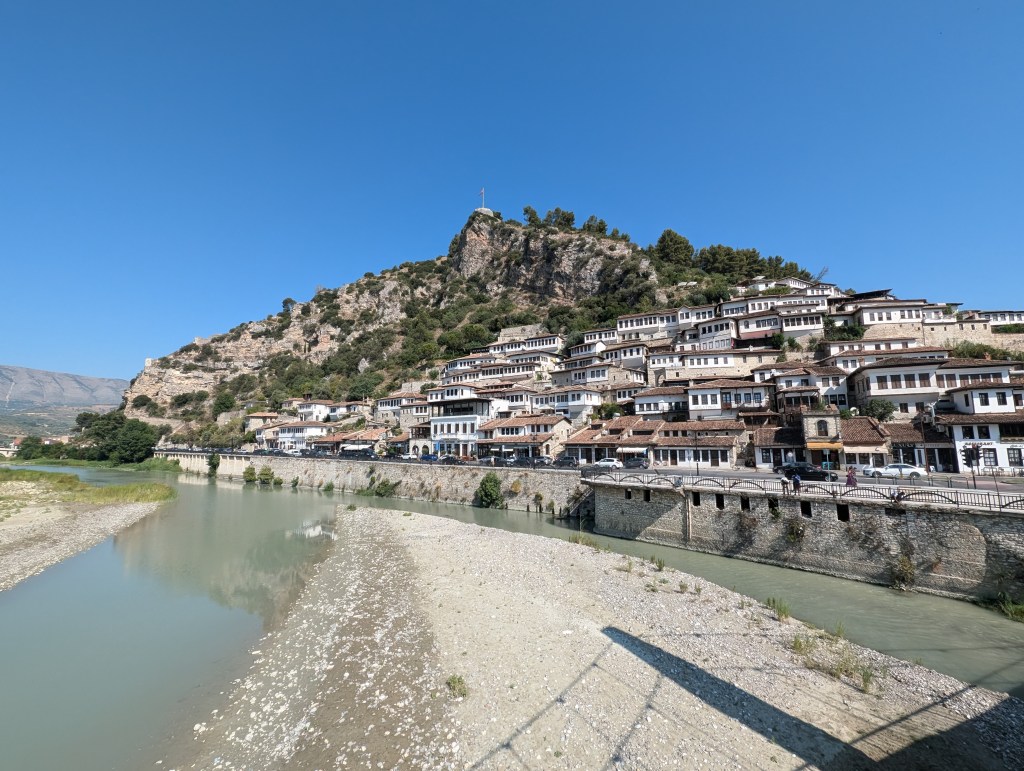
This story was recounted to us having been driven up to the top of one of those mountains, upon which perched Berat Fort. This fortified rocky outcrop provided panoramic views of the town and the valley beyond.
Whether it was due to a genuine lack of tourists or the increasingly roasting temperatures I was beginning to endure rather than enjoy, the fort was largely abandoned and free to explore. Climbing amongst the crumbling walls with the guide explaining the locations of ruined mosques and other structures crucial to the functioning of Ottoman society was as interesting as it was magical. Though there was no sea to cool off in after the tour, I couldn’t help but feel that this was maybe better than anything the coast had to offer.
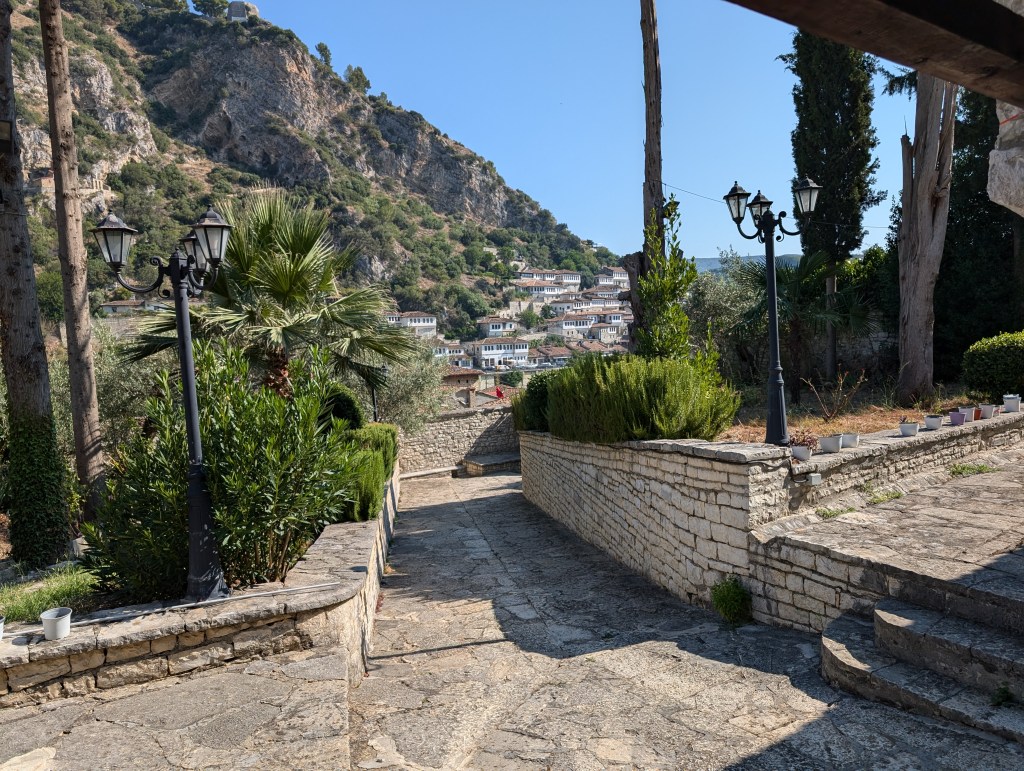
As the tour reached its conclusion at the still-standing gates to the fort, all I wanted to do was to dive back in. Almost child-like, I wandered down every small alleyway which wove between the houses that still stood below the largest (and most ruined) fortifications at the top of the hill.
“Even if the coastline didn’t exist, I would still have been drawn to Albania to see towns like this”
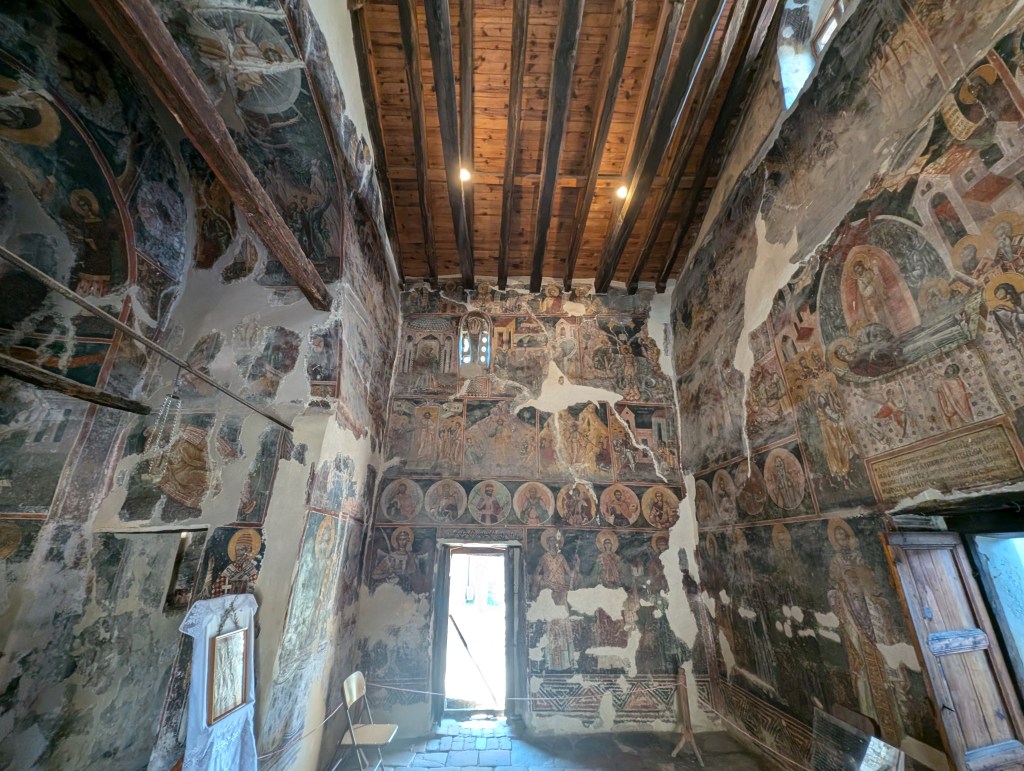
Amongst those alleyways was evidence of Albania’s extremely diverse cultural landscape. Though I’d just been shown the ruins of mosques sitting on some of the most prominent positions, I soon found myself walking over the threshold of a tiny orthodox chapel (it was so small I would hesitate to call it a church).
Despite a drab and totally anonymous exterior which was barely signposted, the interior was covered, floor to ceiling, in frescoed iconography. Though it had been patched quite significantly in some places due to earthquake damage over the hundreds of years of its existence, the colours and clarity of what was left were astounding. The best thing (which was also a relief in such a small room)? My girlfriend and I were alone there.
This really was the theme of the few days I spent in Berat: stumbling into places which deserved mass tourism because of their beauty, uniqueness or cultural heritage which, in reality, saw little to none.
Nothing was overblown for the benefit of foreign visitors. The few tourist shops which were dotted around were quiet, their owners not worried about cajoling wealthy visitors inside to part with large chunks of cash. The restaurants, though by no means empty, weren’t full either.
Equally, those places which I did eat at served traditional Albanian food rather than anything which it was assumed may cater more to foreigners. Specialities such as stuffed peppers, qofte (meatballs) and tavë kosi (the Albanian national dish which combines lamb and yoghurt in a sort of stew) featured on every menu.
Being able to enjoy this sort of food while admiring the view across the town, complete with the impressively consistent sunsets bathing every building in a vivid orange glow, was a privilege.
In the back of my mind, it felt a shame that this was probably the experience I could have had on the coast (in places like Saranda) before the huge influx from countries like the UK. Though I wasn’t fortunate enough to visit the now famous Albanian Riviera before mass tourism, I also imagined that the experiences would have been distinctly unique regardless.
The point is that the mountains and the inland towns of Albania had a draw of their own. Even if the coastline didn’t exist, I would still have been drawn to Albania to see towns like this. As I said, Berat, though it seemed to be the backup option of Albanians, was nothing like second best to anything.
The genie has also been let out of the bottle now. Barring some sort of future freak event, nothing will stop the inevitable march of cities such as Saranda towards the tourism mainstream and, with it, the magic of exploring somewhere which at least gave the illusion of being unexplored has been lost forever.
That was not the case in Berat. Walking around, I was in no doubt that time was ticking and that it would eventually go the same way but, for the time being, this was a place which allowed me to engage a part of myself which quietly wishes that I lived in a bygone and less connected era. An era when travelling was difficult and names like Berat would have been greeted with a quizzical expression by most anywhere beyond the borders of the Ottoman Empire.
Whether I like it or not, that era is also far gone. It doesn’t stop places like Berat making me wonder.
 Into The Elsewhere