There aren’t many cities (outside of the USA at least) that would openly advertise the opportunity to fire an AK-47 to those attending a hostel bar. Thinking about it, and without the benefit of hindsight, my list would extend to Russia, maybe the odd Stan and just perhaps some of the rougher parts of the likes of Vietnam. I certainly wouldn’t have guessed a little-explored corner of the European Union. I wouldn’t have guessed Tallinn.
Still, there it was. In plain sight, an unashamed notice offering the chance to (likely British) tourists to fire pretty much everything short of a rocket-propelled grenade, slickly arranged into packages and at extremely reasonable prices.
Despite being a British tourist in Tallinn, the Estonian capital city, and therefore, I assumed, the key target market for this slightly alternative attraction, I am afraid to say that I didn’t have a go. Either I was too chicken or too enthralled by what the rest of the city had to offer.
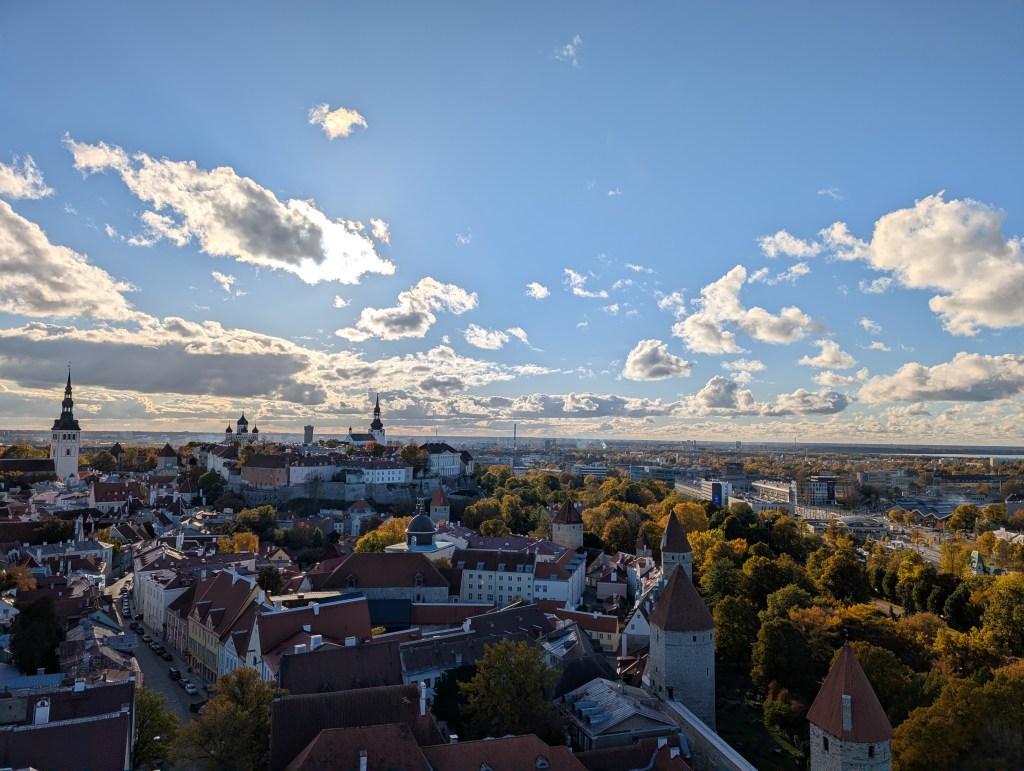
The presence of an advert like this in my hostel’s bar was more of an indication to me of the sort of place I had arrived in than almost anything else. Over my few days in the Baltic’s northernmost large city, just a stone’s throw from St Petersburg, the city gave an overwhelming sense of being tough, serious and extremely resilient.
There was a sense of immovability, an important trait I can imagine when you are so mightily overshadowed by Russia and in such close proximity to a state governed by one of the world’s villains. A villain who has made absolutely no secret in his desire to invade at some point in the future.
“Instead of being welcoming, people felt resolute and hardened by their surroundings”
I had heard about some of the Estonian people’s (entirely justified) concern about their imperialist neighbour before boarding my flight from London. Indeed, I had read headlines just a month or two before talking about how Russian jets had violated Estonian airspace, causing NATO forces to be scrambled in defence.
This made me nervous. Was I about to step into a city engaging solely in the serious and tough business of preparing itself for war?
This question was swiftly and emphatically answered as soon as I found myself going on a walking tour during my first afternoon in Tallinn. The answer? Not a bit of it.
Being led around a beautiful, medieval old town, complete with cobbled streets, tall stone walls and numerous churches wasn’t a unique experience in itself. What made it unique was the tour guide, George, reenacting each piece of his tour using people he had picked out of the crowd while he was dressed in full period costume.
This was a less than serious experience, though it is something I’m unlikely to forget among the multitude of walking tours which I’ve done while travelling. Any questions of war with Russia evaporated as we were toured around, with scenes re-enacted of medieval daredevils tightrope walking between towers and cats being thrown into wells at the behest of monks to improve water quality for the growing city (just a hint on that last one: it didn’t work).
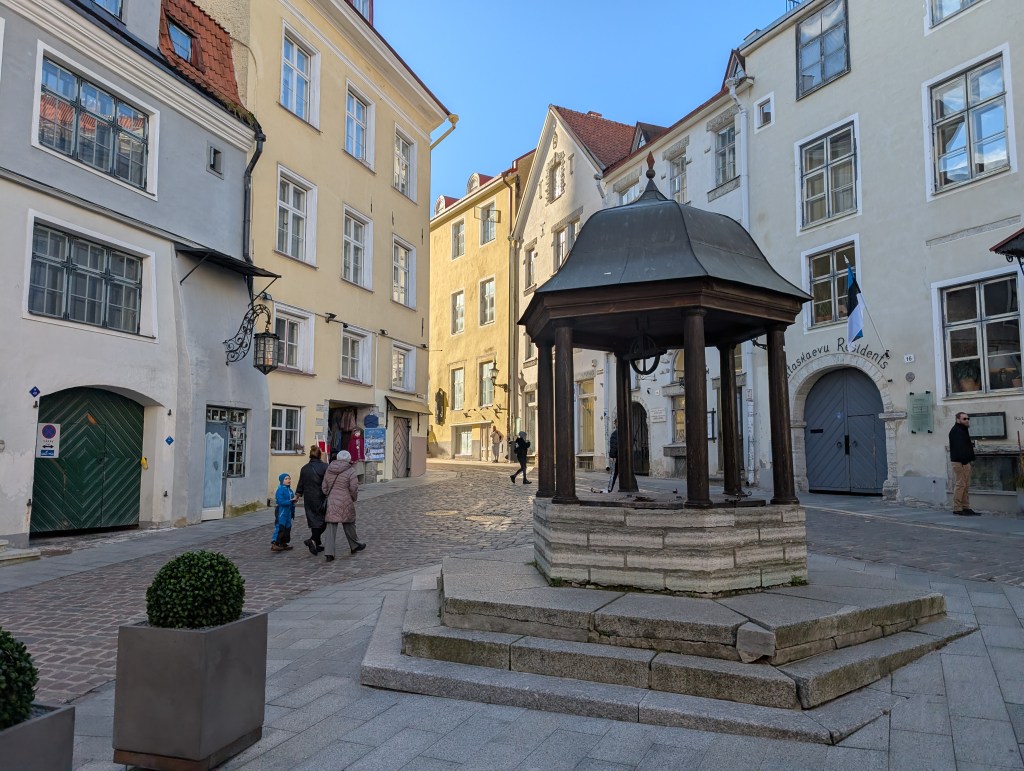
That is not for a moment to say that the tour was reflective of the general population of Tallinn. At the very least, nobody else was dressed up in medieval clothing, mostly because it must have been extremely chilly if you were.
In general, the people matched my pre-flight expectations rather more, though not in an entirely negative sense. Yes, there weren’t many smiles from many people but then again, could I have reasonably expected that, considering Estonian culture?
This was a culture which is sandwiched right in between Scandinavia, Russia and Northern Europe. Instead of being welcoming, people felt resolute and hardened by their surroundings. In a sense, I liked it that way – the bitter cold and early sunsets weren’t conducive to large gatherings of overly-smiley, extroverted people. It was more an atmosphere which encouraged sitting in a bar with friends to play a game of cards, which I was all too happy to engage with.
This sense of seriousness and the presence of a resolute attitude was extremely apparent on the occasions when I chose to venture outside of the city walls.
The areas outside the walls were dominated by much more modern buildings than the medieval townhouses inside the walls. Chief among these was the Linnahall, a vast, derelict complex which lay low to the ground, its squat stance only reinforced by the extensive brutalist concrete facades which had, over the years, been covered with graffiti.
At one point, this had been an Olympic venue, when it hosted events for the 1980 Olympics. More recently, it entered the public consciousness as the stage for the opening scene for Christopher Nolan’s Tenet. For me, it really captured the sense that I got from the more modern side of Tallinn.
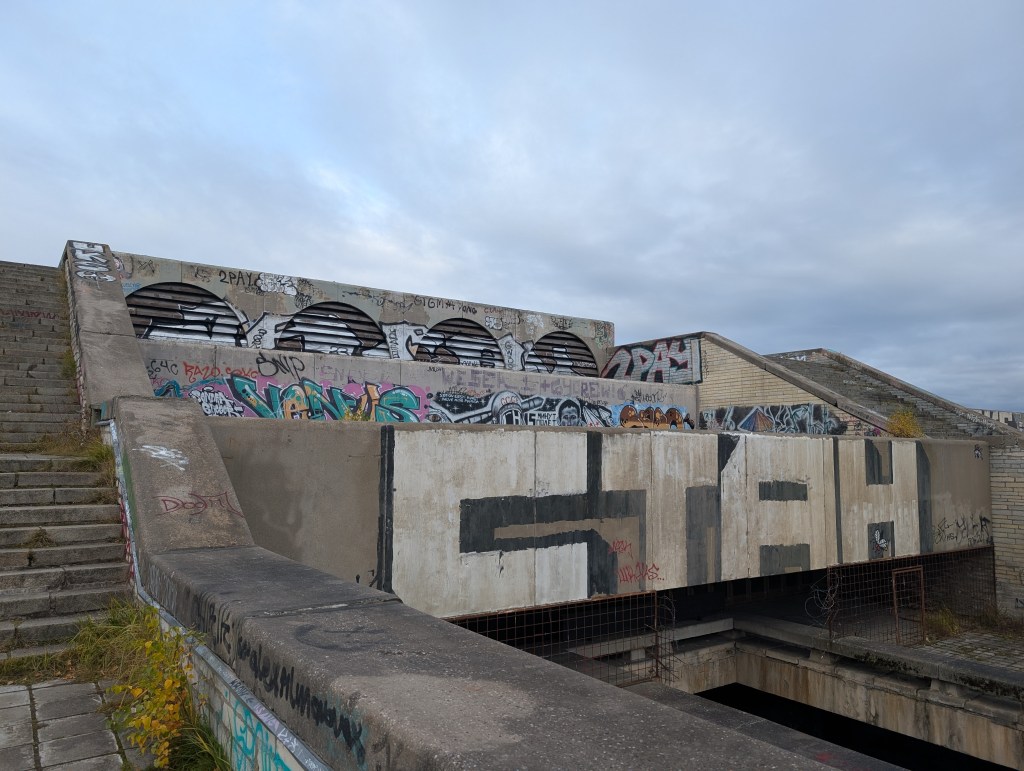
This was a city that, despite its relatively small size, was clearly capable of vast, impressive, even imposing structures. It was the city at its most serious, despite the graffiti which adorned its walls suggesting otherwise.
Although I don’t count myself among the ranks of people who like the brutalist style, I thought it was also oddly appropriate for a city like Tallinn. It gave what was, historically, a concert venue which played host to the likes of Duran Duran or ELO, a more monumental stature unlike any venue I had seen before. In that sense, it blended perfectly with the people of the city.
That said, the Linnahall was also a relic of a bygone era for Estonia. Like most of the cities in Eastern Europe, it had to endure life under Communist Russia and it was only at the behest of Moscow that the vast concrete slabs of the venue were poured.
Fortunately, just down the coast from Linnahall was an expression of the country which Estonia has become since it gained independence: Port Noblessner.
“It was young, vibrant and, frankly, somewhere where I was more than happy to stay for a very long time indeed”
This was perhaps the most surprising and pleasant area which I visited, with waterfront shops, bars and apartments built from derelict industrial port infrastructure, all connected by a series of pedestrianised streets, it was a treasure trove of quirky art installations, excellent coffee and nice areas to sit outside (which I would have enjoyed had it not been so cold).
It showed me how far Estonia has come since the darker days of the 90s. Developments like Noblessner were dotted throughout the city and all showcased quite how far a country can come once it is released from hardship resulting from occupation. Yes, most of Tallinn (the odd walking tour guide aside) gave off an impression of toughness and readying itself for adversity. This, though, was the antithesis of that atmosphere.
It was young, vibrant and, frankly, somewhere where I was more than happy to stay for a very long time indeed. In so many ways, it reminded me of far better known and more touristy cities such as Copenhagen. The only difference was the relative emptiness of my surroundings. Certainly, it had been built with Estonians rather than visitors in mind.
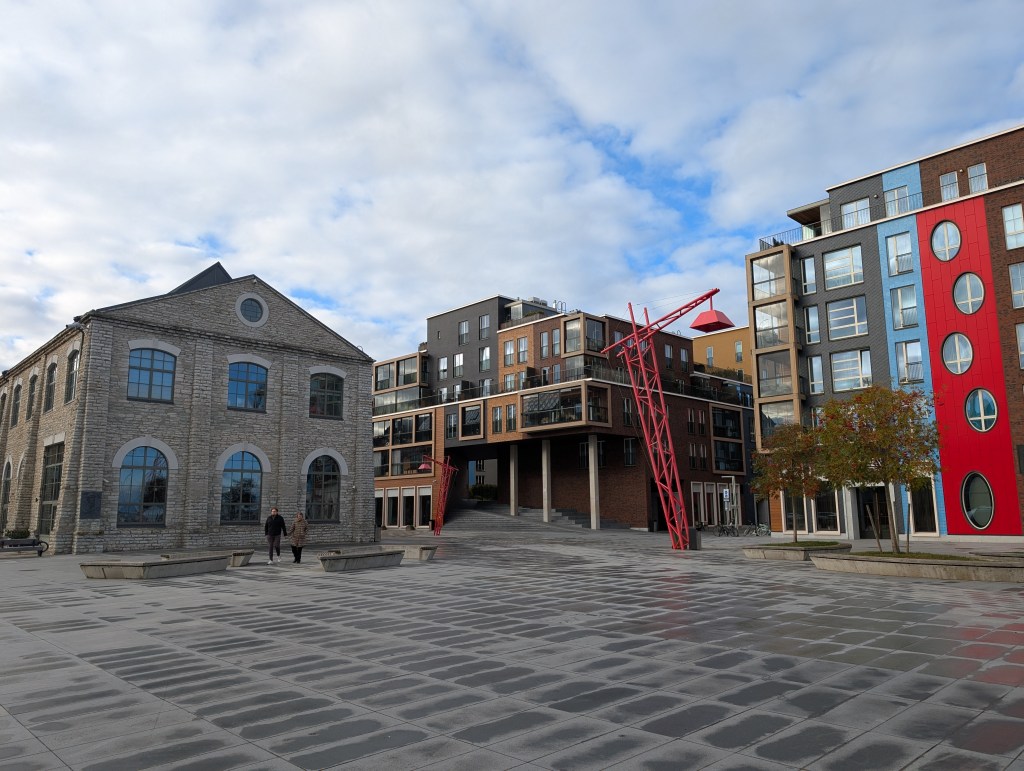
Visiting areas like Noblessner (and the equally impressive Telliskivi Creative City) was a compelling counter-narrative to my preconceptions of Tallinn. It broke up the bleakness which the city would otherwise have been consumed by.
As I left, I concluded that, if Estonia is at some point attacked by its noisy Russian neighbour, as I was worried they would be paranoid about when I landed, my visit to Tallinn proved that this was a country that perhaps had been preparing its whole life for something along those lines through the attitude of its people.
Indeed, while on the walking tour George pointed at the tallest church spire in the city, belonging to St Olaf’s Church, which was once the tallest building in the world. He explained that it had been struck by lightning no fewer than ten times, being rebuilt on each occasion. Though this was a nation which no longer had to endure hardship as it did when it was behind the Iron Curtain, it certainly had past experience that had become ingrained in the Estonian psyche.
From its monumental, immovable architecture to its fortified walls and the tough Baltic people that lived inside them, the city wasn’t going anywhere. It just made it all the more remarkable that, in the face of such potential adversity, the city hadn’t lost its sense of fun or purpose.
 Into The Elsewhere