I took one look up at the sky out of the window and breathed a huge sigh of relief. The clouds had darkened, blocking out all sunlight and replacing it with a brooding, ominous gloom. It was going to rain. Hard. From the safety of my hostel common room, as the first droplets splashed against the windows, I was glad not to be in the mountains above.
The downpour that ensued was a warning to me. A warning to respect the power that the Tian Shan Mountains would have over me as soon as I decided to venture from my safe haven and into the Kyrgyz wilds. This was a place where, as with many mountain ranges, the weather and other conditions can change with the snap of a hiker’s fingers. Summer sun would become winter snow and soon after a spring downpour.
“If this was a job application to become a hiker … I’d have been laughed out of the building”
Not that I knew it of course, staring out the window with a dull sense of trepidation sitting heavy somewhere within my throat. My plan? Head up into the mountains, from the town of Karakol in the direction of the Karakol glacier and up to Lake Ala Kul. I would be alone, clutching a booking slip handed to me by a receptionist which I had been informed was my ticket to stay in a yurt somewhere on the path.
This was to be a journey of discovery; at the time, I wasn’t what you would call outdoorsy. I had never hiked by myself and, apart from the odd European skiing holiday, had never even existed at an altitude of more than 2000 metres, let alone the 4000 metres that I had set as a goal in my mind. Previous experience included a nice summer’s jaunt up Ben Nevis with a couple of friends a couple of years back. I wasn’t even totally sold on the idea of hiking full stop.
If this was a job application to become a hiker in the Kyrgyz mountains, I’d have been laughed out of the building.
Still, I wanted to give it a go, having heard how the mountain valleys which sat above Karakol were unspeakably beautiful, mainly from people speaking about it in the hostel bar the evening after their hikes.
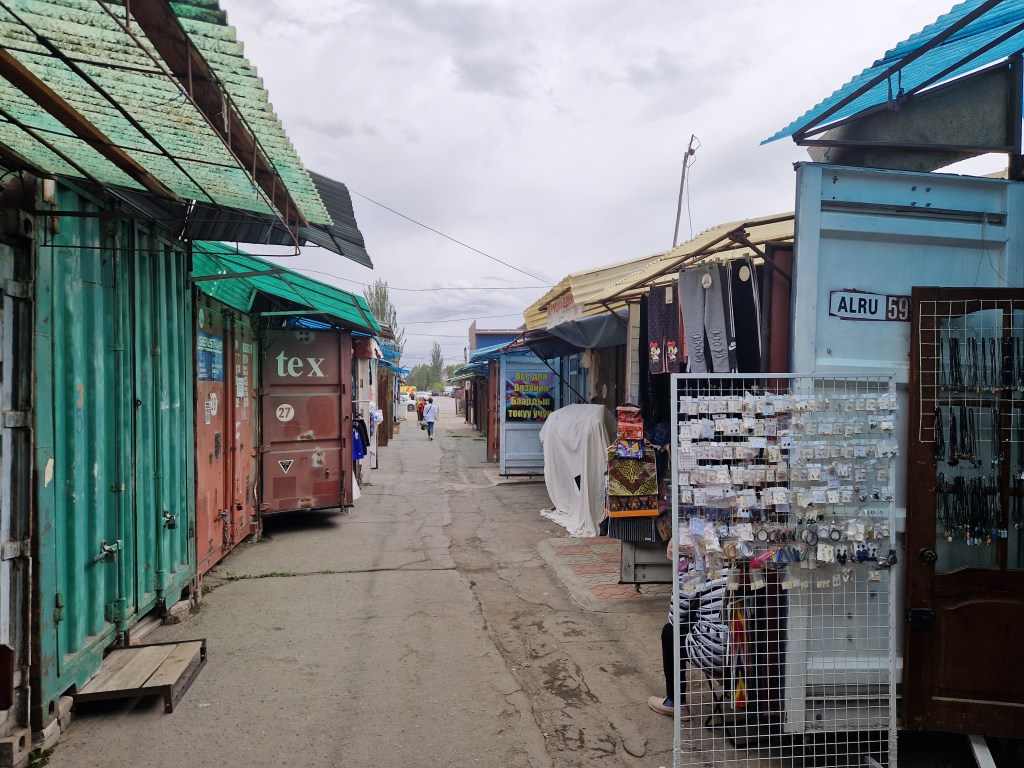
With the downpour abating, I ventured outside where once bone dry roads and pavements were now dotted with deceptively deep pools of water as the town’s drainage systems had given up the ghost. Heading to the shop, I grabbed a few packs of nuts, a large five-litre water bottle (if it can even be called a bottle at five litres) and a couple of loaves of Central Asian bread which sort of resembled a car wheel and had sustained me for the last few weeks just fine. All of this I intended to cram into my small daysack to avoid carrying pointless kilos of dirty laundry from the previous few days up the mountain with me.
I went to sleep that night nervously checking the weather forecast and wondering how my mind and body would cope with such a large step into the unknown. Thoughts of altitude sickness, dehydration, hypothermia and any other number of grim ways to die miserably all crossed my racing mind. Sleep was somewhere between difficult and impossible.
Waking up the next morning, I donned a pair of shorts, T-shirt and hiking boots, praying that the waterproof coat, which I had picked up days earlier in Bishkek, would be sturdy enough if a repeat of yesterday’s downpour happened as I stashed it amongst the food and water in my bag. The next thing I knew, I was in a rickety jeep bound for the trailhead.
Having been bounced around endlessly by the potholed and dusty track which ran along the first portion of the valley, I was glad this half-hour ride passed fairly quickly. Even so, being dumped unceremoniously and knowing that I had to fend for myself from this point forward was a daunting notion. As the jeep disappeared in a cloud of dust back down the track, I was suddenly extremely alone.
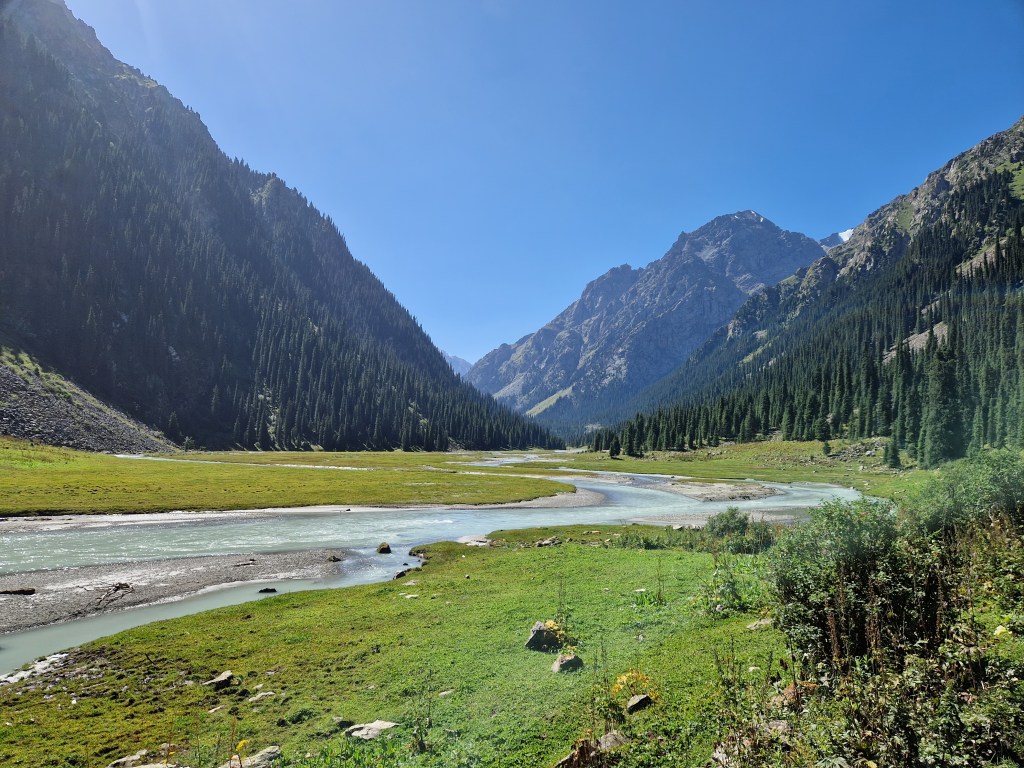
Fortunately, my mind was too preoccupied with my surroundings to worry or care about the thousand ways to die which I had mentally cycled through the night before.
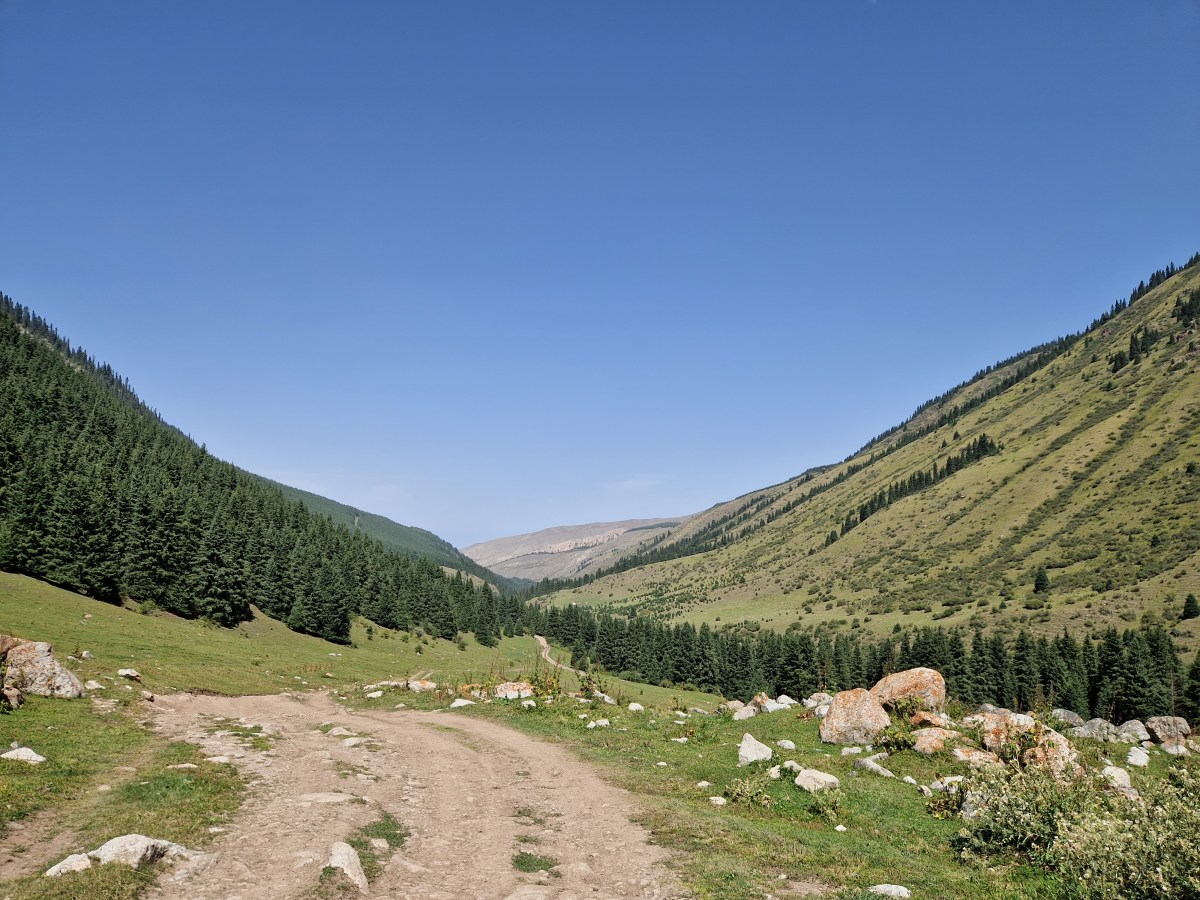
As the track ran alongside an ethereal, intensely blue river, the mountains surrounded me on either side. Covered in pine trees at this point, the whole scene was positively Alpine yet possessed a greater sense of scale and was home to far fewer people than you would expect in Europe. Keeping to the steadily narrowing track, I started to make my way up the valley to the sound of rushing and gurgling water and my boots crunching against the gravel surface.
This was a far cry from Central Asian cities to which I had become accustomed. The pace of life seemed slower and less hectic. Peace permeated through my body as I relaxed into a rhythm, appreciating how the remoteness of my surroundings meant that most of the noise, stress and bustle of normal human existence now didn’t apply. There was nobody hassling me to eat anywhere, buy anything or behave in a certain way – it was a place where I could just exist as myself.
“The region was growing with me”
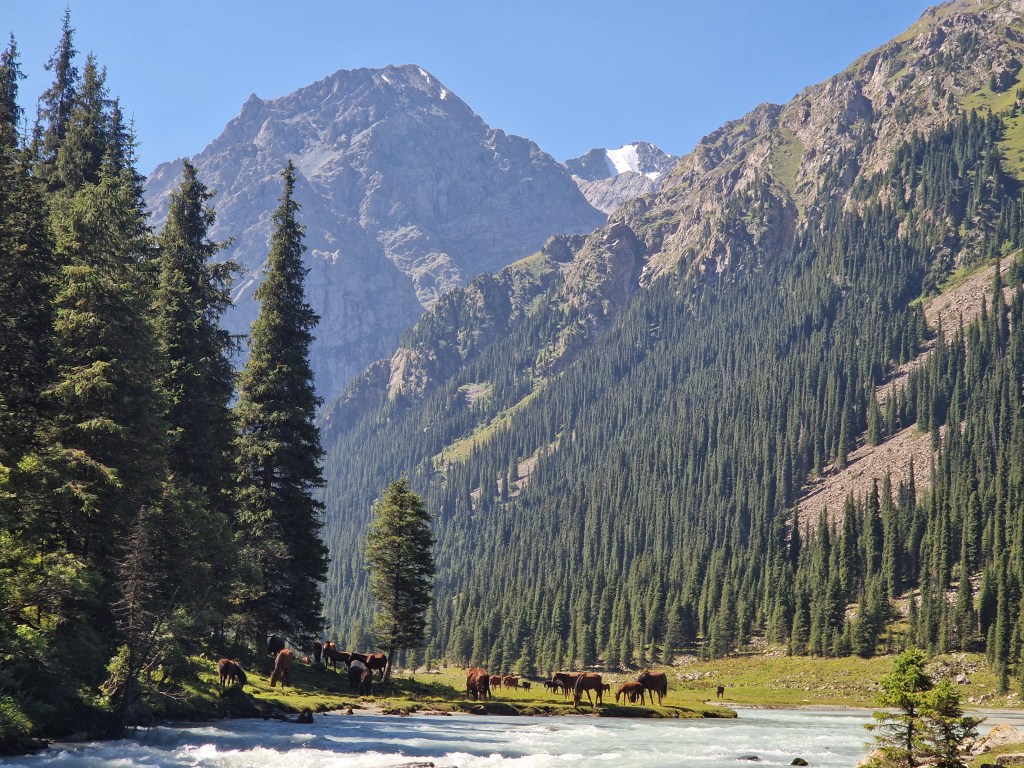
Before too long, the valley floor began to widen, splitting the river into many different branches, all interwoven with each other. Upon the gravel islands which split the streams and in the grassy meadows further afield, wild horses grazed sedately under the sky mottled with wispy clouds. On more than one occasion, I couldn’t help myself but to stand and admire my surroundings, chuckling to myself as I did.
The whole experience was quickly becoming something of a hiking epiphany. My daysack, still weighed down with not insignificant amounts of water, food and the few other items I hadn’t left at the hostel, shouldn’t have felt light on my back but somehow did. I was quickly realising how transformative natural beauty was in the hiking experience. I felt a connection with my surroundings, much more eager to explore them than I had ever been when outdoors at any point in my life.
Even so, there were times where I was happy to forgo natural, untouched beauty for some human intervention. At the point that I was due to deviate off what was left of the track and start climbing in earnest towards the camp, I was happy to find a small shop and somewhat precarious wire bridge across the gushing torrents of glacial meltwater.
The rudimentary nature of these small structures showed me how this was a region which was growing in stature on the tourist circuit. I had little doubt that, a few years ago, even this may not have existed. Equally, a few years after my visit, I was sure that the reverse would be true and the levels of infrastructure would be greater to improve accessibility and increase tourist revenues. As much as I was growing as a person with my burgeoning appreciation for the mountains, the region was growing with me.
However, the following section was sure to test my convictions, both personal and about the area I was in, as the path climbed much more steeply up towards Ala Kul Lake. The 4000 metre high pass above the crystal blue lake was my ultimate goal; a tick in the box for a successful mission.
Down to a single track and passing through woodland and meadows with grasses high enough to block the view of the surrounding mountains, this section of the hike was certainly less aesthetically pleasing on the eye. My lungs strained as I kept gaining altitude, venturing far higher than I’d ever been before. The mission of reaching the yurt camp, just below the lake, was clear in my mind.
When the gradient flattened and the trees parted, I caught sight of the white, domed yurts which signalled the end of the day’s hiking. Rudimentary in nature, it was clear that this was a camp which was limited by the capacity of the owners (and quite probably their horses) to carry all of their kit up the steep, single-track path which I had also steadily panted my way up.
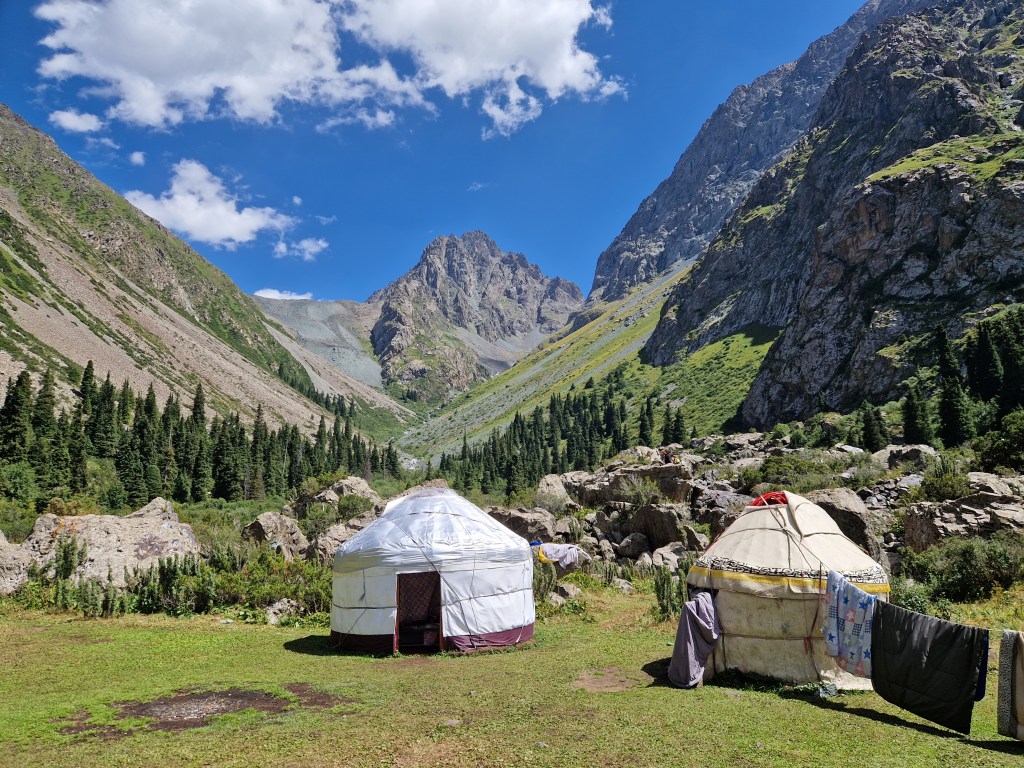
Handing over the slip of paper given to me at the hostel, I was led to one of the yurts which was to be my bedroom for the night. This was closely followed by the news that I was to share it with two other people, when there was a reasonable argument to be had that it was only suitable for one, let alone three. Without going into many details, the toilet facilities followed a similar theme and could be smelt before you saw them. Wrappers and other miscellaneous plastics also littered the ground.
As much as the camp epitomised much of what I was trying to avoid when I headed to the mountains, this was also symptomatic of a region which, in growing and opening up to tourists for perhaps the first time ever, was also suffering from growing pains. On that front, I could certainly empathise, feeling that I was on as much of a personal journey as the region around me. The difference that night was that my journey had been much smoother than that of the Kyrgyz mountains. That would change the following day.
This is the first part of the article – part two will be published next Sunday at 9am UK time.
 Into The Elsewhere