With the advent of budget airlines, followed by an ever-increasing number of flights across Europe to lesser-known and lesser-explored countries, the face of European tourism has changed completely. In the not-too-distant past, Italy would have been the peak of exotic. No longer. Now, with a couple of exceptions, no country is off limits.
This is why I ended up in Montenegro. Once firmly situated behind the Iron Curtain and in the grips of the communist USSR, pictures of its coastline are now plastered over the travel pages of Instagram. As someone usually cynical about places that feature heavily on social media, I made a rare break from my habits and headed right into the middle of the influencer frenzy: the port city of Kotor.
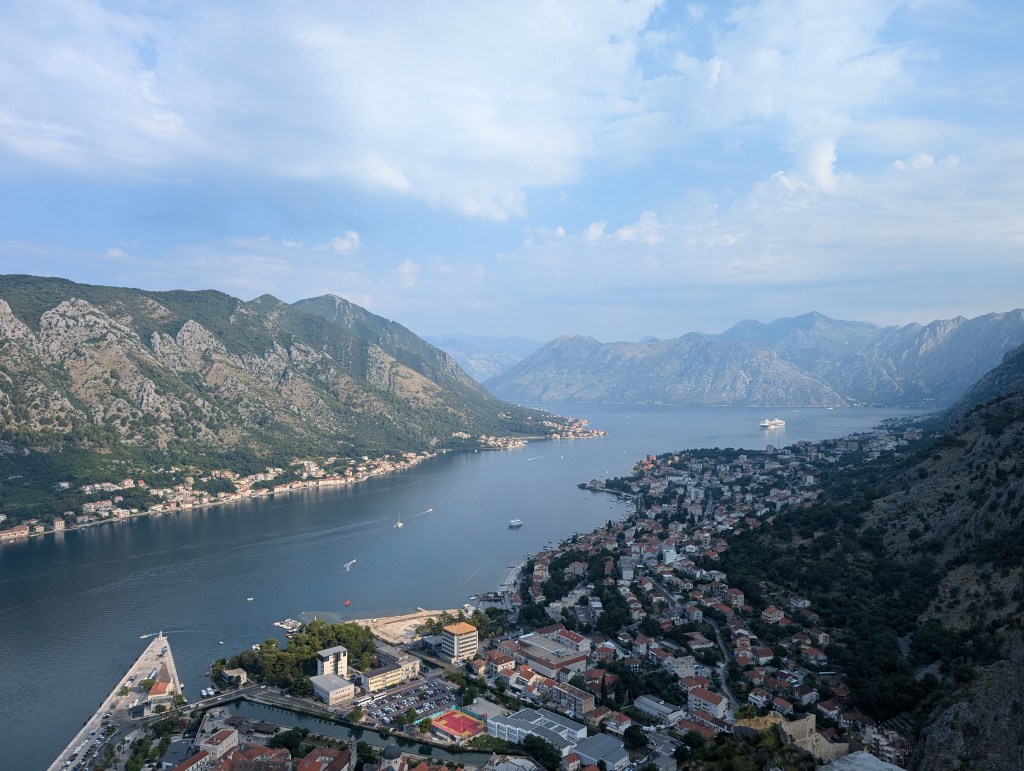
Arriving in a daze following a frankly grim overnight bus ride (complete with intimidating 2am border crossing) from Belgrade, Serbia, I wasn’t too concerned that this wasn’t a place that was “yet to be discovered” by the tourist crowds. I was just after a level of comfort and a nap, having had next to no sleep on the oppressively cramped coach.
The city had other ideas. When the bus dropped both me and my girlfriend off at the edge of town bus station, a quick Google revealed that the Airbnb we had booked was on the other side of the old town. All that stood between me and the bed I sorely wanted was a fifteen-minute walk.
“A tourist heaven had become a crowded nightmare”
In the early morning, this was a fairly magical experience. Passing through the ancient city gates, situated right beside the harbour, we were instantly transported back in time. Concrete was replaced by large stones, tarmac by cobbles and any form of vehicle disappeared completely. The narrow streets and small squares which were dotted between them were almost absurdly picturesque.
It felt welcoming, to the extent that I was more than happy to find a seat at a restaurant and have breakfast, looking out onto one of the leafy squares and watching the world go by. In that moment (and despite the bus) there was very little wrong with the world. The Airbnb could wait.
Even so, the bad omens were present. As much as I had chosen to ignore it upon my entry to the old town, the harbour was almost entirely dominated by the largest landing stages that I had ever seen. Not being someone who frequents cruise ship ports, I was at the time slightly confused as to the function of this enormous strip of concrete stretching out into the azure waters.
In many ways, much of what made the old town charming was also the exact reason for its downfall. Those narrow streets, lined with shops selling trinkets typically dotted with blue evil eyes, were not suitable for mass tourism. The idea of a cruise ship docking and offloading thousands onto the medieval streets for a day was not something I was looking forward to.

The following day, the expected effects were sorely felt as two of the behemoths sailed into the secluded bay, one anchored off the coast and the other moored at the enormous landing stage. The gentle hum of tourism, with people sitting at cafés and restaurants around the edge of squares, became a roar. Queues for the best restaurants stretched along the streets and throngs of people fought to make their way through the tightest bottlenecks.
A tourist heaven had become a crowded nightmare.
The only means of escape was to wake up early enough to see the sights before anyone else had risen and flooded all of the best viewpoints, cafés and attractions. Nowhere was this more important than when we decided to visit the fort that overlooked the town and the rest of the bay.
Even then (and having made the steep climb up before the heat of the day and in the vague hope that we would be there before anyone else), many tour groups had the same idea. Atop the ruined grey stone structures were hundreds of people, all looking out over the view of the still picturesque bay that was surrounded by soaring mountains. As much as the view was still stunning, any sense of seclusion at any time in Kotor seemingly evaporated long ago.
It was easy to see why. This was a destination that, just a few years ago, was emerging onto the European tourism circuit. Whispers of unimaginable beauty without the cost associated with better-known destinations like Dubrovnik or the Italian lakes were plastered all over social media. As soon as those whispers became shouts, the prices rose and the atmosphere surrounding Kotor was shattered.
“It was an antidote to the claustrophobia of Kotor”
I knew there had to be a better way. Though we weren’t planning on staying in Montenegro long, I was determined for my impression of the country as a whole not to be tarnished by the spectre of over-tourism.
This was why, the following day, we found ourselves on a bus heading away from the coast with its stunning mountains and bays. Our destination was a city called Cetinje, the former capital city of Montenegro.
As soon as the bus had cleared the traffic jams stretching both into and out of Kotor and the nearby resort town of Tivat, I instantly felt more relaxed. This was a different, more chilled out version of Montenegro; one which was far more suited to the baking hot Adriatic climate which stretched right across the country. Away from the manic coastal towns, life was much more sedate.
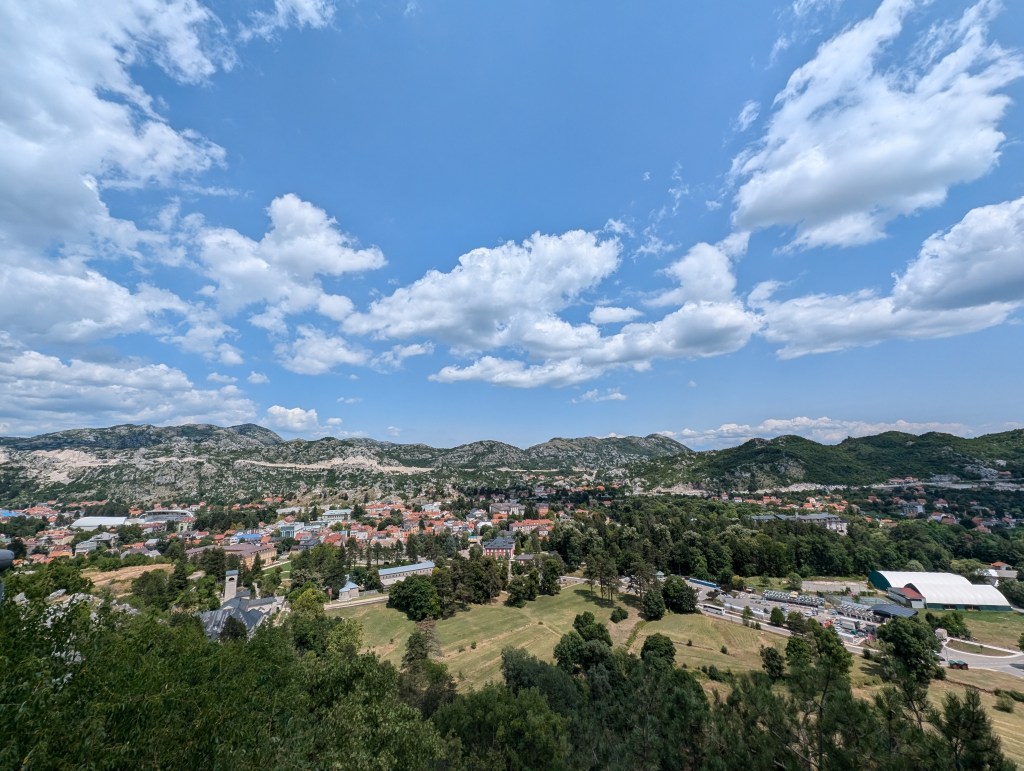
Stepping off the bus and into the middle of Cetinje, this theme only continued. It was the sort of place where rigid opening hours were never observed and nobody walked faster than a gentle stroll down any of its tree-lined boulevards. Granted, it didn’t quite have the stunning surrounds of Kotor, with the dramatic mountain landscapes dropping directly down into the brilliantly blue waters below. Instead, the beauty of Cetinje was in how it provided the perfect balance to the coastal towns.
In essence, it was an extremely welcome break from the crowds. With the wide, pedestrianised street running through the town centre and larger, leafy squares, it was an antidote to the claustrophobia of Kotor.

It also felt like a more realistic vision of modern-day Montenegro. While this was a place worth visiting for tourists, there were still people busily going about their daily lives, with shops geared much more to locals than those from abroad. This was also reflected in the restaurant prices, which were far lower and more in line with what could be expected of the Balkans.
In some cases, the seclusion became almost extreme. As we climbed a hill to get a view over the town and surrounding mountainous landscape, any semblance of a crowd disappeared and we were soon the only people on the road to the top besides a few workmen digging a trench on the way up. Where in Kotor a view over the town would have immediately been swamped by tourist crowds, we were alone at the summit viewpoint over Cetinje.
However, all this is not to claim that the ex-Montenegrin capital was perfect in every way. Indeed, it was abundantly clear that the country was still trying to catch up with the increases in tourism it had seen over the years preceding our visit as, for example, all the museums which were dotted around Cetinje appeared to be undergoing various forms of renovation and restoration. Frustratingly, this included the Montenegrin National Museum which was one of the biggest motivators in persuading us to go in the first place.
That said, as much as the experience was personally frustrating to us, it just went to show that this would only become a more attractive place to visit within Montenegro in the future. It was clear that the government saw the city as the country’s cultural hub (especially as we later visited the capital, Podgorica, which most definitely wasn’t). The level of investment and thought going into Cetinje was plain to see.
I have no doubt that this was similar to the levels of investment poured into places like Kotor in years gone by. Even so, I was confident as I visited that, while Kotor was something of an overwhelming experience, Cetinje never would be – the presence of the cruise ship port at Kotor would always maintain that status quo.
Overall, I wouldn’t not recommend heading to Kotor. There is absolutely no denying that it’s an extremely beautiful place and almost certainly one of the highlights of the Adriatic. It may well also be that we had just unfortunately coincided with the peak summer crowds descending on the city, overcrowding its streets and bringing the ancient walls to bursting point. Even if that was the case (and if you do decide to visit despite the crowds), just remember a small city up in the mountains which rises above the chaos of the coast.
 Into The Elsewhere