One of South America’s more rugged and emerging destinations, visiting Bolivia is a chance to see some of the planet’s most other-worldly landscapes, from the Salar de Uyuni to the Andes. This is a country which is yet to lose its rough edge yet is all the better for it – go before its distinctive atmosphere does first. Just be sure that you’re happy at high altitude first.
Please note that these are all my personal recommendations and are not sponsored in any way.


Getting There
Santa Cruz Viru Viru Airport is the largest in the country, despite not being in the de facto capital, La Paz. Even so, flights from the airport to beyond South America are few and far between. That said, there are connections to Madrid with Air Europa and Miami with BoA, the Bolivian national carrier. Just be aware that, if you choose to transit through the USA, you will likely need an ESTA.
There are also flights to Santa Cruz from better connected destinations such as Rio de Janeiro or São Paulo. For European travellers, flying via Madrid is definitely your best bet.
Many people cross into Bolivia by land from neighbouring countries. This is relatively pain-free and possible from Peru, Chile, Argentina and Brazil. If you are crossing from Peru, head to Kasani rather than Desaguadero – it’s much more relaxed.
As per advice on the FCDO website, British nationals can visit Bolivia for up to 90 days without a visa (at the time of writing). US citizens can also travel without a visa, though the maximum duration they can stay for isn’t stated.
Major Destinations
Major tourist destinations within Bolivia include:
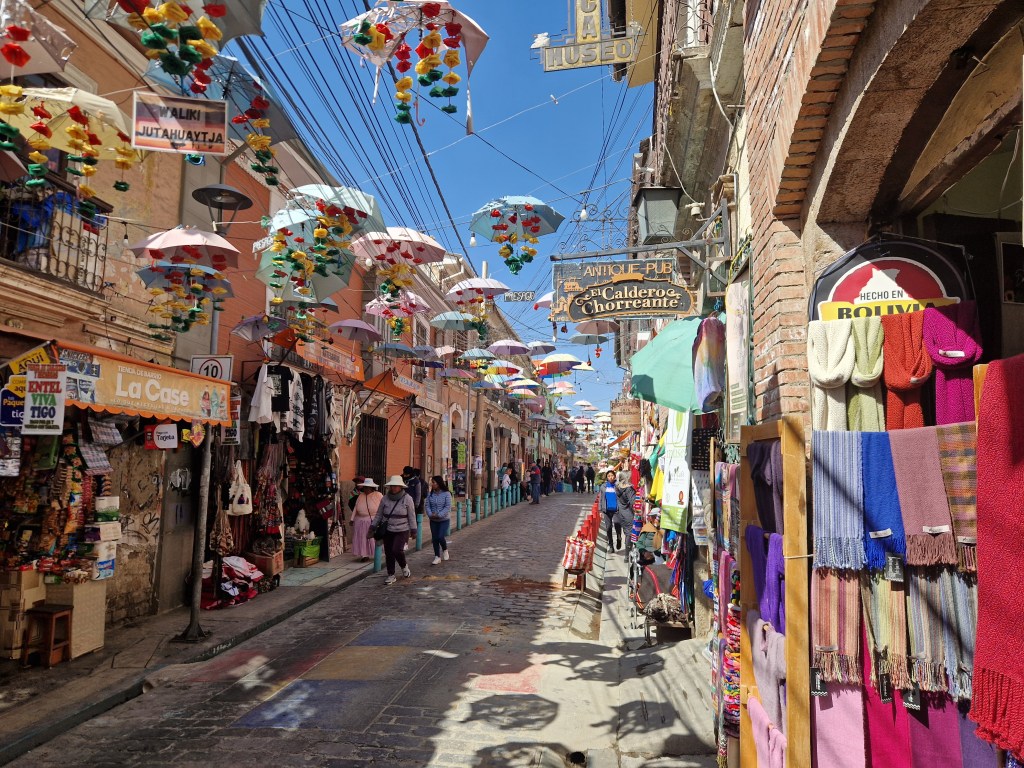
- La Paz – the de facto capital of the country and its beating heart
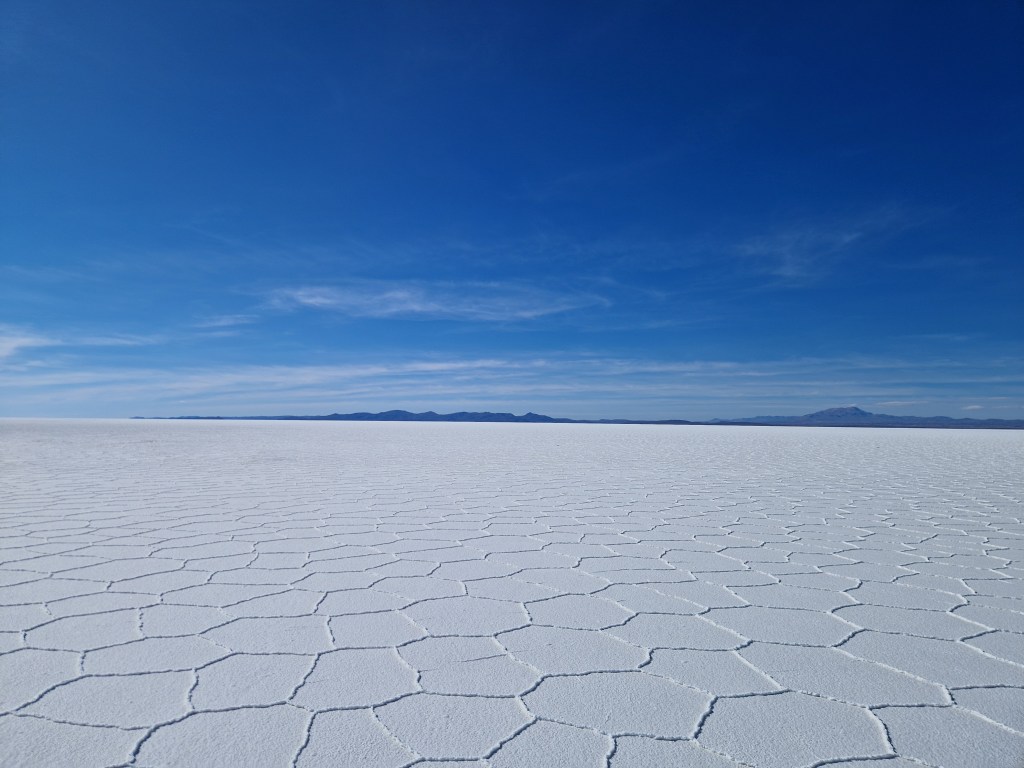
- The Salar de Uyuni – salt flats in the south, flooded December to April
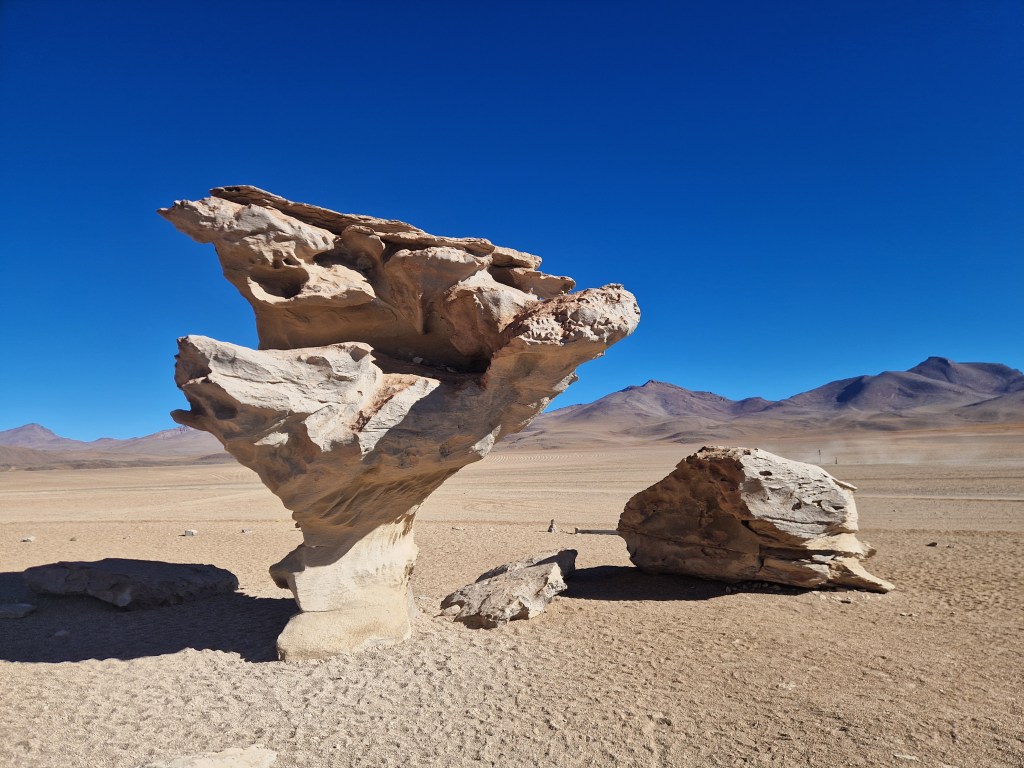
- The Atacama Desert – also in the south and the world’s driest place
- Copacabana – a town on Lake Titicaca and gateway to the Isla del Sol
- Potosí – gritty city in the south of the country
- Madidi National Park – Bolivia’s best place to experience the Amazon
Getting Around
There are some trains in Bolivia but they are slow and unreliable. Instead, the country relies on a large network of excellent coaches. Each city will be home to a bus station, with private companies each having stands at which you can book tickets. Alternatively they can be booked online.
Book Bolivian bus tickets using ticketsBolivia.com
The quality of these companies varies greatly. The best are Trans Titicaca (who do not seem to have a website), Todo Turismo and, for buses into Peru, Transzela. Bolivia Hop also offer hop-on-hop-off services specifically for tourists.
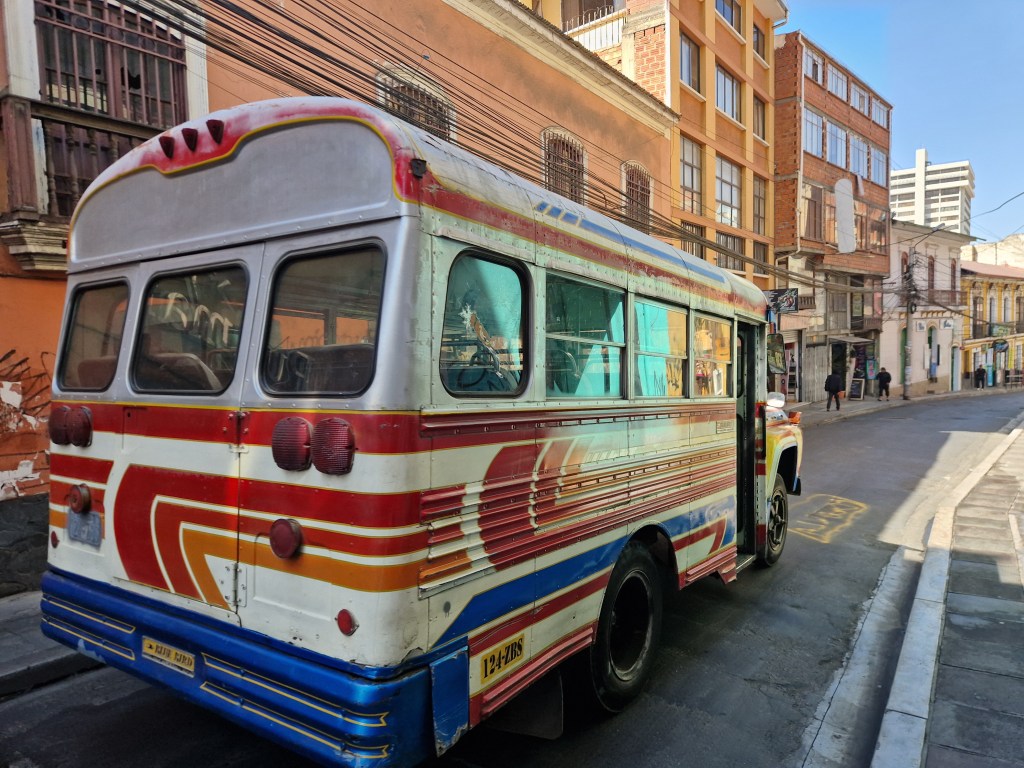
Within cities, Uber operates in Bolivia. This is generally the most reliable way to get around, though the brave may also want to experience the chaotic network of colectivo vans in every city, though their routes and destinations are often unclear to visitors. In La Paz specifically, the cable car network is both useful in getting around and a tourist attraction in itself.
It is possible to fly internally in Bolivia, particularly from hubs such as Santa Cruz or La Paz. However, unless you are in a massive rush to get somewhere, the bus is likely to be more comfortable. If you must fly, have a look at BoA’s website.
Accommodation
Bolivia is hardly a hotbed of world-class hostels. That said, for those looking to party, Peru’s Wild Rover does have an outpost in La Paz. In general, expect to pay no more than £10 a night.
Hotels range wildly in price, from not much more than a bed in a hostel dorm all the way up to £150 per night for the poshest place in La Paz.
Money
The currency in Bolivia is the boliviano (or BOB as its generally known in the backpacker community). This is not the sort of currency that you’ll be able to find at home and so you’ll have to pick some up when arriving in the country. This will be essential as card payments are rarely available.
In terms of ATMs, your best bet for avoiding commission on withdrawals is Banco Fie.
It is also worth noting that US dollars are widely accepted and may even get you a better deal in some cases. Bolivians will gladly accept these as protection against inflation and, in many cases, prefer dollars to BOB. Some currency traders may even offer above the market rate for dollars.
Other Points
Bolivia is one of the highest countries in the world, so come prepared for the altitude. Tours around places such as the Salar de Uyuni will reach altitudes of more than 4000m, higher than most tourists are used to. It is possible to get altitude sickness pills if you are particularly concerned, though how people are affected varies from person to person. More information (including on medication) can be found on the Travel Health Pro website.
Security is also a concern when visiting Bolivia. Precautions you should take include ensuring that you do not have all valuables in one single location at once (so leave a back-up bank card in your accommodation) and wearing a money belt under your clothing. Also try not to carry large amounts of cash and check which districts of a city are safe or dangerous before arriving.
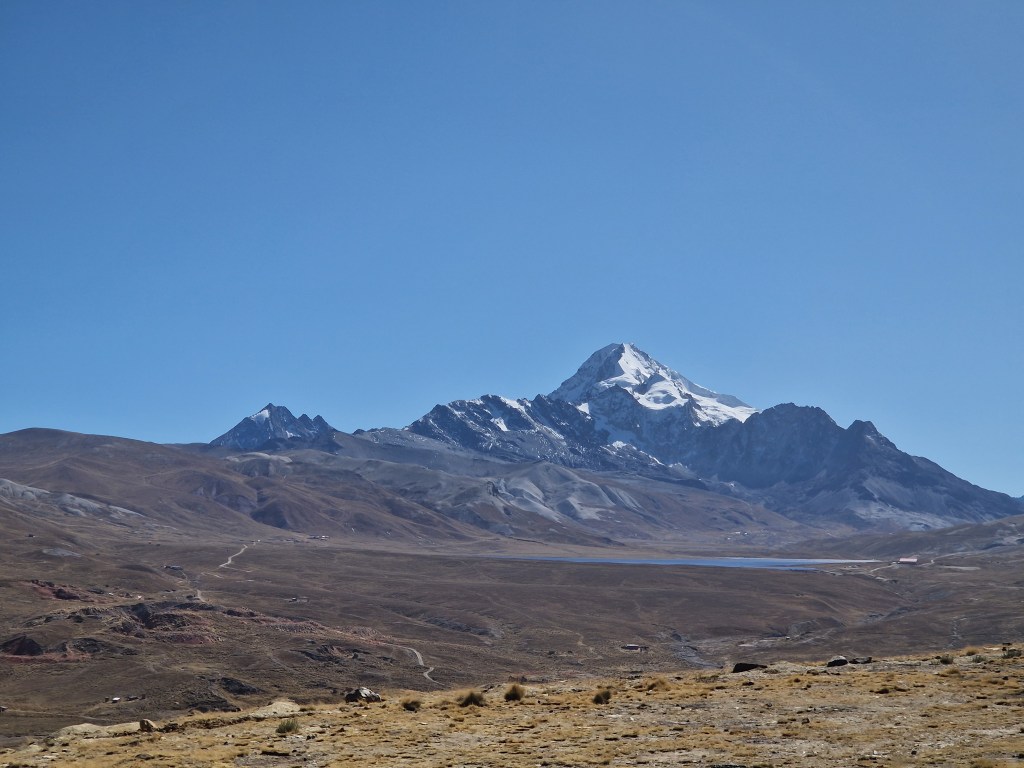
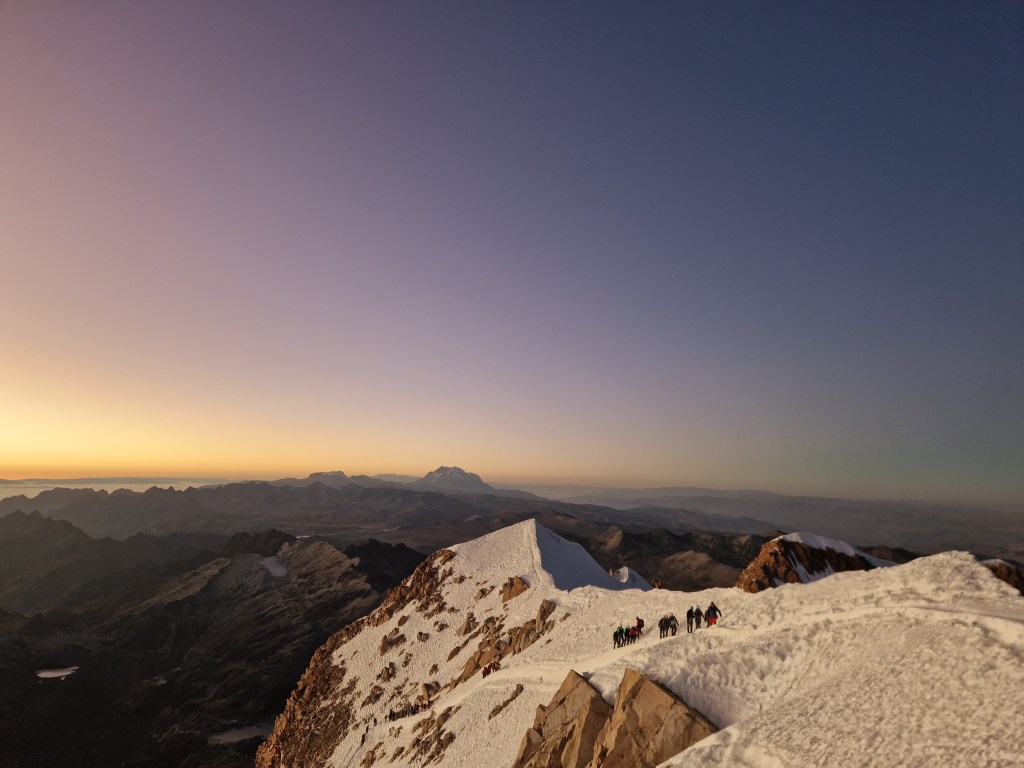
Bolivia is all about outdoor activities. Highlights include climbing the 6088m tall Huayna Potosi, mountain biking down “Death Road”, made famous on Top Gear or exploring the Salar de Uyuni. For all of these, you will need a guide: Jiwaki are reliable and based in La Paz for mountaineering and Salty Desert Aventours run an excellent Uyuni and Atacama tour. If you are planning on exploring the more extreme end of these activities, make sure you have the travel insurance to match.
 Into The Elsewhere