
Often the best adventures are when you set out with no plan, no notion of any consequences and no idea of the many pitfalls you may just squeak past. Watching condors soar over the canyon dropping precipitously below me, I was content, proud even, that this plan was going excellently, though, unknown to me, that was all about to change.
It had started in Arequipa, Peru, in a hostel which was unremarkable in both the level of comfort it provided to its inhabitants (pretty good in all honesty) and then in how much it ripped off the same inhabitants as soon as they decided to step over the threshold and into the street to actually do something.
The tours advertised behind the desk, having been marked up by the tour operator, were marked up again by reception. Often, this wouldn’t be an issue to me – it helps the local economy and lines the pockets of those less fortunate than myself.
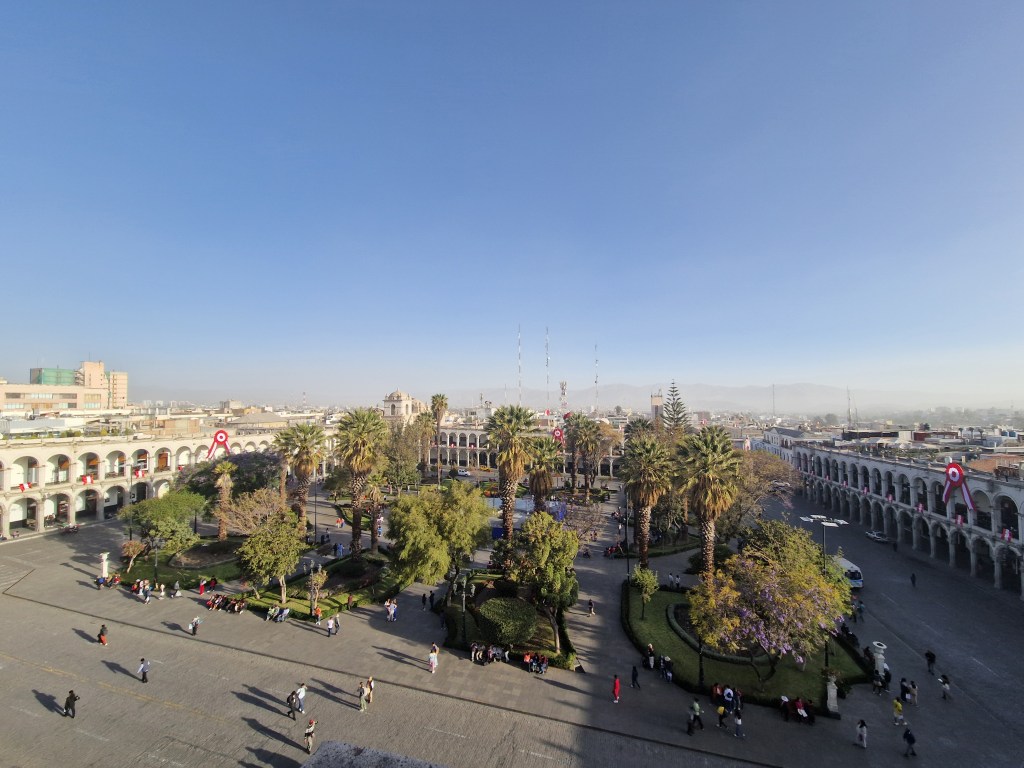
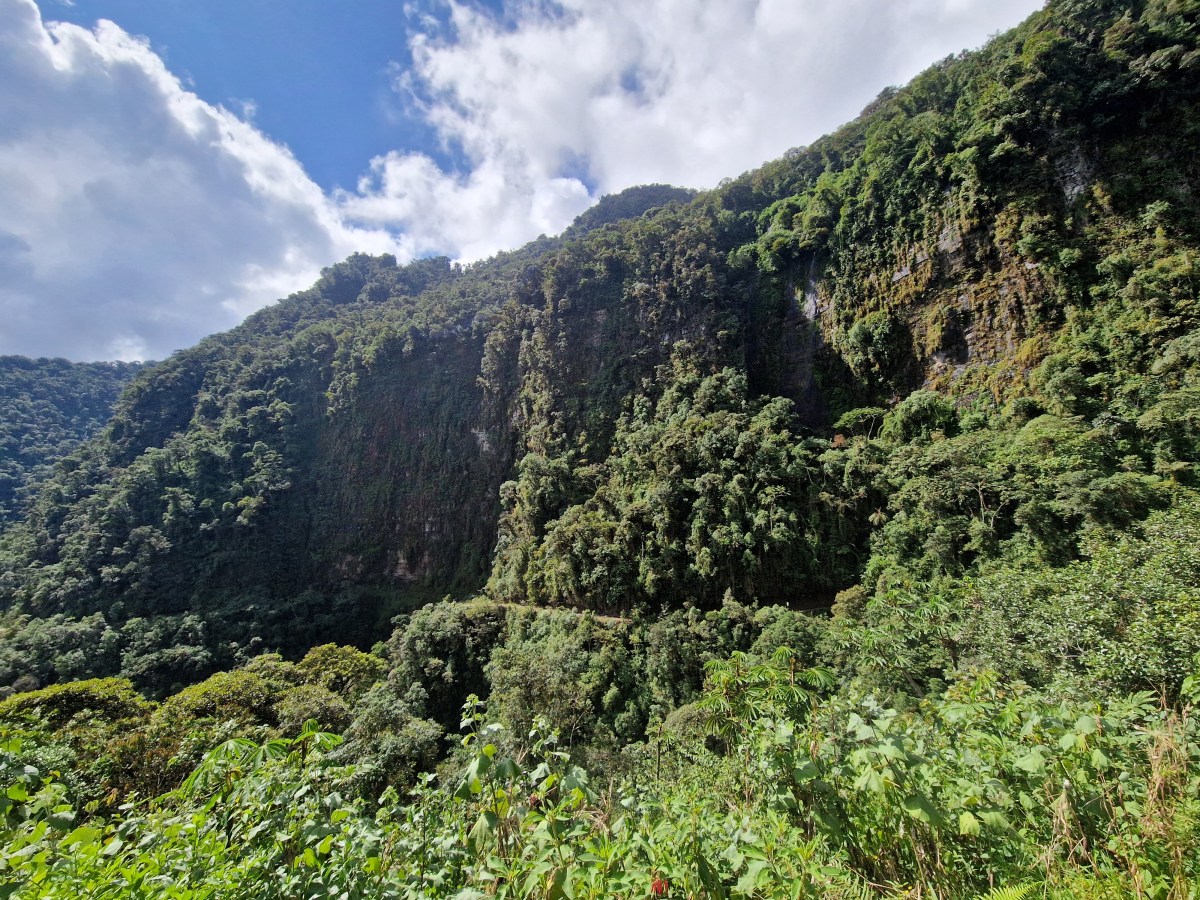
This, though, wasn’t a normal day and I felt particularly stingy. The desired destination was the Colca Canyon; the world’s second deepest and only a stone’s throw from the deepest. It was a well-known destination on the Peruvian backpacker trail, with its opportunities to see condors and then hike into the depths to see how life differed for the communities who called the canyon home.
Having seen how the tour companies who ran these expeditions tended to try and justify their high prices with gimmicky add-ons (traditional folklore and dance show anyone?) I’d had enough and was determined to set out alone. After a bit of digging online, a bus ticket was booked to Cabanaconde, a town at the trailhead into the canyon.
“The side of the road … was a lonely place”
On the way, the plan was to hop out of the bus, wave it goodbye and watch for condors at a tourist-laden viewpoint. The issue? The other tourists enjoying viewing the world’s largest flying birds had air-conditioned tour group minibuses to hop straight back into once they (or their drivers) were bored of watching condors soar on air pockets rising from the canyon below.
As much as watching these majestic birds weave around invisible obstacles in the air as they searched for their next meal was an unforgettable experience, my perception of it was marred by not knowing how I was going to get six miles down the road from the viewpoint to Cabanaconde to begin my self-designed tour.
I had an inkling there would be occasional buses, though no idea of a timetable. Instead, I attempted to plead for a lift with a few of the stony-faced tourist bus drivers with what little Spanish I had picked up during a month’s trip.
There were repeated claims of the buses being full (though they clearly weren’t). The drivers, clearly aware of the ruse and how, if they provided a lift, it may begin to eat into their extremely lucrative business model, simply left me at the roadside.
Trudging back to take one last look at the condors alongside the remaining dregs of people who hadn’t yet moved onto their next pre-planned stop, I considered my options.
My first choice – the side of the road – was a lonely place. Each passing van drew a brief spark of excitement that it may be the next public bus driving to Cabanaconde, only for it to be extinguished as the realisation dawned that it was just another workman, courier or local going about their daily business.

It left no option but to brave the scorched tarmac stretching off into the distance towards Cabanaconde. Trudging, almost purely focussing on putting one foot in front of the other to mask my simultaneous irritation and desperation at my predicament.
As I slowly made my way to the trailhead, whipping around at the slightest sound of an engine in the vague hope it would be the public bus that had been so elusive at the condor viewpoint, the piercingly intense sun began to take its toll as I was left without shade at the side of the road.
This was the downside of backpacking and not booking an organised tour. When semi-formed plans such as the one I was now living within worked seamlessly, I was rarely more satisfied. The flip side was that, when whatever half idea I had turned out to be a dud, it left me disconsolate and usually at the side of a road.
Still, with the idea that, despite my situation, I had at least managed to see condors, had saved a lot of money and would eventually get to the canyon trailhead, I was just about motivated enough not to turn back to Arequipa and call the whole thing a day – not that I could, of course, as there were equally few buses headed in the opposite direction.
“I heard whispers of words such as “gringo”, … I quietly conceded that they may have had a point”
Another low-pitched rumble slowly came into earshot behind me. At this point as I had already travelled a good number of the miles I needed to cover to the trailhead, I didn’t even bother turning my head to see the oncoming bus, let alone stick a hand out to hail it down. As I saw it overtake me, long past the point of stopping, I simply knew it wasn’t my day.
Experiences such as these can be the loneliest while travelling. Mostly, this is down to the inevitable helplessness that courses through the psyche of someone who ends up stranded as I was.
From the road, there were multiple houses and small farms (even the odd hotel), all of which no doubt contained Peruvians more than happily going about their daily lives, totally oblivious to my frustration. This only served to heighten that sense of isolation as my brain somehow transformed the ignorance of others into persuading me that they were indifferent and unwilling to help, even if I asked – much like the bus that I was by this point convinced just didn’t want to stop for me as it drove past.
A new low drone slowly grew louder behind me. Learning from previous mistakes, I turned to see a knackered white minibus proudly displaying a placard reading “Cabanaconde” in the windscreen.
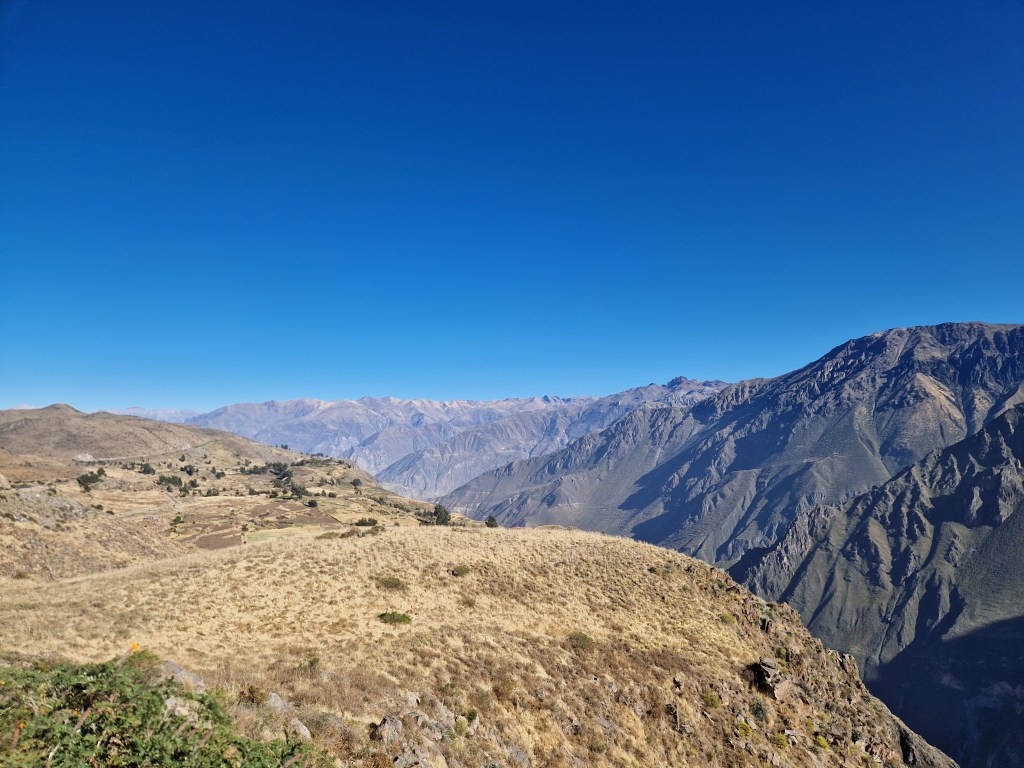
Despite covering around four and a half of the six miles from the condors to the trailhead, I was more than happy to stick my arm out, causing the bus to come to a screeching halt. The side door was thrown open by someone inside and I wearily clambered in.
My fellow passengers looked at me, bemused as to why an extremely non-local person was at the side of a totally nondescript stretch of road in rural Peru. Behind me, I heard whispers of words such as “gringo”, the classic South American word to describe someone, usually with connotations of naïvety and even stupidity, who wasn’t Latino. In this case I quietly conceded that they may have had a point.
Unable to see out of the front of the bus due to a large black screen which had been erected to separate the driver from the rest of the passengers, I watched my phone as we careered down the last few remaining twists and turns that I hadn’t walked towards the trailhead.
Somewhat frustratingly, within about five minutes of manic Peruvian driving, we had reached the point where I attempted to reach through the small hole used for payments that had been cut out of the black screen to tap the driver on the shoulder to stop. Due to the extreme brevity of my journey, I was charged the equivalent of about 20 pence.
Once again, this made me feel significantly better about my idea of avoiding the tour groups, especially as I was dropped right beside a large one all sporting matching orange t-shirts getting prepared to start their trek. I was happy to know that my experience was without pointless frills and excesses, saving money and time to do other things in the process.
At this stage, would I have concluded that my half plan was better than an organised tour? It would have been hard to say.
There was something deeply lonely and isolating about making my way along the side of the road as the odd car or tourist bus whizzed by. At that point I certainly regretted my decision. That said, the notion of setting out alone, working things out as they came, was incredibly freeing.
I wasn’t beholden to gimmicks or random attempts to justify a higher price for what ultimately amounted to a guide on an easily self-guided walk and an air-conditioned minibus with pickup from my accommodation that doubtless would have been nicer than the ones I had used to get to the same destination.
As I found out when I started hiking, the benefits only multiplied from the trailhead onwards, as I finally began my descent down the steep gravelly paths into the Colca Canyon.
This is the first part of a two-part article. The second half will be published at 9am on Sunday next week.
 Into The Elsewhere