
An extraordinary blend of eastern and western traditions, unspeakably delicious food and underrated wine, this city may be slightly more tricky to get to compared to others located more centrally in Europe but it is surely one of the most rewarding.
Please note that these are all my personal recommendations and are not sponsored in any way.
Getting There
Tbilisi Airport is the largest hub in Georgia and serves multiple destinations across the continent and beyond. From the UK, British Airways and easyJet both fly from London (Heathrow and Luton respectively). Elsewhere, there are flights available with airlines such as Lufthansa (from Munich) or LOT (from Warsaw) among many others. Georgian Airways also have a bit of a European network – though there’s no indication if this is any good or not.
Flights further afield go to Shanghai (with China Eastern), New Delhi (with IndiGo) and Qatar (with Qatar Airways and Georgian Airways). There are no flights direct to the US at the time of writing.
It is equally possible to get to Tbilisi by train or bus, from any of Turkey, Azerbaijan or Armenia. Detailed information on trains can be found courtesy of The Man in Seat 61.
For UK nationals, the FCDO lists entry requirements for Georgia. At the time of writing, it was possible to visit up to a year without a visa. Information for the USA can be found here.
City Highlights
The highlights of Tbilisi include:
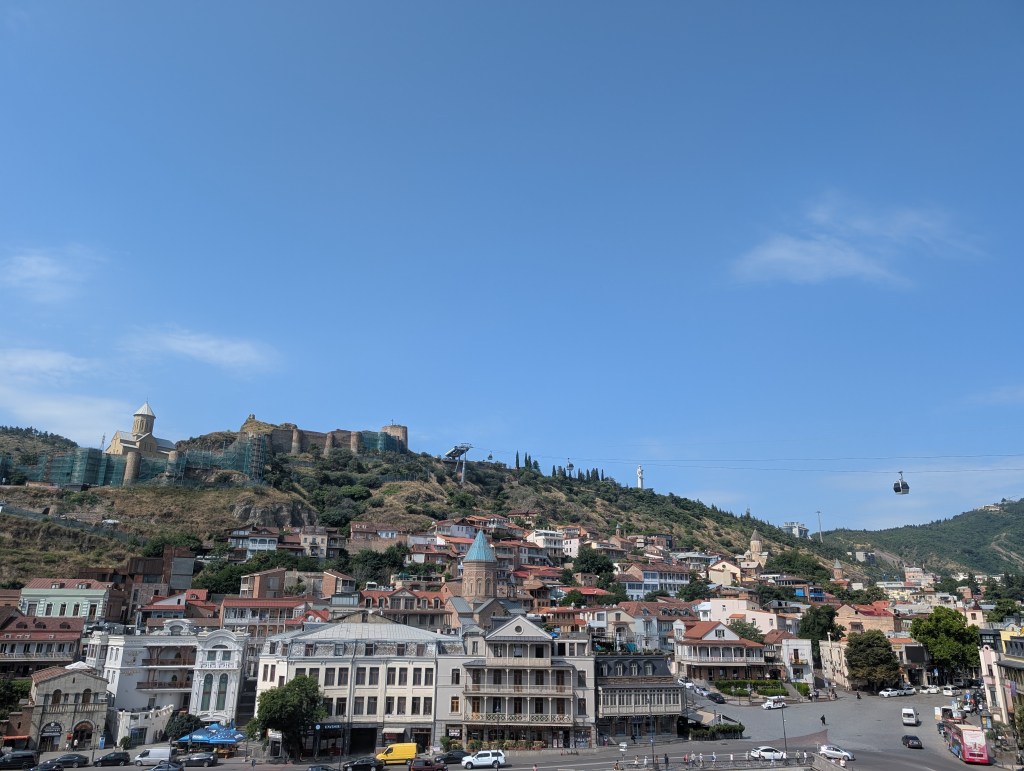
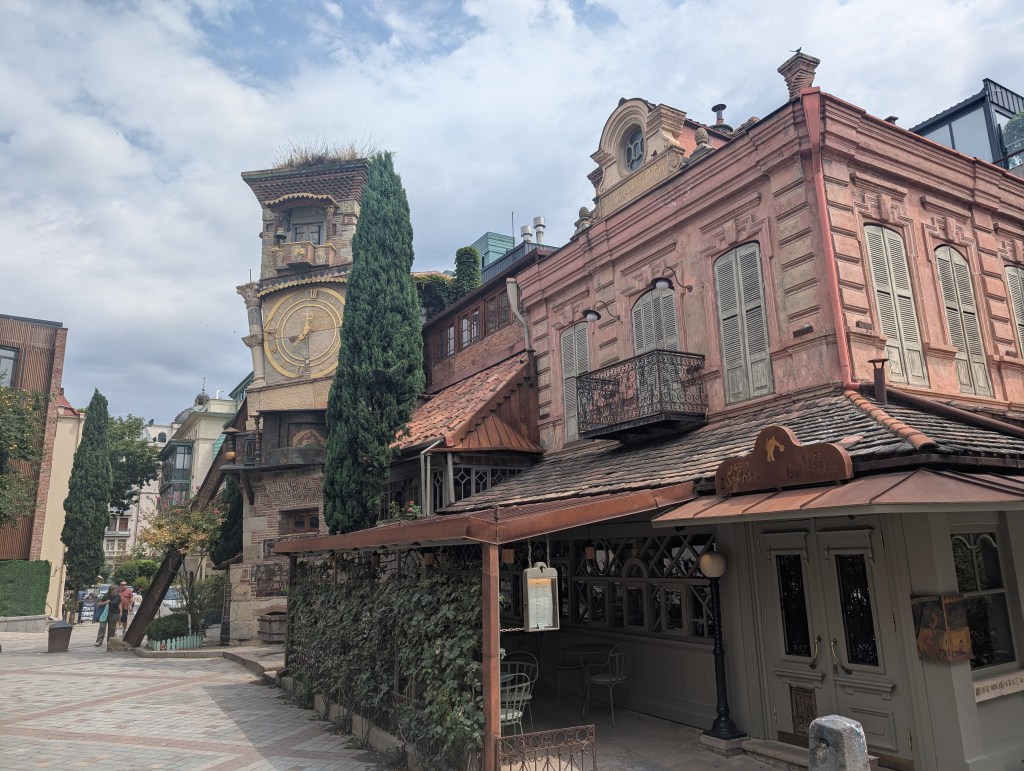
- The Old Town – get lost in the winding, crumbling streets
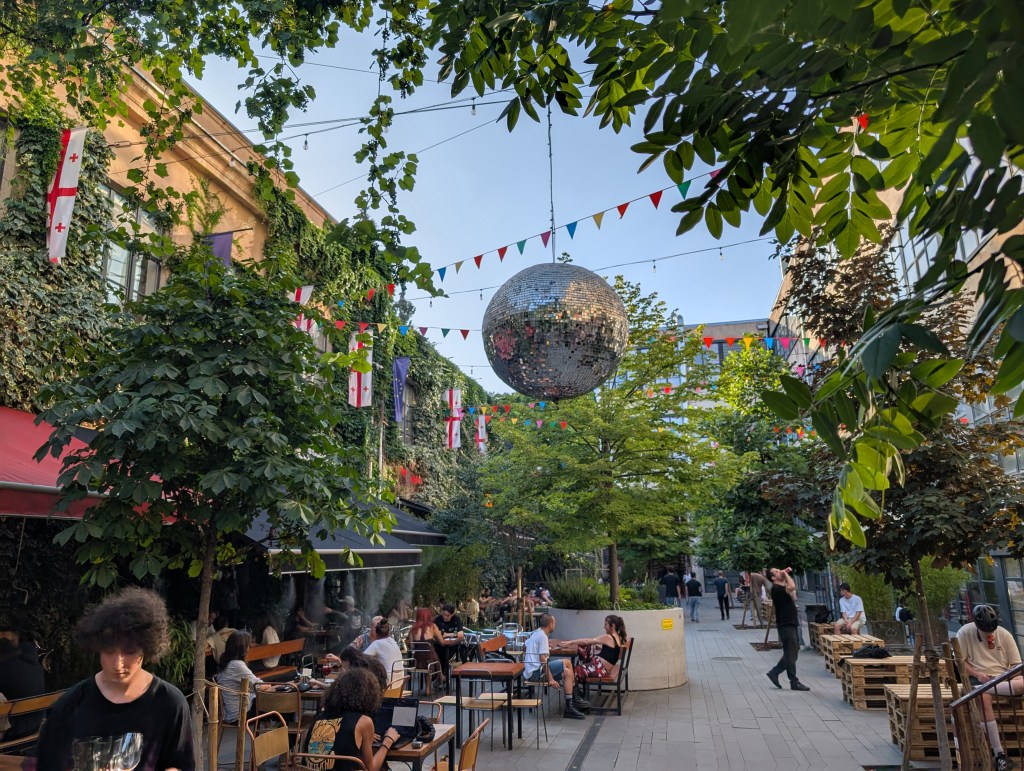
- Fabrika – a renovated factory and the city’s bohemian heart
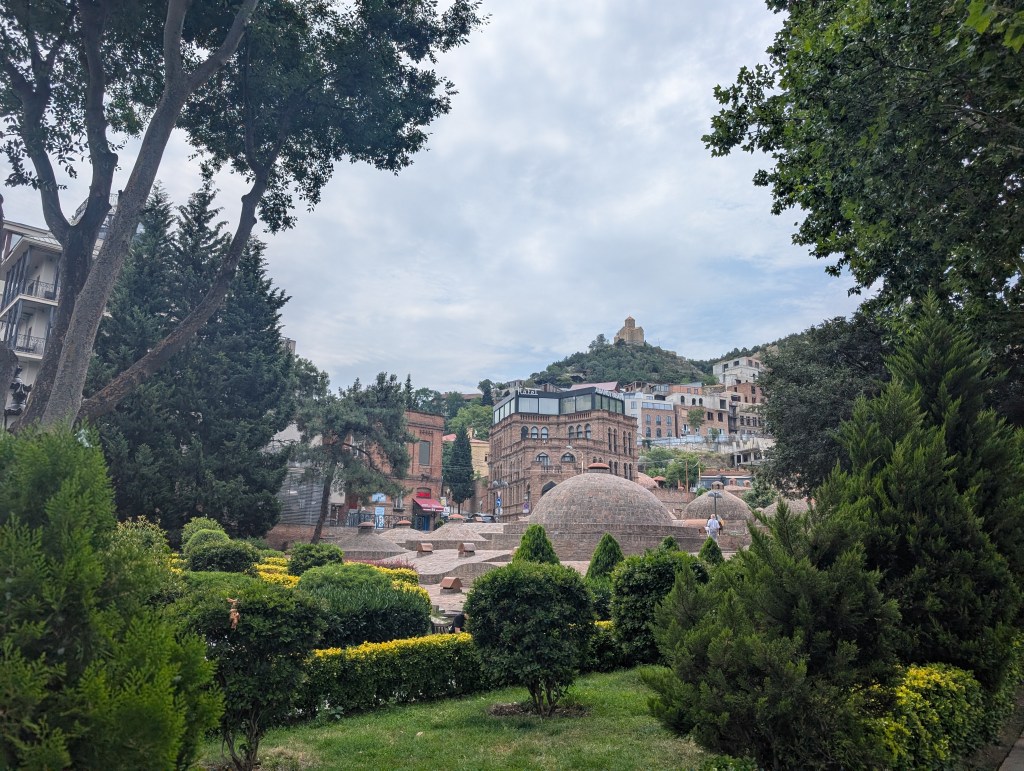
- Thermal baths – an excellent way to recover from a day’s sightseeing
- Cablecars – the best way to get up the city’s hills for a great view
- Gori – a nearby city in easy reach and the birthplace of Stalin
Getting Around
Tbilisi has a limited metro system. This is quite useful in getting from the bus station to the old town but besides that, you’re better off on foot with the many hills and old, narrow streets not lending themselves to trains.
There are also cablecars which will whisk you up onto the hills looking over the city. This is worth a go as the views are good and its a novel way to travel around a city for most. The routes can be found on the metro map linked above.
In terms of ride-hailing apps, Uber operate in the city though you’ll need a separate app to the one you’d normally use. Bolt is probably a better option.
If you’re looking to get from the airport to the city centre, Bolt is again likely going to be the most reliable and quickest (but most expensive) way of doing it. The 337 bus does also run to the train station if you wanted to save some money, though it isn’t 24/7.
Accommodation
If you want to stay in a hostel in Tbilisi, the obvious choice is the one located within Fabrika. This is a development which centres round a redeveloped Soviet factory and is home to multiple bars and restuarants which are buzzing every evening. It’s a bit out of the old town but worth the walk. Dorm beds are available for around £10 a night.
An excellent hotel in the city is The Blue Balcony Hotel, where rooms are around £65 per night. That said, the city is full of excellent boutique hotels at many different price points – you’ll be sure to find somewhere which is great.
Money
The Georgian currency is the Lari and generally isn’t available outside of Georgia though Tbilisi has many ATMs. These tend to charge relatively large withdrawal fees so taking out large sums at once may be advisable. Otherwise, according to online sources, Cartu Bank and Basis Bank may offer free withdrawals.
You may also find it useful to take some US dollars with you as a back up plan. Some places within Tbilisi may also take cards, though cash is always preferred.
Other Points
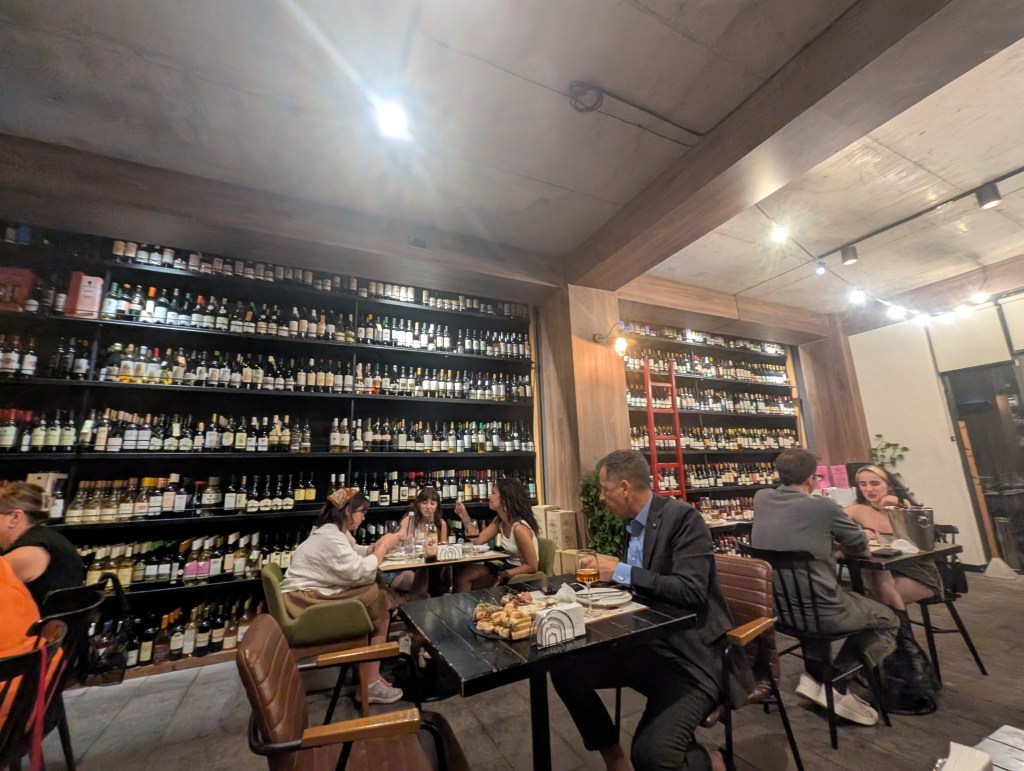
Food-wise, try khachapuri and khinkali (any Pasanauri in Tbilisi is particularly good) with a glass or two of the local wine (maybe try this bar). Georgians are incredibly proud of their food and drink and it’s supposedly where wine was invented.
Gori is an interesting potential day trip from Tbilisi. This is the birthplace of Joseph Stalin, the former leader of the USSR. You would have thought that this would be a touchy subject with the locals given Stalin’s record of killing millions of people; instead there is a museum in Gori celebrating him and people are generally proud that a Georgian rose so high up the ranks of the Politburo. Though this is at odds with Western perception it is an interesting alternative perspective.
When visiting the city’s many Othodox Christian churches, you will be expected to cover up. This may include parts of your body such as your knees or shoulders or, for women only, your head. In most churches, scarves are provided at the door.



 Into The Elsewhere