
As someone who was almost totally uninitiated to travel in South America, I felt as if I was drowning. Not only was I struggling to breathe as I climbed the impossibly steep streets of Cusco at an altitude of just under 4,000 metres but it felt as if I was going so in a world designed to overwhelm the senses.
Cusco was in full party mood as it slowly prepared itself for Inti Raymi, the Incan festival of the Sun still celebrated to this day. When it wasn’t swaying to the beat of drums echoing from the main square from the daily parades, the stomping of feet along the narrow, flagstone-covered streets took over. All of this gave way to fireworks displays and even more rapturous parties well into the evenings.
“And then there was cuy. I wanted to try cuy”
It was a city alive to its own rhythms and culture, one which insisted that you got involved and became part of it if you didn’t want to remain an outsider for the duration of your stay.
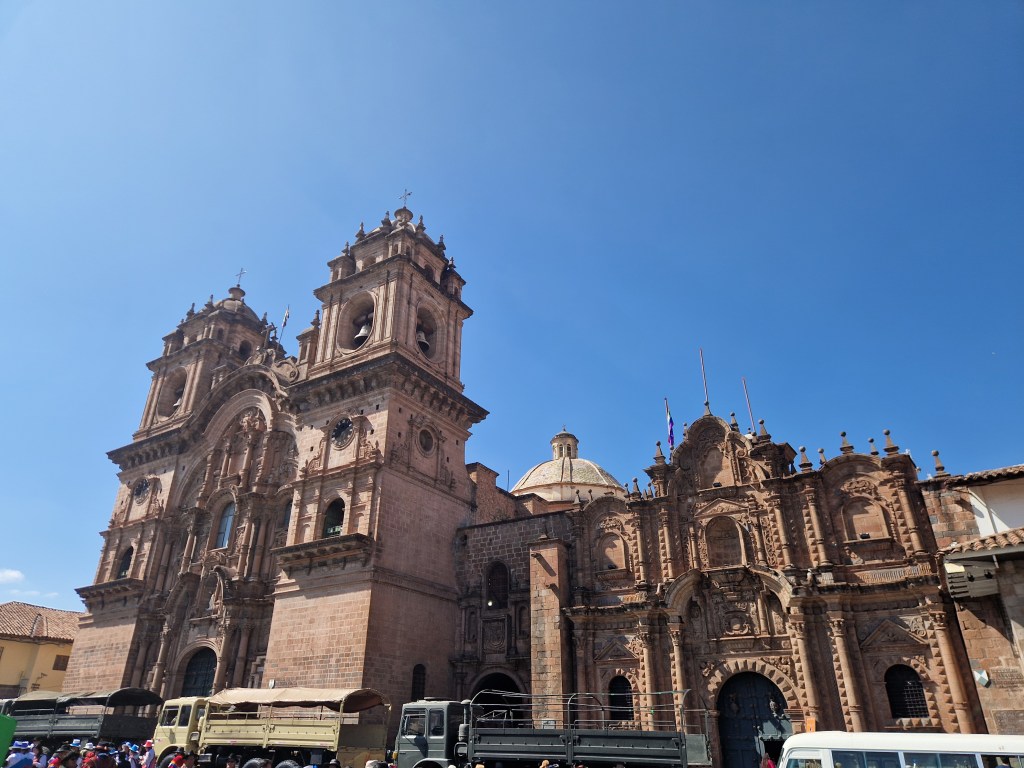
As I found out, this went far beyond just the parties at the Plaza de Armas, the city’s main square surrounded by Spanish colonial architecture, where, appropriately, the whole population seemed to gather beneath the blazing sun in celebration.
It began on a trip up to Saqsaywaman (which any local will gleefully tell you is pronounced “sexy woman”), the Inca fortress which stood on one of the city’s many surrounding peaks.
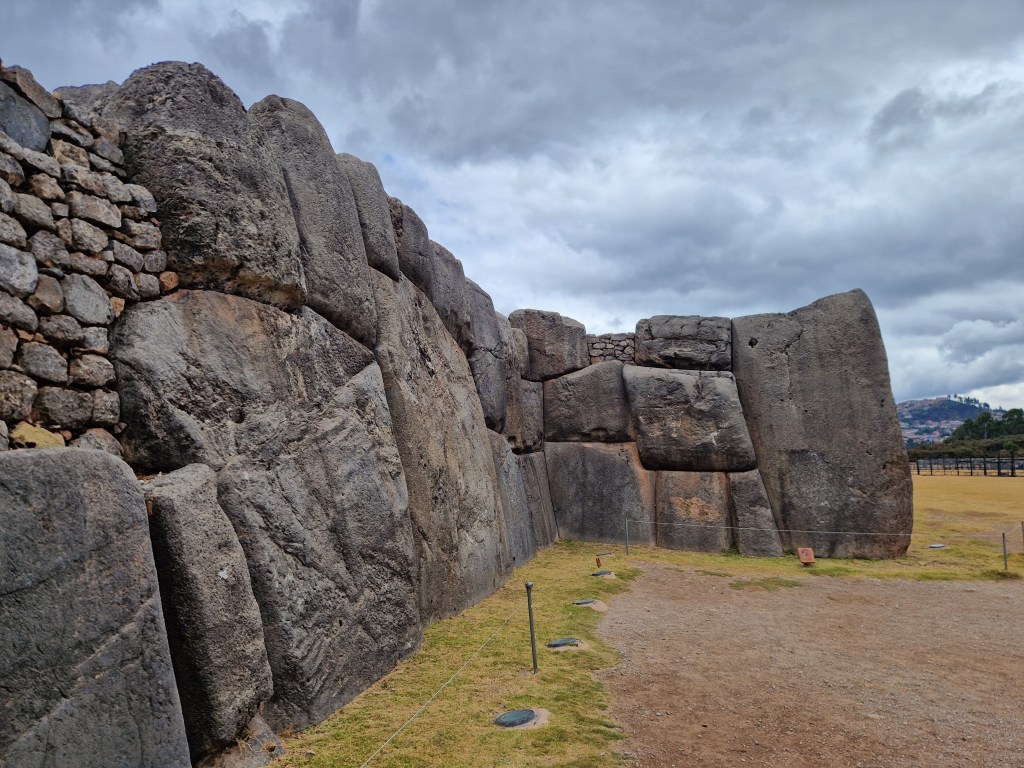
The monumental nature of what the Inca civilisation was capable of was clear to see. Some of the stones were the size of the buses which wove their way in and around the mountains to cities across the country. They would be vast even by modern standards, despite the power tools and cranes we now have at our disposal. Quite how a 15th Century population managed to shift them even an inch, let alone slot them into place in an intricate but extremely ungainly jigsaw was beyond me.
Indeed, it seemed to be beyond the historians who had been studying the site for years, if I was to believe my guidebook.
As I walked between the dull, grey saw-tooth fortifications, the realisation dawned on me of how much of an influence the Inca civilisation had on the city to the present day. Despite hundreds of years of Spanish rule in which some of the main Inca sites had been remodelled into Christian churches or monasteries, it was clear where the city’s allegiances lay.
Yes, everyone around me was speaking Spanish but everything culturally stretched back much further than the European invaders. This city was still Incan.
Nowhere was this more apparent in Cusco’s food. Hungry after a few hours of walking, I headed back into town. Of course, the Peruvian staples of lomo saltado or pork chicharrones were present. However, in Cusco they were washed down with a healthy dose of chicha, a sort of fermented and therefore ever so slightly alcoholic drink made from maize.
And then there was cuy. I wanted to try cuy, knowing I was unlikely to get it anywhere in the world outside of Cusco’s hilly city limits.
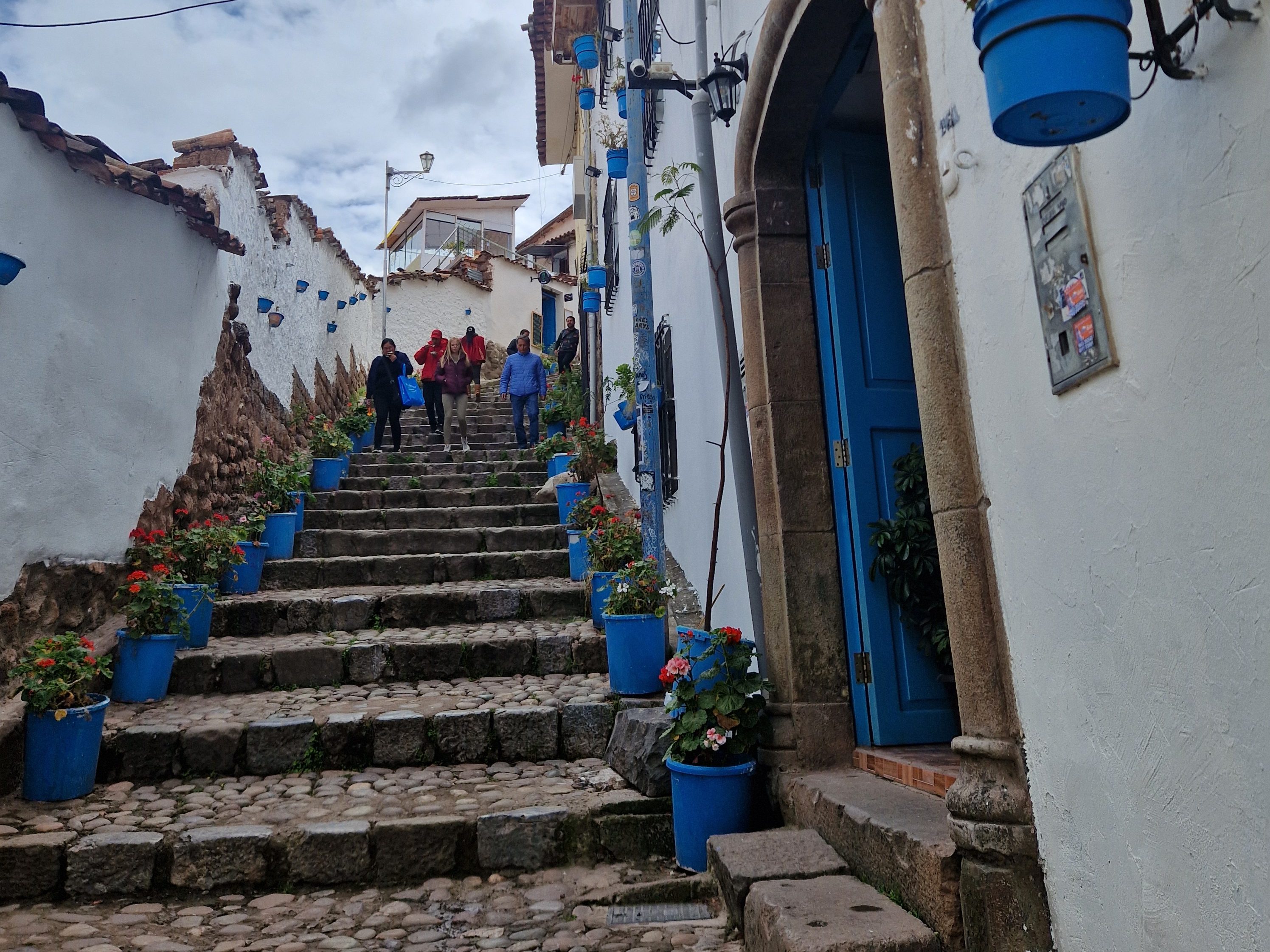
Scanning the guidebook, a restaurant named Quinta Eulalia soon caught my eye. In the description, it specifically mentioned that this was the single best place for cuy in the whole city. Best of all, it was between me and the city centre. I made a beeline through the narrow, stepped streets.
“As much as I was eating a guinea pig, it was delicious”
Passing any number of whitewashed houses, I struggled to find the well-hidden restaurant among all of its neighbours. Luckily, as much as the trek up the hill had been punctured by breathless stops to take on water and recover from the gruelling high altitude, the way down was far easier and more relaxing. After just a couple of wrong turns, I finally climbed the steps up to the gate which gave way to a courtyard with clusters of tables dotted around under covered awnings around each of the four walls. In the centre, a bed of flowering plants sat, giving the whole place a relaxed and colourful look.
As it turns out, there were options when it came to how I wanted to try cuy at Quinta Eulalia. However, I went for the cuy chactado, where it would be deep fried whole, making the entire dish crispy and, if done correctly, juicy and tender. Additionally, I went for a Cusqueña beer to wash it down – chicha was never really my thing.
I waited, staring round the other tables in the courtyard. This place, though it was by no means cheap, still seemed popular with the locals, as a group of grey-haired men sat at the next-door table, conversing intensely in Spanish.
In stark contrast to their conversations, I sat in silence alone. This was always one of the true joys of travelling alone: being able to sit there and observe a place while waiting for food. Occasionally, I would try to distract myself with a book or my phone but, in a place like Quinta Eulalia, it was much more entertaining to watch as the waiters rushed between tables, taking orders and serving plates of steaming hot trout, pork and steak.
It was soon my turn to receive my food as the waiter approached with my cuy. It is, at this juncture, that I really should come clean as to what this mysterious dish, unique to Cusco, was. I had elected to eat a guinea pig.
What shocked me immediately was how much like a guinea pig it still looked. This wasn’t like eating a steak or chicharrones, where the animal is completely indecipherable once it had been through the butchering and cooking processes. It wasn’t even like eating a whole chicken.
Most of this was probably due to the animal still being completely whole, including the head still being attached. On the plate in front of me, I could see four, crispy deep fried legs, a tiny head with its eyes closed and a small, spatchcocked body connecting them all together. It was obviously an animal and certainly not for anyone feeling squeamish.
Almost out of guilt at so obviously eating an animal, I immediately cut the guinea pig’s head off in an attempt to de-animalise it. It rolled around on the plate alongside the red pepper it had been sitting on (which was stuffed with what I only assumed were the poor animal’s organs which had been blended into a sort of paste).
All I could think was that, firstly, I was about to eat something which would normally be considered a child’s pet in my native UK and, secondly (knowing the first point), I had just unceremoniously hacked its head off from sheer guilt.
Still, I had ordered this and, now, I had to eat it. Besides, I probably wouldn’t ever get the chance to eat something like this again. Certainly, it wouldn’t feature on the menu of any Peruvian restaurant in London for fear of bringing every animal rights and food standards agency in existence to the door of the establishment brave or stupid enough to stick it on a menu. Where would you ever source your guinea pigs to cook them in the UK? Pets At Home?
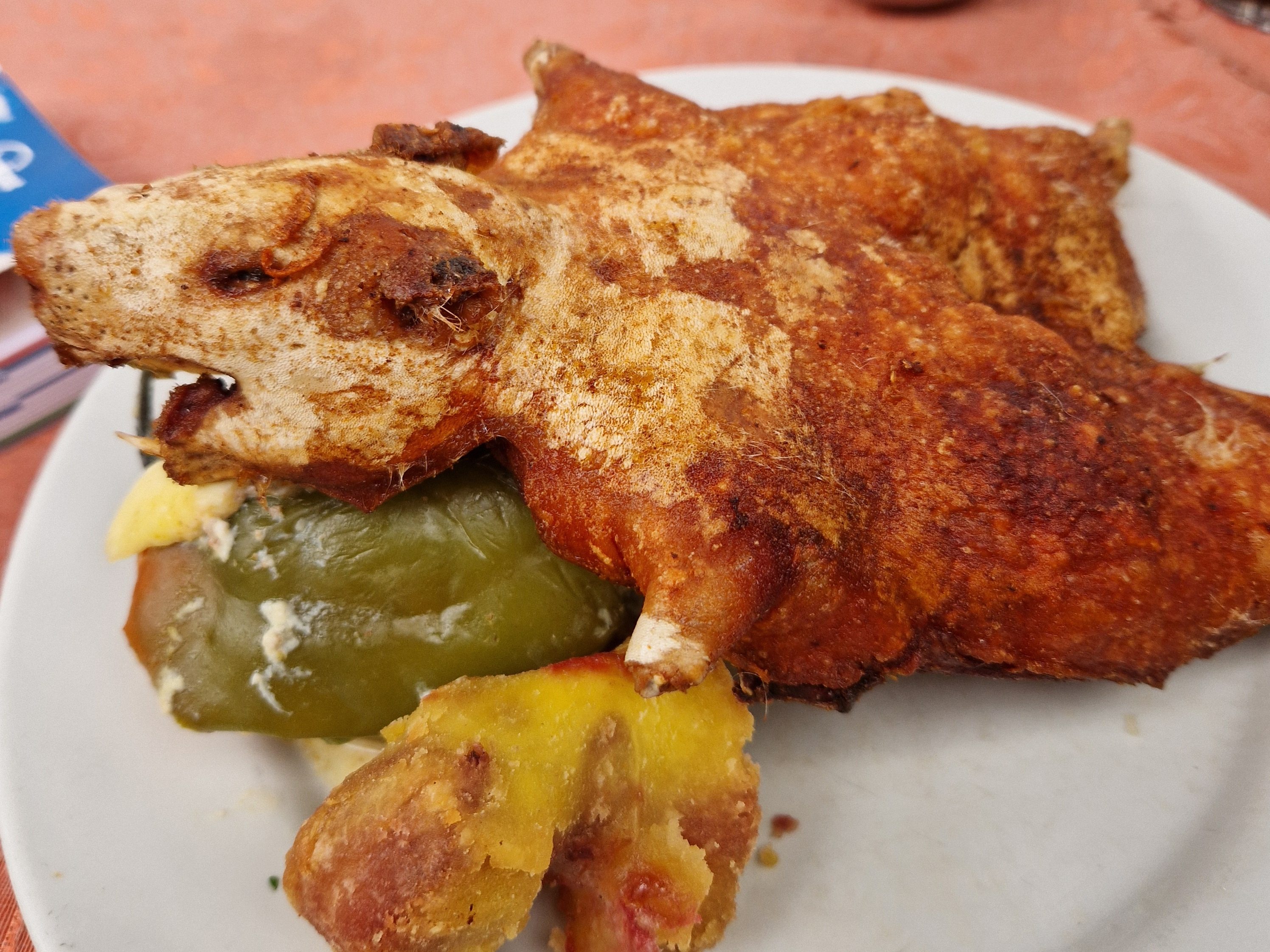
Hacking a leg off and tentatively taking a nibble of the small amount of meat on the tiny bones, I immediately understood why the animal had been cooked in this way. It was something like fried chicken, with a crispy skin giving way to succulent meat which fell cleanly off the bone.
As much as I was eating a guinea pig, it was delicious.
Though the meat had the light texture of chicken, it tasted far more similar to pork. This was only more intense as I cut into the stuffed pepper supplied with the dish, which had a deep and meaty flavour which would have been impossible with any form of chicken.
I was sure that this is something which could be done badly, drying out the meat and making it chewy and, effectively, inedible. This definitely wasn’t like that as I carried on picking around the fiddly bones which were small enough that they presented something of a choking hazard if I had missed one.
What did prove a step too far was the head. The reason it hadn’t been cut off and disposed of in the kitchen was because it supposedly contained some of the juiciest meat on the whole animal. However, because I had no idea where to start on how to get to that and because I was still feeling some residual guilt, I decided that it would be best to neatly leave it to the side of the plate while I worked on the rest of the animal.
Soon I had got to a point of being fairly full and lacking the knowledge to get any more meat off what was left of the tattered carcass. The waiter, looking at me knowing that I had only managed to get about half the meat off the thing that a local would, dutifully took the rest away as I sipped the last of my beer and reflected on this experience unique to Cusco.
For me, this sort of experience is the reason to travel. In so many cases, a form of cultural hegemony is crawling its way across the world, to the point where everyone listens to many of the same songs, eats the same fast food and watches the same sports matches on TV. This translates to food, where because I’m lucky enough to call London home, I can get my hands on most things when it comes to different cuisines. Most but not all.
Maybe it’s a good thing that London’s restaurants are prohibited from serving cuy after all.




 Into The Elsewhere