
The village was hidden from sight as we approached through endless meadows filled with swathes of butterflies and a technicolour carpet of blooming wildflowers. If it wasn’t for the route on my watch showing that we were nearing the end of the day’s hiking, I’d have been steeling myself for another fifteen kilometres of hiking. There was nothing to suggest the presence of any form of civilisation.
This was the way of Georgia’s Svaneti Trail, a path which wove its way up between Georgia’s two Russian-occupied territories of Abkhazia and South Ossetia. Every step we took brought us closer to the Russian border, which was quickly coming within a stone’s throw.
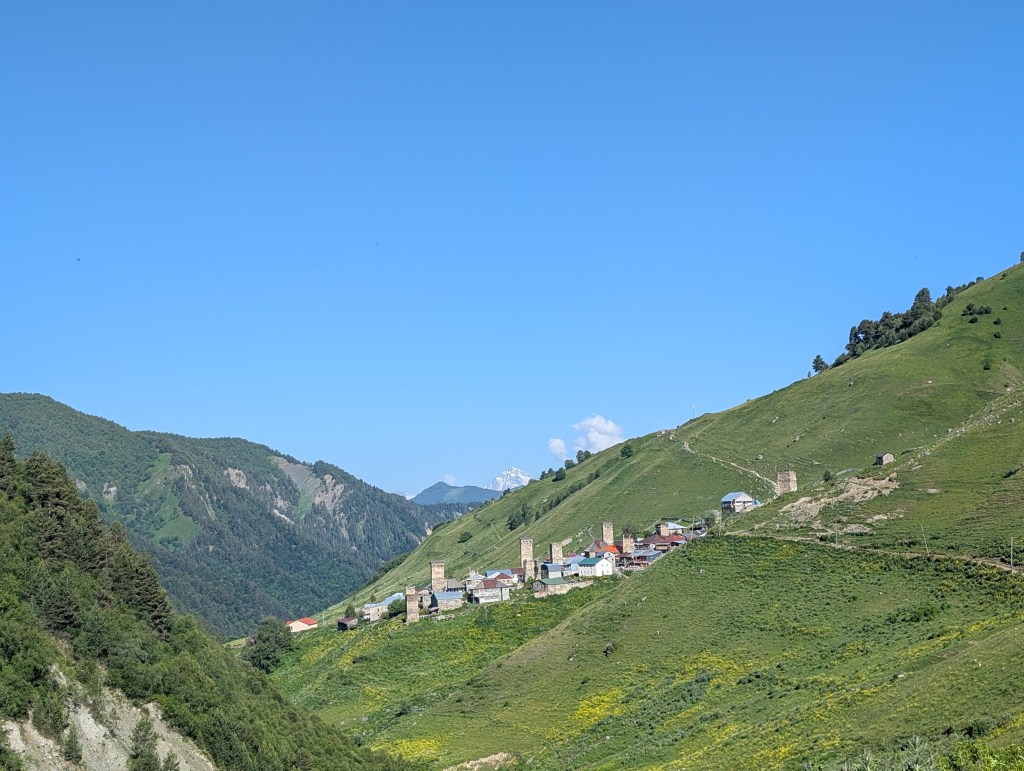
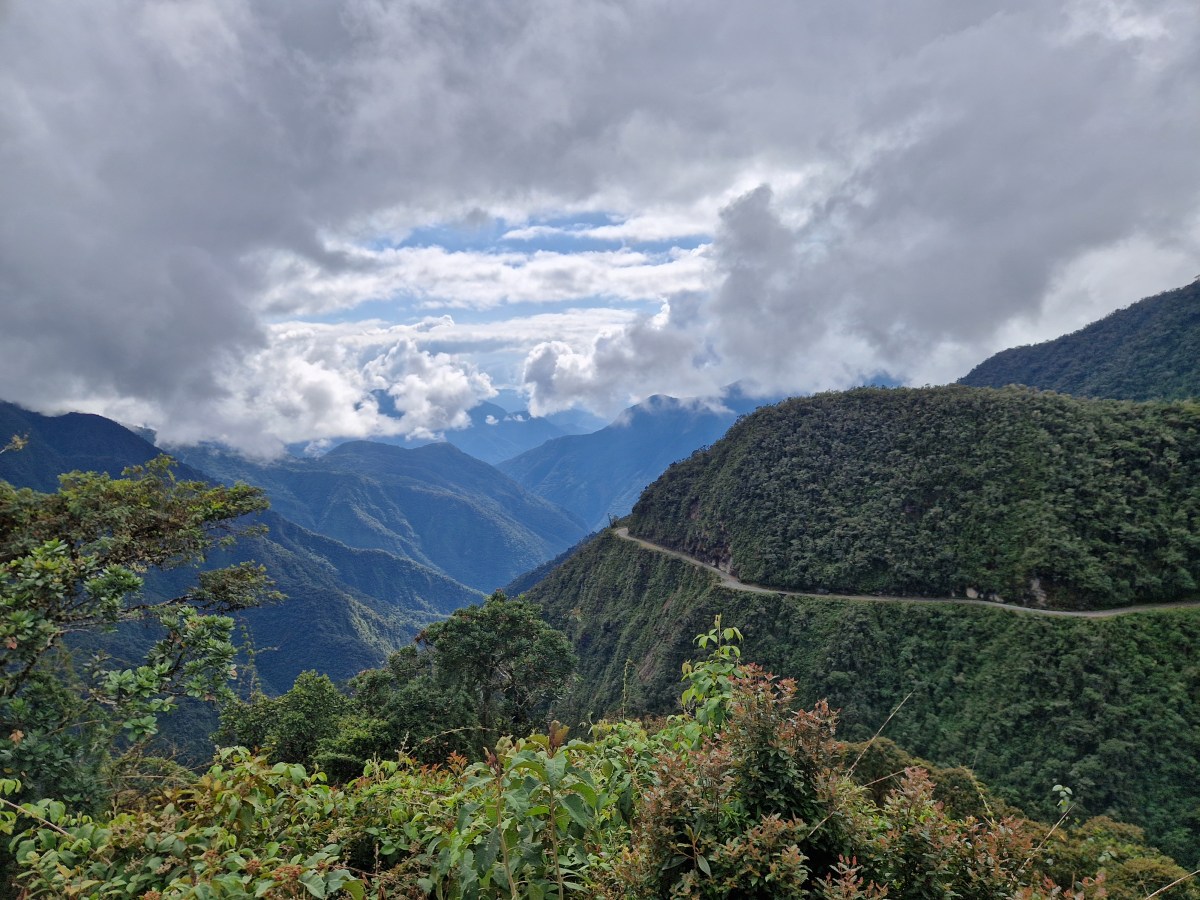
With the way that Russia is often painted in Western media though, you wouldn’t have guessed it. The green meadows gave way to white, snow-capped peaks and, beyond those, a brilliant blue sky. It was quite the opposite of the bleak, suffering and even evil land which some may have been expecting, being so close to a country which had positioned itself so firmly against the West.
Slowly, evidence began to emerge that our day’s hiking was coming to an end and we were close to Adishi, the finishing point of day two of the hike. Crudely painted signs, constructed from rough planks and sturdy stakes driven into the fertile ground, pointed tired hikers towards an inordinate number of guesthouses, far more than had been listed online when I had booked the trip.
It was a sign of what sort of place this was. Adishi sat on the edge of modernity; a small Georgian mountain village which, under any normal circumstances, would have been almost completely cut off and forgotten by the fast-modernising lowlands around Tbilisi. However, as long as the village lay on one of the country’s best-known trails, tourists arrived and, bit by bit, mod cons such as the internet and the ability to book places in advance online sprang up.
“Its gently wonky floor was painted a shade of pale green, which contrasted with the delightfully dated-looking red bedsheets”
We walked past the signs, still following the narrow, pink line on my watch and hoping that it would eventually take us down the grassy bank to the invisible village below.
The fact that Adishi was still invisible, even hundreds of metres away, was no mistake. While my mum and I had wisely decided to visit during the peaceful summer months, this was an entirely different landscape during winter.
Temperatures drop to nearly -20 degrees Centigrade (or four degrees below zero Fahrenheit) during the frigid winter nights. As a result of these potentially deadly temperatures, the village was placed as low down the valley as possible to avoid the worst of any storm which may come its way, while keeping it high enough so it wouldn’t become consumed by the gushing river of glacial meltwater below as all the snow thawed each year.
Though our hike was thoroughly pleasant in terms of the weather, it was obvious this wouldn’t always be the case year-round. The people who called Adishi home needed to be tough and prepared to be cut off from the rest of the world during much of the winter. These were just the good times.
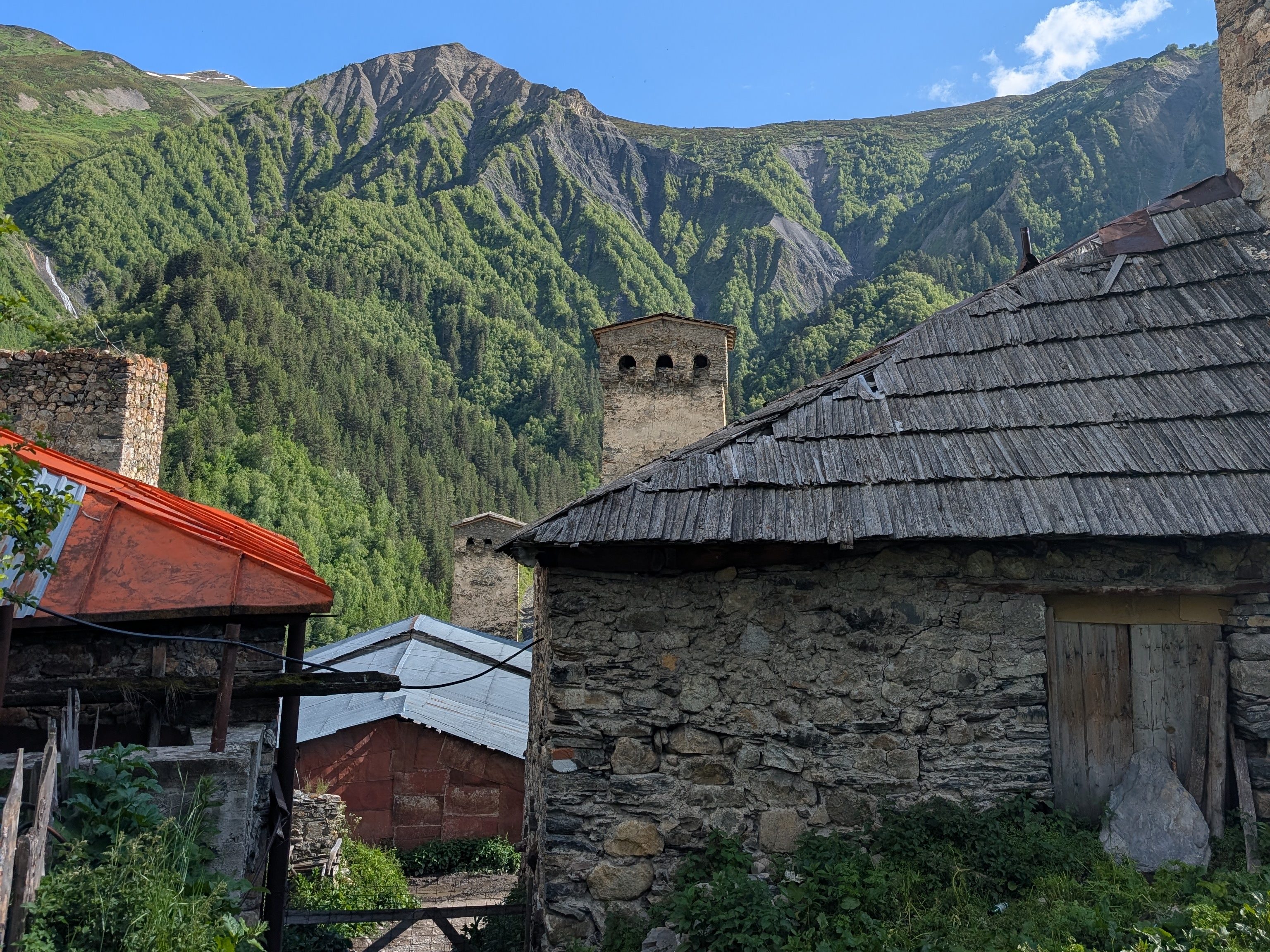
Eventually, the path dropped steeply and widened out into something of a dusty and muddy track. Only at this point did crumbling stone buildings start to spring up around us as we walked, many of which had plants growing out of the cracks between the large rocks. As we passed some cows standing aimlessly in the middle of the narrow passageways between the buildings, it was clear that, though this was a village which had embraced a small level of modernity, it certainly didn’t yet belong in the 21st century.
Finding our guesthouse was difficult, as all the signs promising any number of beds above the village evaporated once we set foot within it. After the odd dead end and some confusion, we finally set foot in a muddy and dilapidated farmyard.
Children were running around and shouting gleefully, as they poked and slowly trapped a toad who had been unfortunate enough to stumble into them. The terrified animal was being taunted and jabbed by the laughing and screaming children, who couldn’t have been any older than ten years old. Sitting on the large stone doorstep of what we assumed was the guesthouse, we watched as the poor animal desperately tried to escape the clutches of its captors to no avail.
Before too long, one of the children’s mothers arrived and beckoned us into the house, which, with its unintentionally sloping floors, small rooms and many holes around the dirty windows letting the outside air in, was hardly the Ritz. We were at least in the right place though.
“It felt analogue and, in turn, significantly more real than most of the half-lived experiences which we aimlessly exist through”
The room had windows facing into the main eating and relaxation area of the guesthouse. Its gently wonky floor was painted a shade of pale green, which contrasted with the delightfully dated-looking red bedsheets. Though it was undeniably basic, with little more than a bedside table on offer, I was totally charmed by the rough-and-ready feel of the whole place.
We had also finished our day’s hiking early and now had plenty of time to kill in this tiny, remote Georgian village. Without any internet which seemed actually capable of loading a webpage, it very quickly became apparent that we would have to embrace the pre-21st-century way of living. It was a blessed relief from the relentless pace of the rest of Georgia and, indeed, the world.
After just a short walk around the muddy roads of Adishi, squeezing past the same cows which we had passed on the way in, we soon found what seemed to be the only bar in the village.
Situated on a ramshackle structure bridging the road and only accessible by stairs which were so impossibly steep they were probably closer to a ladder, the whole space was open to the elements on all sides. In the process, it transported the beauty of the surroundings, meadows, gushing river and all, straight into the bar as we ordered a couple of deliciously cold local beers.
Sitting and relaxing after a day’s walk while trying to stop our playing cards from blowing off the table as we played was an experience which I wished I could have more often. There was no interference or noise from the outside world, fighting for our attention through our effectively useless phones. Instead, it felt analogue and, in turn, significantly more real than most of the half-lived experiences which we aimlessly exist through in our modern and connected lives.
This was the charm of Adishi, certainly for people like us who were just passing through and didn’t have to live with the consequences of near-impossible access to things like healthcare or food supplies for a large chunk of the year.
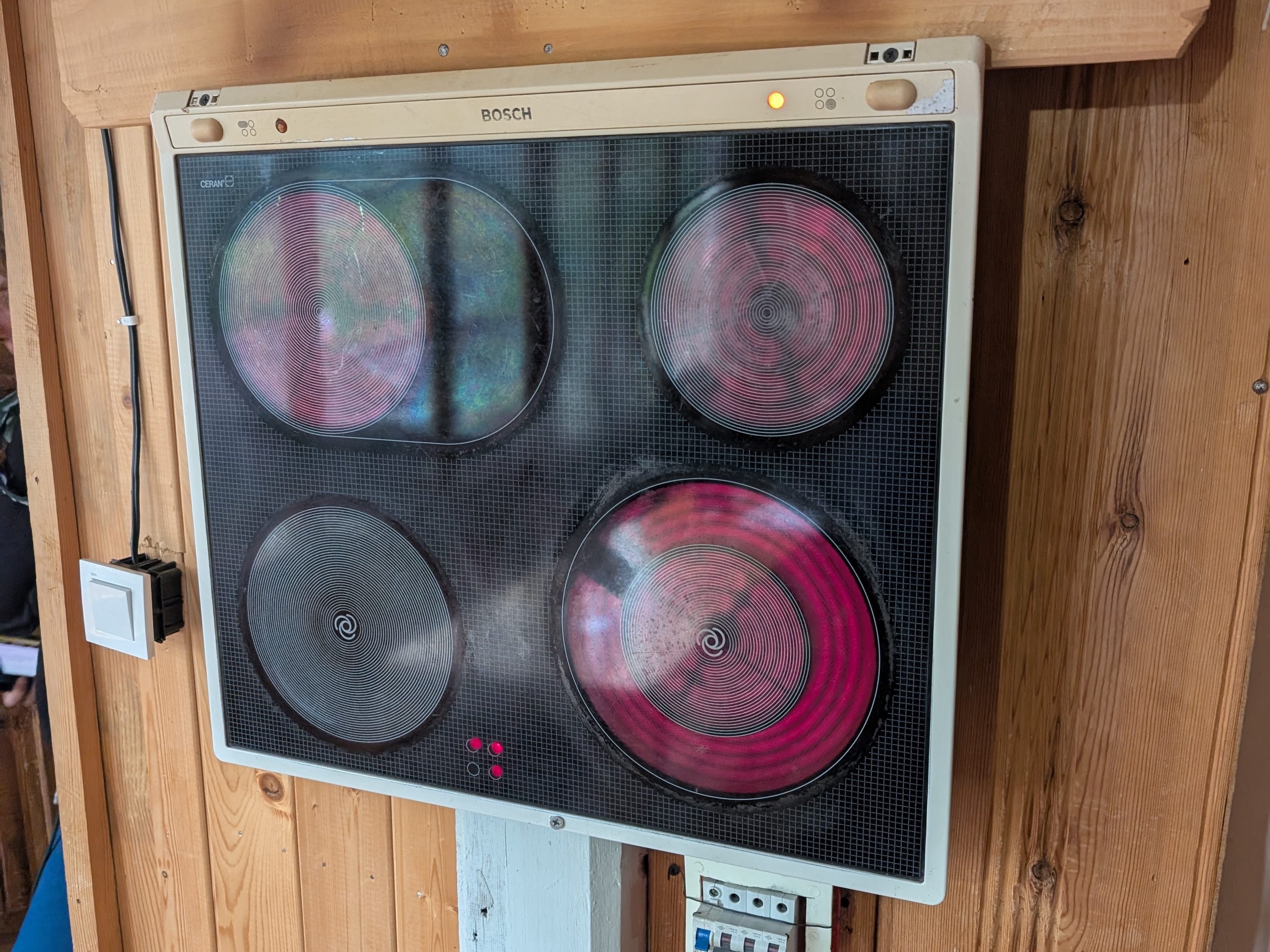
Still, even for the people who did have to exist in that reality, their ingenuity was clear to see, whether in the kitchen hob mounted to the wall of our guesthouse’s living area to provide warmth during the cold nights or their quick adaptation to the increasing numbers of tourists passing through.
That said, when I woke up the next morning, having slept well after a large meal of khachapuri, salad and other Georgian delicacies, I hoped that it wouldn’t adapt too quickly and lose its charm in the process. The fact that there was no internet, the streets were muddy and the buildings (including the region’s famous Svan towers) were crumbling was, in large part, responsible for making it so charming.
Walking away from Adishi and towards the glacier further up the valley which fed the river beside me, I looked back occasionally over my shoulder at the village, perched on the hillside among all of the wildflower meadows.
I was unsure whether I would ever return, like so many who pass through it when hiking the Svaneti Trail. Equally, I was unsure if I would ever want to. This was by no means because I didn’t love the night spent in that small Georgian village but because I was scared that, if I returned in a few years, the reality I would end up confronting would be a very different one from what I remembered on my first trip.
It was a thought which made me simultaneously grateful and yet sad. The people of Adishi cannot be blamed when they inevitably want to modernise the village – of course anyone in the world would try their best to get access to modern services such as the internet or just decent, accessible roads. At the same time, it will lead to an inevitable erosion of what made Adishi so special in my own eyes as I visited.
That said, I had got there at the perfect time and the memories of the Georgian mountain village will stay with me forever. I smiled to myself as I turned back to face the endless wildflower meadows, focused on the next stage of our hike through Georgia’s mountains.

 Into The Elsewhere