
Plunging down Sofia’s darkest alleys at night probably wasn’t a good idea at the best of times. As a city with, at times, a distinctly Soviet edge it wasn’t a place to mess around. Indeed, if things had been normal, it would have been out of the question.
Things were a bit different though. There was method to the madness: an end goal the likes of which would likely more than repay the risk of turning off the street-lit pedestrianised boulevards of the city centre and into pitch black unknown.
It was just a matter of finding it and, as quickly became apparent, Google Maps was in no mood to help out on our quest. Neither, in fact, was my girlfriend who, wandering the darkness with me was none the wiser as to what the end goal actually was and why I had seemingly been overcome by a sudden bout of apparent madness.
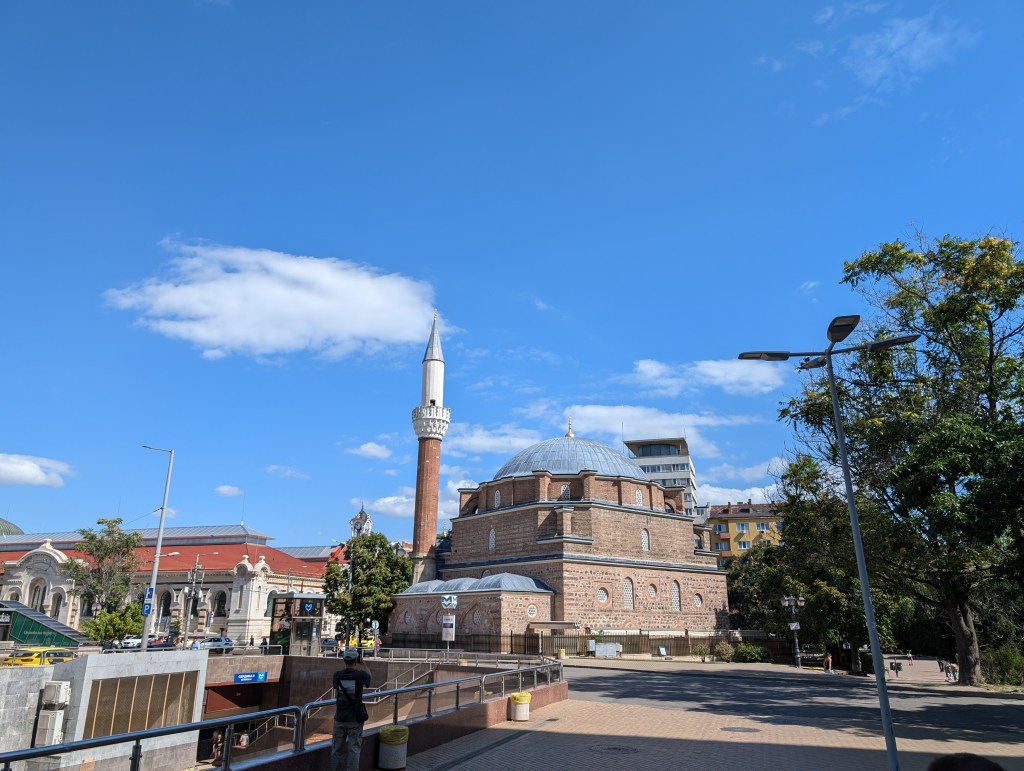
The thing was, I knew that finding the door would be worth the wait, frustration and confusion. We turned left, down another passageway which would normally have screamed “stay away” to any tourist. Another wrong turn.
It was for good reason that the door was hidden. It was intentional, even necessary. By no means was this a gimmicky hidden venue – the sort where you have to crawl through a fake washing machine in a laundrette to reach the bar behind. Instead, the obscurity of our final destination was entirely necessary due to the checkered history of Bulgaria and its capital, Sofia.
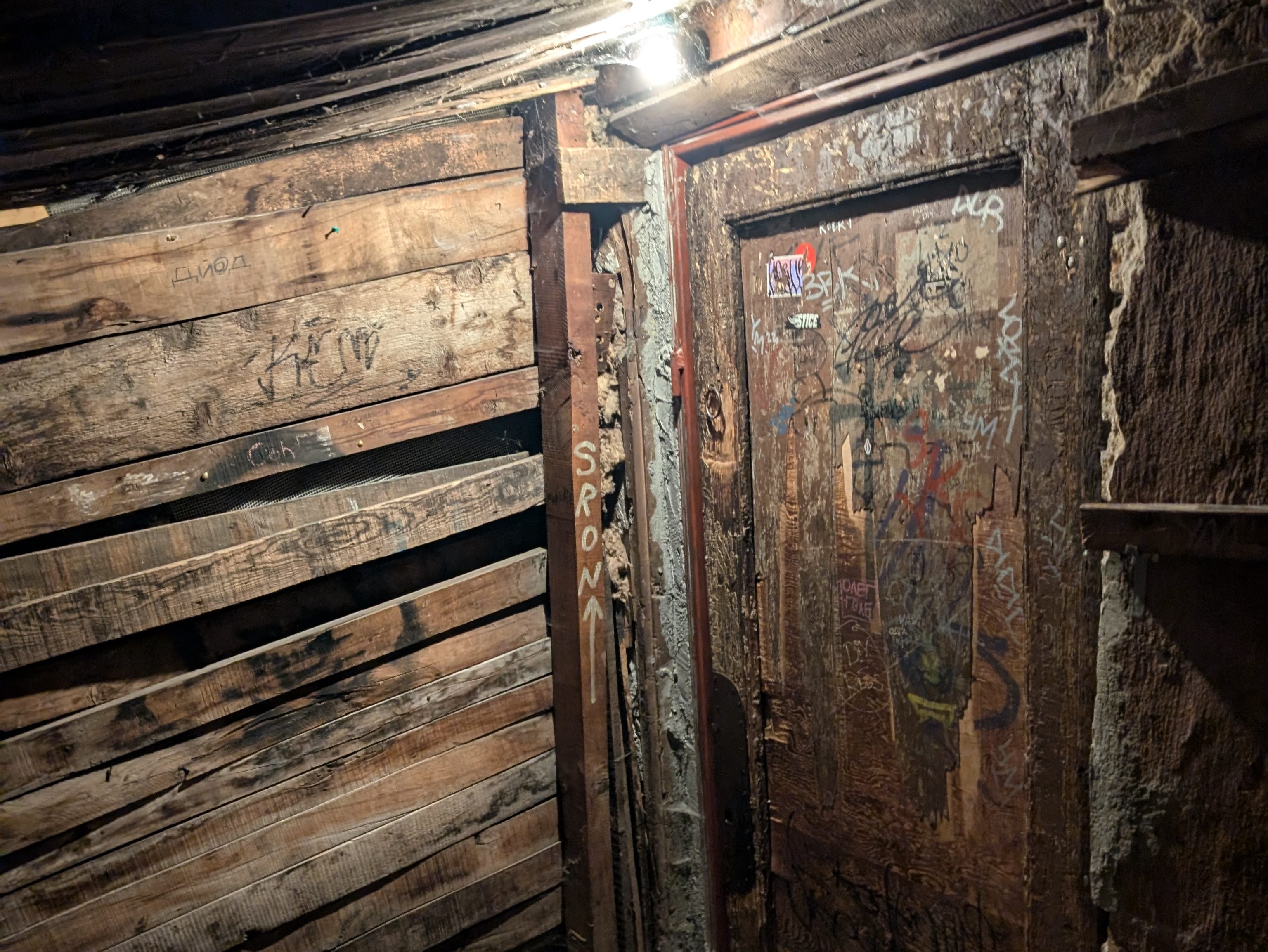
Tentatively trudging down another filthy alley just off 6th September Street, strewn with rubbish bags from the apartment blocks backing onto it and adorned with garish graffiti, a dim bulb slowly became visible towards the end. A bulb which hung over an old, wooden doorway.
It was a miracle that the whole thing was still standing. The porch was constructed from planks which had long since become dislodged from where they were nailed to the wooden posts behind, leaving gaping holes in the structure around the door. The whole thing was ramshackle, totally unmarked and purposely invisible to anyone casually passing by and not in the habit of taking risks walking down dark alleys.
“Hambara wasn’t hidden as a gimmick. It was hidden by necessity”
In fact, there was really no guarantee that this was even the correct door. Walking up to the lit porch, the whole thing had a distinct feeling that it was closed for business. Luckily this was something which I had read to expect.
I knocked and waited.
After a few seconds, the door creaked open and we were invited inside by a moody looking waitress. It had taken some trying but we had finally made it to Hambara. My girlfriend, quite concerned at this point about some sort of hostage situation developing down a Bulgarian alleyway at night, was relieved to be off the street.
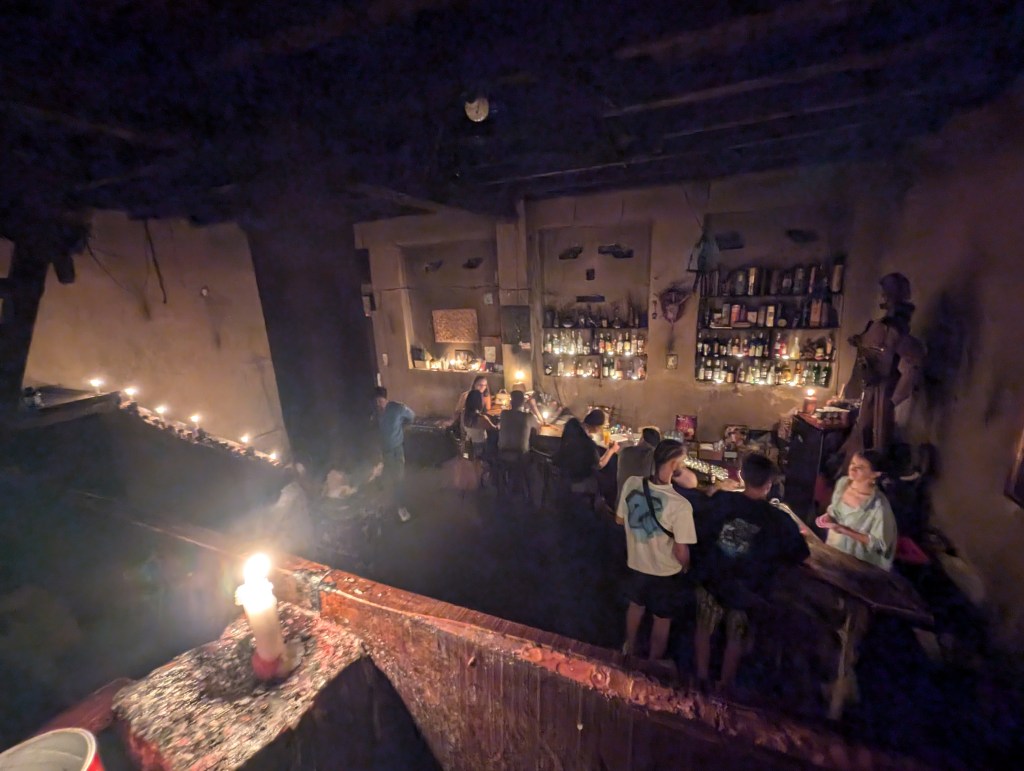
Relief then quickly turned to surprise as we stepped out into a cavernous, double height space, held up by wooden beams and brick columns in almost as advanced a state of disrepair as the porch outside.
The whole room was dimly lit by warm, gently flickering candles that were periodically replaced by the bar staff as they passed between the long bench tables. It felt as if, in stepping through the nondescript and dilapidated door, we had been transported back into sometime around the 19th Century. It was clear that there was no electricity throughout the whole establishment.
Again, this was entirely intentional and, in fact, necessary. There was a point in time where it would have been dangerous for this bar to be connected to the Soviet grid. Its connection would have left it exposed and visible to the authorities determined to close it down.
Hambara wasn’t hidden as a gimmick. It was hidden by necessity as a former hangout of the Bulgarian intelligentsia during the country’s time behind the Iron Curtain as part of the USSR. The people who frequented this candle-lit cavern of a space could, in many cases, have been classed as enemies of the state.
It was here that ideas which were anathema to the likes of Stalin or Khrushchev would have been discussed. Discussions centring around democracy, capitalist ideology or Western literature would have been next to impossible on the paranoia-soaked streets just the other side of the wooden door keeping Hambara separate from the outside world. Inside it was a case of anything goes.
There were even rumours of a printing press inside the bar, allowing patrons to slowly spread their banned ideologies that were contrary to those distributed by the totalitarian Soviet system.
It wasn’t as if anyone was allowed to enter in those days either. The door was protected, with passwords whispered to those already inside serving as the only means of entry. This way, undesirables or, even worse, secret police officers were kept at arm’s length.
Walking from a table situated upon a mezzanine only accessible by a set of rickety and extremely steep steps, I headed towards the bar and drank in the palpable sense of history around me. As much as Hambara was undeniably a place where many Bulgarians still come to drink today, it also felt like a living museum. It was a monument to subversion and subtlety.
One by one, the tables around us began to fill up with people dutifully knocking on the door and being let in subject to the whims of the bar staff. As the room filled, it echoed with conversations in the same way it doubtless had done for decades up until my visit. This wasn’t like other places where drinkers would have to shout to each other to be heard over the latest hits from the Bulgarian charts. Instead, it was soundtracked by its clients as their voices echoed off the tall, yellowed walls.
“This had been the way things had worked for decades, with the Bulgarian intelligentsia witnessing exactly the same ritual”
Steadily, the conversations became cloaked in a thickening layer of smoke, both from the candles and the multitude of cigarettes which were being smoked by at least half of the room. It was another historical hangover from Hambara’s existence long before smoking was known to be harmful, and the more the bar became engulfed in sickly tobacco fumes, the more I was enchanted by the otherworldly charm of the place, enforced entirely by the necessity of it remaining hidden.
Of course, now that there was no need to be invisible, things could have changed. Outside smoking areas could have been added and electricity could have been fitted to allow for mod cons such as card payments or a heating system which doubtless would be necessary during a cold Bulgarian winter.
That would be missing the point though. Even though the cigarette smoke permeated through all of my clothes and deep enough into my lungs to elicit a persistent cough while I sat and chatted, I was glad it did. It cemented Hambara’s place as a piece of living Bulgarian history.
Indeed, it is places like this which really serve to bring a city alive for a visitor. I like a generic wine bar as much as the next tourist, particularly when sitting out on the street and watching people as they go about their daily business while I sip a glass of Pinot Grigio, there was something all the more special and memorable about Hambara.
It was the small acts, like when the waitress did her rounds with a handful of fresh candles. When she found that one was burning low, she would quickly light the new one off the old, before splodging the new one down on top of the old, in the process extinguishing it and using the melted wax to keep the new one upright. Of course, there is no evidence to confirm it either way but it felt as if this had been the way things had worked for decades, with the Bulgarian intelligentsia witnessing exactly the same ritual.
This process left large stalactites of wax dripping off almost every surface available. Again, it was anyone’s guess how long they had been there, though it left a palpable sense of history in a way that was so much more alive than any museum could possibly dream of achieving.
Later on in the evening, as we stepped outside and the wooden door slammed shut behind us to leave us back in another of Sofia’s dark alleyways, I drew in a breath of fresh air and grinned at the thought of what I had just been lucky enough to experience.
I was, of course, lucky that I didn’t have to visit as part of an act of secrecy unlike thousands of people preceding me. However, that made an evening at Hambara no less special or memorable as I was enveloped once again by the bright, street-lit and distinctly 21st Century streets of Sofia.
 Into The Elsewhere