
Anyone travelling through South America will confirm that, unlike in other parts of the world, tuk tuks are not good news. As much as they’re the undisputed king of short-distance Indian public transport, in South America the connotations are different.
That’s because, in South America, the humble tuk tuk tends only to be driven by people who couldn’t otherwise afford a car. Particularly in Lima, the capital of Peru, the tuk tuk is a sure-fire sign of an area which a tourist probably shouldn’t be setting foot in.
Still, I didn’t know that.
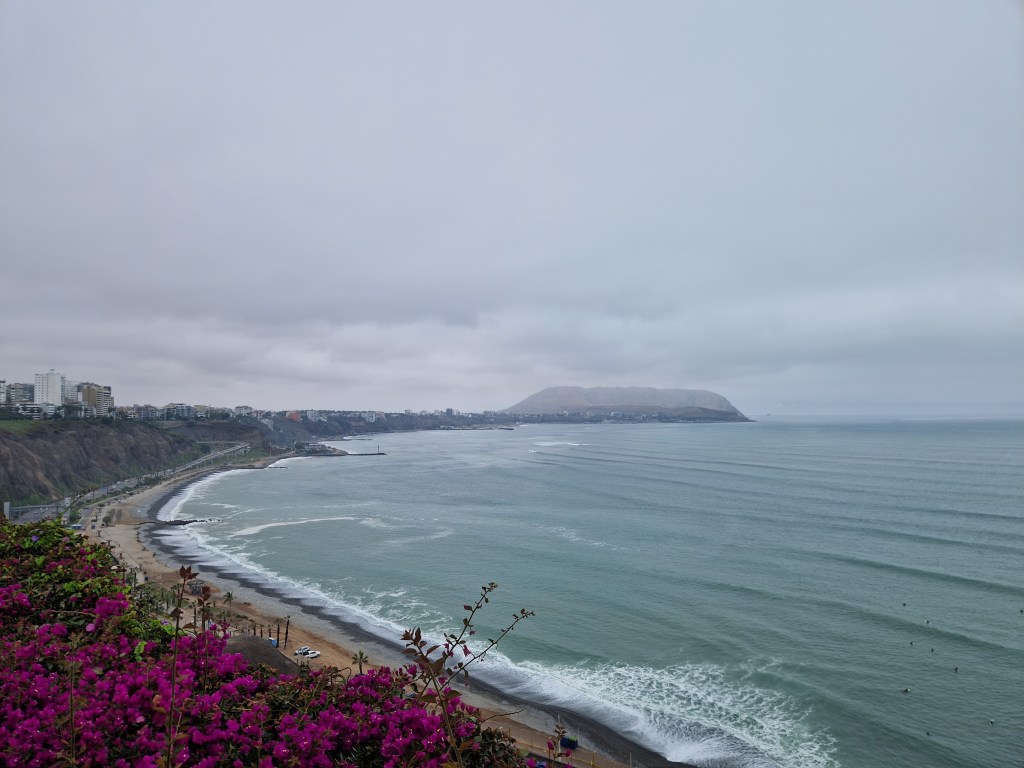
I didn’t need to. Of course, I had a vague knowledge of the fabled places somewhere in the depths of Lima where I would be significantly more likely to be robbed than if I stuck within the comfortable confines of Miraflores. I could see the Hilton from my hostel rooftop bar, there was an excellent ceviche restaurant just a stone’s throw away and the sound of the Pacific Ocean lapping at the earthy clifftops was just a brief walk down the road. What more would a tourist need?
Miraflores is the sort of district which has the tendency to lull an unsuspecting visitor into a false sense of security. Having just arrived on the continent, fresh from London, I had of course heard about and read a lot around personal security and the regional risks of robbery, often violent. On the ground, I saw a completely different story though.
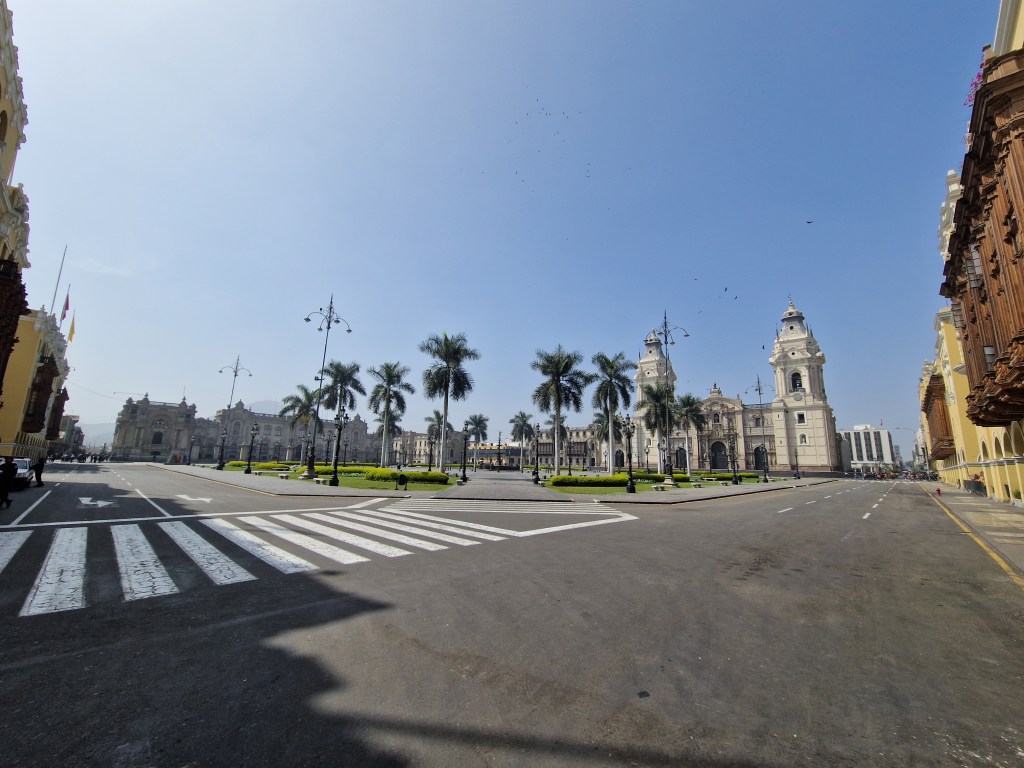
Besides a couple of hilltop neighbourhoods which were pointed at by guides from a very safe distance there was no evidence to assume these tales were anything besides scare stories, designed to keep the less adventurous away from the continent as a whole. I never felt unsafe and there was, frankly, no reason to worry at any point.
Confidence quickly grew as I fell into sync with the bustle and noise which seemed to permeate every crevice of Lima, from its manic buses to its side street cafés.
My exact experience of and acclimatisation to the city are a story for a different occasion, though. After just a few days, I knew I had to get to Cusco (the country’s second city) as I had booked to hike the Inca Trail – one of those once-in-a-lifetime experiences which I couldn’t wait for. As much as carrying $700 in cash to pay for it had been an inconvenience so far in the trip, my excitement for what was down the road more than made up for it.
Not wanting to splash out on a flight, nor return to the airport so soon after arriving through it, I quickly managed to book myself a bus for the 24-hour journey over the Andes mountains, bound for the former capital of the Incan Empire.
“Miraflores and San Juan de Miraflores—they sound pretty similar, right?”
Making the booking with the Palomino bus company, I was faced with a choice of hopping on the bus at La Victoria in the city centre or, half an hour later, getting on at San Juan de Miraflores. It was an obvious decision – this was a long bus journey. The thought of having to spend an extra half an hour on the bus as it wove through the indescribable Lima traffic wasn’t appealing so I ticked the option for San Juan de Miraflores and thought nothing more of it.
Besides, Miraflores and San Juan de Miraflores—they sound pretty similar, right?
When it came to my actual departure, I was packed up and ready to go. With my large backpack loaded onto my back and strapped tightly round my waist and then a second on my front containing all my valuables, I was fully laden. Everything I would need for the Inca Trail and a lot more besides was ready to be lugged all the way to Cusco.
Before I knew it, I had said goodbye to the hostel reception, thrown my big pack into the boot of a battered Uber and was on my way to the bus garage. The glass blocks of Miraflores shrunk in the rear-view mirror, closely followed by the charming, bohemian restaurants and bats of Barranco.
Then the tuk tuks started to appear.
At the same time, the size of the buildings shrunk. The glassy, luxurious façades of Miraflores had given way to concrete and bare brick, unfinished floors and iron bars placed over all windows at ground level. Even so, I was still in the relative safety of my Uber and not hugely concerned as we rolled onto a slip road leading to a much larger highway.
As much as I was safe in that moment though, I withdrew my phone from my pocket to check whether that was a state of affairs which was set to continue. Bringing up Google, I tapped out a search: “Lima most dangerous areas”. Waiting as the slow Peruvian internet struggled to bring up the results stretched on for an eternity as concern grew for the unfamiliar location where this taxi would drop me off in just a few minutes.
The results appeared as I followed a link to the New Peruvian, without any idea of the legitimacy of my source. Then, at number ten on the list, was San Juan de Miraflores, with an asterisk noting that this wasn’t to be confused with Miraflores.
My heart skipped a beat as I read on. I was driving right into the heart of one of Lima’s most dangerous areas.
The taxi pressed on as the numbers of tuk tuks multiplied. Staring out the window and resigned to my fate, I could only admire the ingenious modifications which had been made to most of them from hastily fitted body kits to flashing lights, sponsor decals and pretend rear spoilers. It was a far cry from the relative uniformity of the tuk tuks of India which I was much more used to.
I could also see that I would be the only gringo for miles around. Not a single other face was white. My Spanish was also poor so, if something was going to happen, the likelihood of understanding it was slim.
Scenario planning on the taxi’s back seat quickly took hold to prevent a bout of full-scale panic. Chief among the immediate concerns was if someone was to see me inside the taxi and try, opportunistically, to grab my rucksack out the boot. Not much to be done there about that; the ship had already sailed.
Then there was the issue of what to do when I arrived at the bus garage. I was due to arrive early as requested on my booking confirmation so I just had to pray the bus was on time to minimise the amount of time I was stuck in the waiting room. I would also have to try and obscure myself from the street as best as possible, though I had no idea if it was actually going to be possible.
After a short while running through it all in my head, I gave up. Things were out of my hands and I was at the mercy of the Lima evening, with the sun slowly setting over the unfinished houses, shops and apartment blocks. There was no going back and I just had to wait for the bus and hope nothing happened.
Then the Uber ground to a halt. Stepping out of the rear door, I was keen to gather my stuff and head straight inside the garage across the pavement as quickly as possible to attract the smallest amount of attention possible. The pavements were grubby, with bin bags dumped randomly on dusty verges separating carriageways on the main road out of town.
“I sat … and contemplated how I was going to get $700 in Cusco when the cash I currently had was nicked”
The garage itself was one of the few whitewashed buildings on the road, though it still retained the bars over its windows that all its neighbours also sported. Stepping inside, things were actually fairly normal, clean and calm besides the security guard with his pistol holstered on his waist.
Despite the relative normality, the bus couldn’t come fast enough for me though. Checking my bag in, I was disappointed to see that there were windows on two sides of the waiting room which minimised my chances of hiding out of sight. I sat slumped in a chair with my head down and contemplated how I was going to get $700 in Cusco when the cash I currently had was nicked in the next few minutes.
Then the time which the bus was due to arrive quickly came and went. What was supposed to be 20 minutes of suspense, disaster planning and an unhealthily elevated heart rate soon became 40. Other vehicles came and went, picking up parcels to be distributed across the country, with my ears pricking up at a means of escape each time, only to be disappointed at the sight of yet another nondescript white van or truck.
Still, I remained unseen in my corner of the waiting room as I carefully monitored the movements of the armed security guard should I need him to come to my aid. Eventually (and once the sun had set completely), another deep-throated roar of an engine sounded in my ears as my ride to Cusco arrived at the garage. I would be safe.
In many ways, I was extremely lucky. Through the experience, I began to fully understand, appreciate and respect the stories which I had read about online before arriving in Peru. That said, I had escaped from a close call fortunately unscathed beyond being more than a touch frightened as I approached the garage and sat there helplessly waiting.
From the safety of my bus seat, I watched as the tuk tuks of Lima’s San Juan de Miraflores disappeared into the distant past, just like the comfier confines of its near namesake had just over an hour earlier.
 Into The Elsewhere