It’s something which I won’t often admit but Top Gear was a not insignificant influence on my childhood. Each Sunday evening, I would sit in front of the TV, enthralled at the adventures the trio embarked upon. Embarrassingly, I absorbed some of their idiosyncrasies into my own personality for a time. It also developed in me a love for cars and all things automotive.
Over the many years since the show moved on from its most famous presenters, I did too. Sure, I endlessly watched the repeats (and still occasionally do) to the point where I almost knew some episodes verbatim. However, the influence of Top Gear around who I was as a person waned. Thankfully, I sounded less like an adolescent version of Jeremy Clarkson and my interest in cars also decreased.
“That night was light on sleep”
Only one thing really strongly remained: the idea of a world being out there which was ripe for exploration, adventure and as a setting to push the limits of a person’s comfort zone.
From the expeditions to Kenya, Myanmar or even the North Pole aired on BBC Two of a Sunday, my desire to go and travel to some of these places only increased. Of course Top Gear wasn’t a travel show but travel was an intrinsic part of what made the whole thing Top Gear. I was inspired.
A special episode which I always found myself returning to was the Bolivia Special. Watching three decrepit off-roaders negotiate all that Bolivia could throw at them, from the Amazon to the Atacama opened my eyes to the natural beauty of South America’s most wild country.
And then there was Death Road.
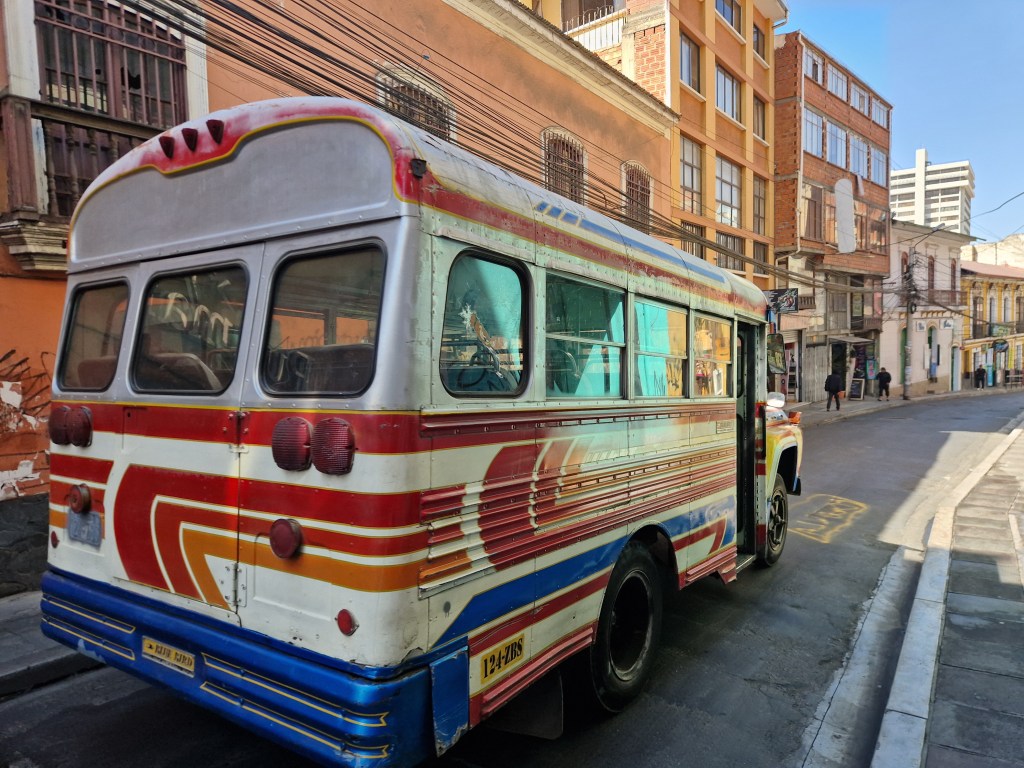
When I arrived in La Paz, I was vaguely aware that it would be possible to visit the scene of some of the most death-defying footage ever shot on Top Gear. I had heard from people who had travelled through the country before me that a new road had been built, opening it up to tourists on mountain bikes looking to understand what gave this 70 kilometre stretch of gravel such a blood-curdling name. Even so, I had no interest.
I had seen the episode (multiple times). This wasn’t a place to be messed with; a single track road snaking its way along the side of a mountain through the rainforest. Drops large enough that anyone cycling over them would have time to realise what they had done before hitting the bottom. A surface rutted and bumpy enough to send you flying over that edge in a split second. Having watched the episode, I knew what I would face and told myself I wouldn’t do it.
Then, in the La Paz hostel bar one evening, I was convinced by a group of backpackers to join them the following day. That night was light on sleep.
The minivan pulled up by the hostel entrance just as the sun was beginning to peek over La Paz’s tightly packed streets and bathe those already out of bed in a warm, orangey glow. We were told by our Bolivian guides that we would be heading out of town for a few hours, collecting the bikes at the top of the road and cycling in the opposite direction to Top Gear, which thankfully made the whole ride downhill.
I tried to doze off towards the back of the lurching bus as we disentangled ourselves from the blaring horns and perpetual gridlock of the city centre. However, my body and mind were filled with a mixture of excitement in following in the steps of Top Gear and dread for the moment when I would be flying off the edge of a cliff so tall I wouldn’t be able to see the bottom as I careered off it. Sleep was, once again, impossible as the bus ground to a halt at a grey gravel car park somewhere high above La Paz.
Across the open expanse, a trailer full of mountain bikes from a brand I certainly hadn’t heard of was being unloaded by a couple of squat Bolivian men.
“My eyes remained largely fixed to the road surface no more than three metres ahead of my front wheel”
We trudged over to our steeds, each being passed one which our guide thought would fit best. When he got to me however, he stopped.
“Tell me if this bike doesn’t fit,” he murmured as he passed over a machine which was clearly far too small for my two metre tall frame. Bolivians are generally quite short, certainly compared to Europeans, and their bike sizing reflected that as I pulled the saddle up to its highest point, only to sit down on it with my legs still bent as my feet were flat on the ground.
A new bike was produced, this time larger but without the rear suspension fitted to all the other models being ridden by the rest of the group. My nerves jangled as we pedalled away.
After a long and extremely fast stretch on a tarmac road, stopping periodically to ensure that everyone was following and to flag any potholes which lay ahead, our guide turned off the main road and onto a tiny dirt track heading to the other side of the valley.
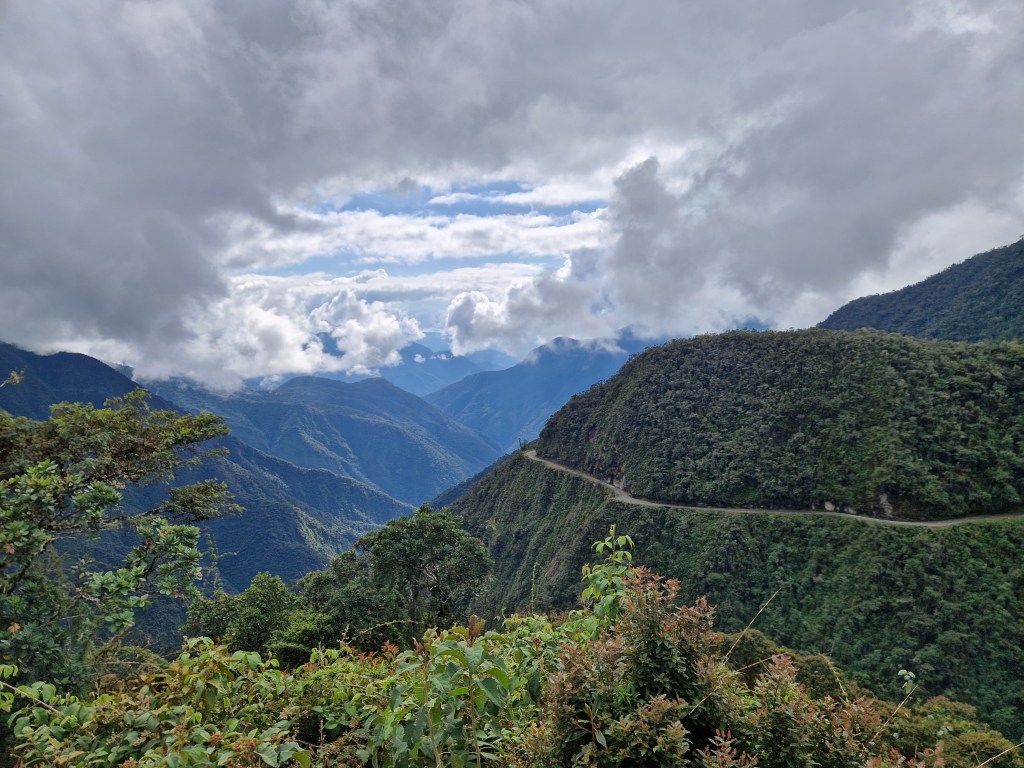
It looked like a place more likely to be a lunch stop than the entrance to what was once a main road to Bolivia’s north. The surface was potholed and loose, causing the tyres to slip and skip across the surface as my grip tightened on the handlebar in front of me. We hadn’t even entered the road proper at this stage – the drop down to the valley floor was far away – though I felt desperately unsafe.
I couldn’t imagine how it must have felt for the three presenters I had watched climb the same road but in broken cars and with all manner of traffic heading in both directions according to unknown and unwritten rules.
After one final check where I silently nodded when asked if I was okay, our guide set off down the hill and towards the impossibly steep and forested slopes.
The surface worsened as we clung to the side of the valley. Periodically, waterfalls fell directly onto the road and had partially washed it away, leaving what remained perilously slippery. As the bike bounced over the rocks, I could feel the repeated impact taking its toll in my hands, which were gripping the handlebar tightly out of fear of losing control and crashing.
Every so often, the group would stop to rest and let some of the slower riders (myself included) catch up. At this point, there were photo opportunities which also served to admire the intense, natural beauty of the surroundings.
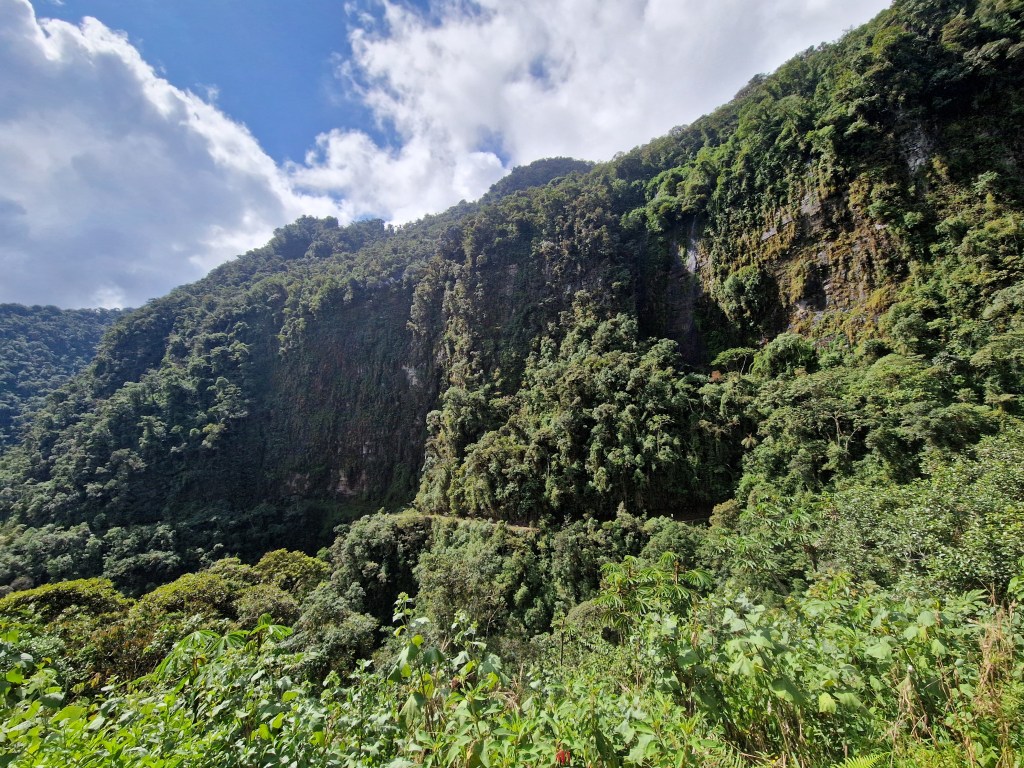
Though the road and the way in which I had chosen to experience it was nerve-shredding and exhausting, the lush valley that enveloped the group was anything but. The altitude that we were cycling at meant that the forest wasn’t so dense that it obscured any view, instead allowing you to see for miles as the vegetation grew thicker on the lower reaches of the slopes.
If I hadn’t been on a bike, terrified of being pitched over the road’s edge by a stray rock, it would have been extremely pleasant to stare at for hours.
Still, we cycled on and my eyes remained largely fixed to the road surface no more than three metres ahead of my front wheel, scanning for hazards.
Quite a way down the valley, the guide beckoned us to stop again under a particularly large waterfall. I immediately recognised where I was from my childhood memories of watching the TV: this was the point where the most perilous moment in Top Gear’s Bolivia Special occurred as Jeremy Clarkson was forced to pass another car on the outside of the road, inching closer and closer to the loose edge.
Stopping at that point, it became clear that if he had got the manoeuvre wrong, he wouldn’t have been the first to fall at that specific point. Looking over the edge, the rainforest could be seen sprouting through the rusted remains of a bus which had fallen at the exact same point decades earlier. All the occupants had been killed.
After that history lesson, my bike speed reduced yet further.
Despite my decreasing pace, the rainforest slowly began to thin as we approached Coroico, the town which served as the start of the road for Top Gear and the end of our ride down it. By this point, my hands had been battered to the point that they were numb and I was struggling to muster the grip strength to operate the creaking and squealing brakes. Behind the dust being kicked up by the group ahead of me, I was increasingly relieved that the experience was over, both from a personal safety and comfort standpoint.
When I pulled up at the restaurant at the bottom of the hill, I was desperate to get off my bike. Even so, I had completed the trip and followed in the footsteps of three people who had, in large part, inspired me to travel to the region in the first place. Though I hadn’t enjoyed my time on Death Road in itself, I was still grateful to have had my eyes opened as a teenager to the world out there by watching, years ago, those three presenters go through the same experience and so much else.
 Into The Elsewhere