
The climb wouldn’t be pleasant. It wasn’t something people would normally be subjected to but, unfortunately, it just wasn’t my day in Sarajevo. Throughout the weekend I had spent in the city, the bobsled track used for the 1984 Winter Olympics remained firmly on the to-do list, only to be steadily knocked down by more accessible and easier attractions.
Then, when it finally came to it? The cable car to the top of the mountain was down for maintenance. Damn.
“This was a country in the process of healing itself”
No trip to this wonderful, largely overlooked, Balkan city would have been complete without seeing the derelict remains of where Olympic glory, and so much more, had been fought for, won and lost. I stocked up with water and steeled myself for the climb up the steep slopes, ready for the contents of the bottles I bought to quickly reach a temperature more appropriate for brewing tea than drinking, such was the heat.
Even so, as far as cities to walk through and out of, Sarajevo was neither too large nor indescribably ugly. The road quickly gave way to steep cobbled lanes with steps cut in at regular intervals to aid others making the same journey to the top of the hill.
This led to a peaceful atmosphere as the steps prevented any road traffic from getting anywhere near me as I walked. Feeling the sweat slowly bead under my backpack, I followed the route up, passing the few other people either brave enough or too pressed for time to wait for the cable car to become operational again.
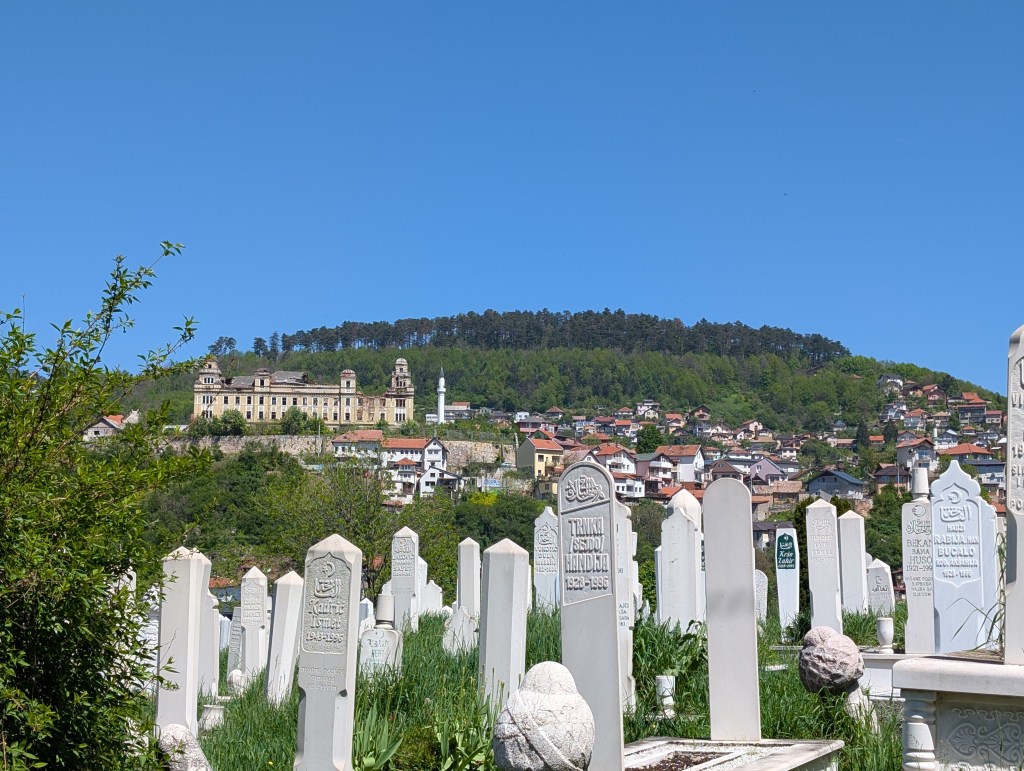
Before too long, the buildings lining the street opened out. Suddenly, I was walking through a cemetery, full of brilliant white stones, excellently maintained so that they looked as if they had only recently been placed where they sat.
The white stones were purposely reminiscent of those that anyone visiting the battlefields of Belgium or Northern France would recall. They were brilliant white, fairly plain and, though occasionally wonky, organised into regimented and regular ranks, each stone similar to its neighbours. Walking past the rows as I ascended the hillside, the years during which the cemetery’s occupants died were also remarkably regular, with them almost all falling between 1993 and 1995.
This epitomised the contradictory nature of Sarajevo as a city and Bosnia and Herzegovina as a country. At first glance, any location would seem peaceful, serene and often beautiful. It was only upon closer inspection that a tourist would begin to discover the uglier truth which lurked beneath that calm, skin-deep surface. This was a country in the process of healing itself.
The bobsled track which I was walking slowly towards was no different in that regard.
This was all because of the Bosnian War of the 1990s. Upon the split of Bosnia and Herzegovina from Yugoslavia after the fall of the Berlin Wall, a separatist movement quickly materialised in Republika Srpska, financed and aided by neighbouring Serbia. Sarajevo itself was besieged from 1992 to 1996 by those troops.
Just 30 years ago, the climb I was making would have been impossible. I was within a couple of miles of the border with Republika Srpska, still a region of Bosnia and Herzegovina today. I would almost inevitably have been shot dead by a sniper, just like the more than 6,000 people who were killed across the city during that bloody period.
This made the climb all the more special and poignant as I took each step. This was a road which was a very real demonstration of how far the Balkans have come in the intervening 30 years in terms of reconciliation and the maintenance of peace. Of course, tensions still exist and a separatist movement still thrives within Republika Srpska. Even so, it was safe.
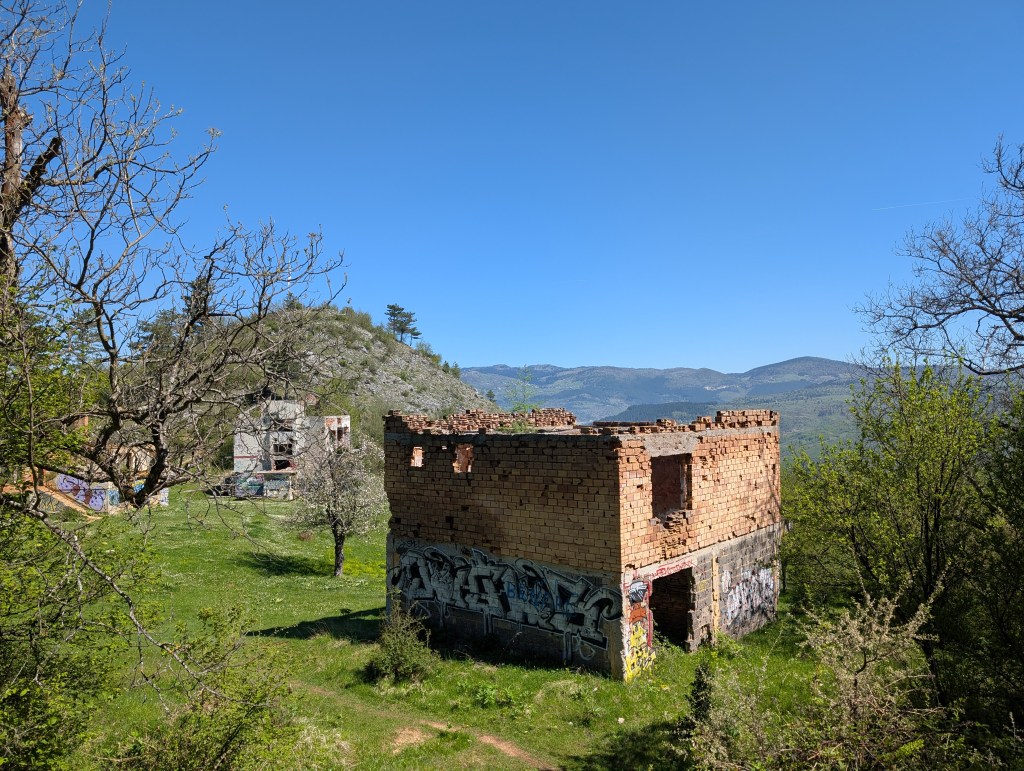
Approaching the forested peak of the hill which served as a home for the bobsled track, the signs of the relatively recently ceased conflict were clearer. Stepping off the path (something which wasn’t always advisable in Bosnia and Herzegovina due to ongoing issues with mines), I approached a small cluster of houses which stood alone in a field. The fact they were covered in graffiti was the only sign that it was safe for a human to set foot in the area.
There was little left of the structures, with their brick and concrete walls holding up no roofs, which had long since been bombed out and fallen in. Approaching closer, I could see bullet holes tracing their way across the remains of the walls, the pockmarks dotted across each and every face.
“The contrast between Olympic venue and siege artillery position … was almost unimaginable”
In many ways, this brought the notion of the war and how recently it had happened into much greater clarity. This was unlike either of the World Wars – the vast majority of the local population still remembered the events of the 90s, whether that be through the friends and family that they lost, the buildings that were destroyed or the atrocities which were committed. There hadn’t been the same amount of time passed, or money provided, to be able to patch over the ugly scars as there had been since the last time my home country experienced something even remotely similar.
I continued to climb steadily, with the path levelling out as I slowly approached the domed top of the hill and, with it, the bottom of the bobsled track – the location which, less than a decade before the outbreak of war, was where Olympic dreams had been made or broken.
Then, through the trees, I glimpsed a large, floating concrete wall. Suspended just over a metre off the ground, this was the outside of one of the final curves of the bobsled track. In comparison to the natural lines of the trees and hillside, it was clumsy – a classic example of Soviet function over style.

Predictably, the track fell into disrepair during the Bosnian War and had never been restored since. More recently (and once the whole area had been cleared of mines), the course was turned into a park for locals to enjoy and to get out of the city below. It was also a popular site for urban exploration and street art, with the enormous and steeply banked corners serving as giant grey canvases for people to be able to paint anything from brightly coloured words to depictions of characters such as Wile E. Coyote.
It was a constantly changing exhibition of the best of Balkan street art in a location where it could be appreciated by the public, rather than where it was seen as a blight on the streets of Sarajevo or any other city.
Walking up the track was a strange experience. Despite the derelict nature of the track, it still felt as if anyone walking up or down it would have to jump out of the way at a moment’s notice to avoid a bobsled plummeting down the hill. Certainly, it felt like an unnatural place for a person to be.
Still, I made my way up the rest of the track, admiring the vibrant painting which adorned almost every available surface. Every now and then, the track split in two as different sections veered off to allow less experienced sliders to break the whole course down into smaller and more manageable sections. Where the junctions were placed, large sections of concrete track, long since seized, could be slid into and out of the track to divert the sleds in the correct direction.
It was these less-used sections away from the main track which showed the most telling signs of why this track fell into disrepair so quickly. While the main run had been restored to an extent, doubtless to make it safer for tourists like myself as they walked up and down it, these extra spurs remained almost exactly as they were 30 years ago.
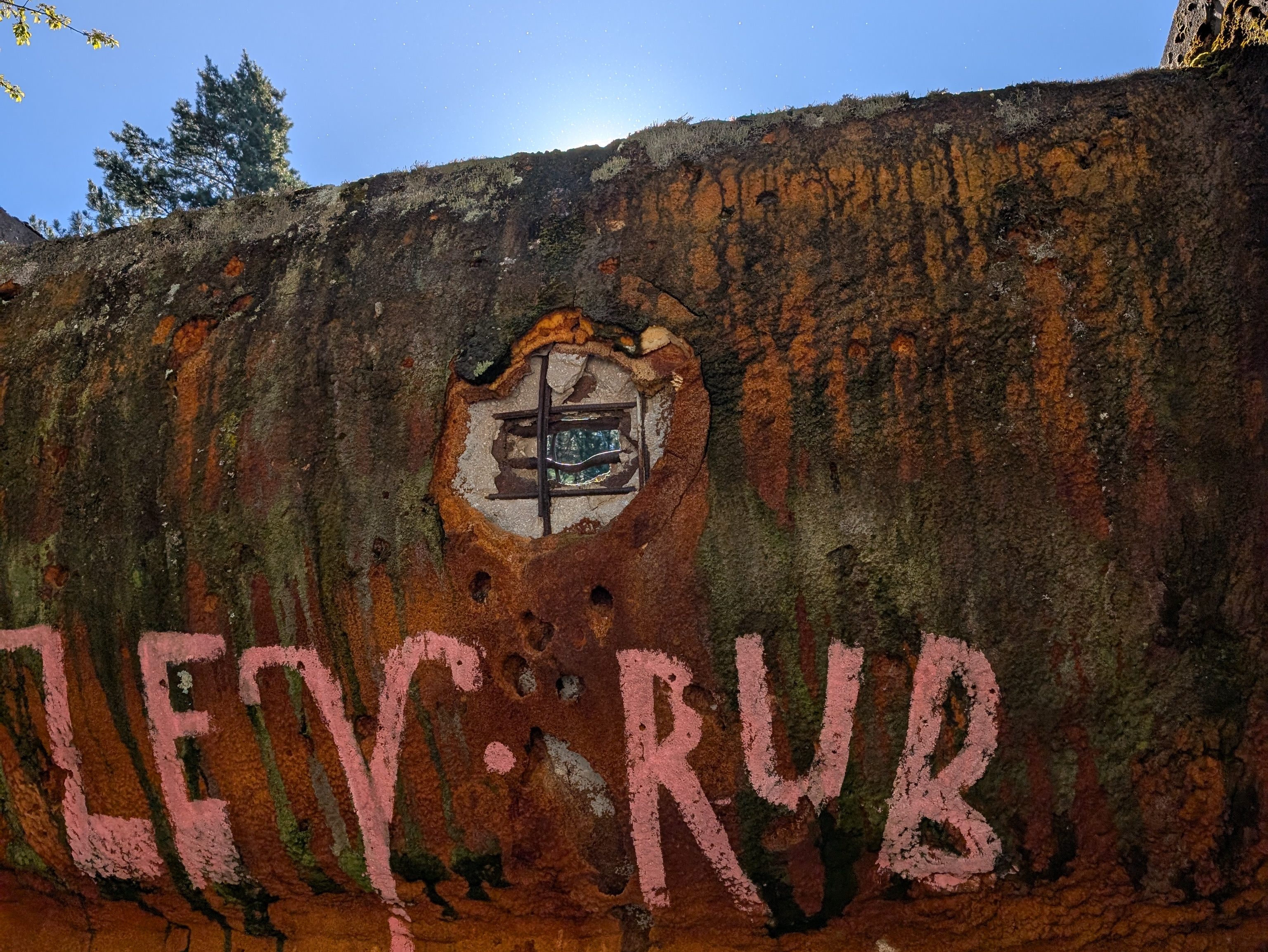
It was here where the holes which had been cut in by the separatist troops from Republika Srpska were still visible. These were used by snipers to ensure that no troops were able to ascend the hill to attack the artillery positions being used to shell the city below.
The contrast between Olympic venue and siege artillery position in the space of just a few years was almost unimaginable.
Eventually, I reached the summit of the hill and, with it, the top of the cable car which I had been prevented from taking earlier in the day. Looking out through a gap in the trees, I could see almost the entirety of Sarajevo below.
I tried to comprehend how a city which was so vibrant and lively, with its bars, Ottoman-style city centre and thriving, youthful culture demonstrated by the endless artworks on the bobsled track, could have experienced such pain and suffering just 30 years ago.
It overshadowed almost every aspect of the city, though that was entirely understandable. The fact that the conflict was still well within living memory and the evidence of those events was still obviously visible was humbling for someone who had grown up only knowing peace and stability in their own country.
Though it was only a relatively short walk up the hillside to the top of the track used in the 1984 Winter Olympics, I gained so much more in understanding the story of the country, from the high of international sporting events to the low of war and the recovery which is still ongoing today.
 Into The Elsewhere