Petra needs no introduction. It is one of the Seven Wonders of the World, part of the set for Indiana Jones and a labyrinth of ancient tombs, Roman ruins and spectacular hikes. Among the few places which everyone should try and visit at least once, it greatly rewards those who give it more time than just a day – there is so much more to this ancient city than the famous Treasury.
Please note that these are all my personal recommendations and are not sponsored in any way.
Getting There
Getting to Petra is reasonably easy. The first stage of this will be getting to Jordan and, though it is slightly further away than Aqaba, Amman Queen Alia International Airport is likely your best bet. This has good connections with Royal Jordanian Airlines across Europe, the US East Coast, Asia and North Africa.
Other airlines which fly into Amman include Wizz Air (to Budapest only), Turkish Airlines (to Istanbul) or Lufthansa (to Frankfurt). Be aware that this information was correct at the time of writing. However, with the ongoing conflict in Iran and the wider region, things can change quickly.
Once you’ve got to Amman, JETT offers a daily bus departing Amman Abdali bus station at 6:30am and stopping at 7th Circle at 7:00am. These are both signposted to Petra. Buses can be booked online, though you will need a VPN which places you in Jordan – HMA VPN is a good bet.
At the time of writing, UK nationals need a visa to visit Jordan which is included as part of the Jordan Pass scheme (further details can be found below) or can be bought on arrival in Amman. Full UK travel advice can be found here – note that the amber warning due to the Iran War has now been lifted.
For US citizens, the travel advisory due to the Iran War hasn’t yet been lifted at the time of writing, with the Department of State advising people to reconsider travel. US citizens also need a visa, either on arrival or through Jordan Pass.
Petra Highlights
The highlights of Petra include:
- The Treasury – the Instagram spot everyone is there to see
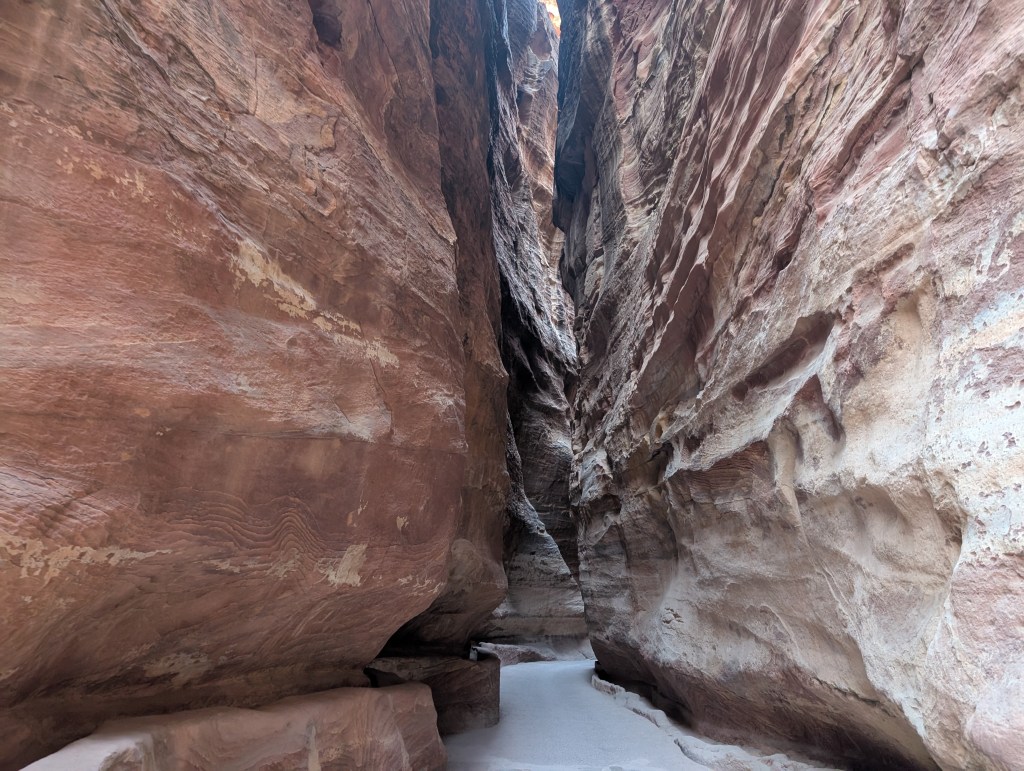
- The Siq – tight and dramatic canyon at the entrance, ending at the Treasury
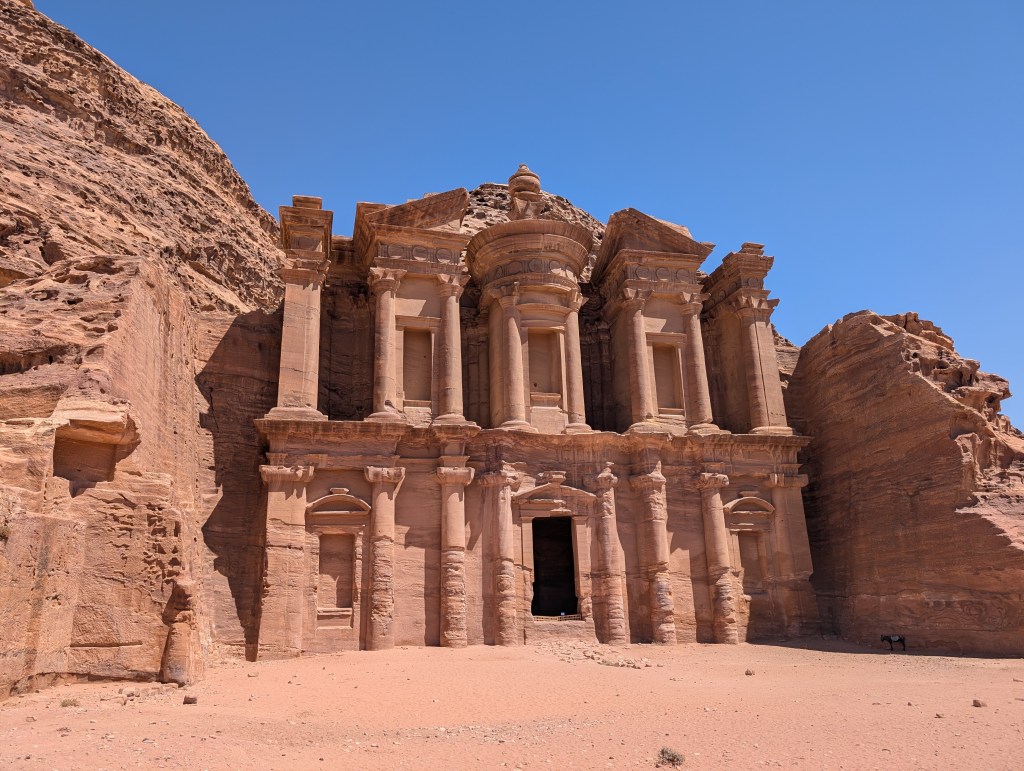
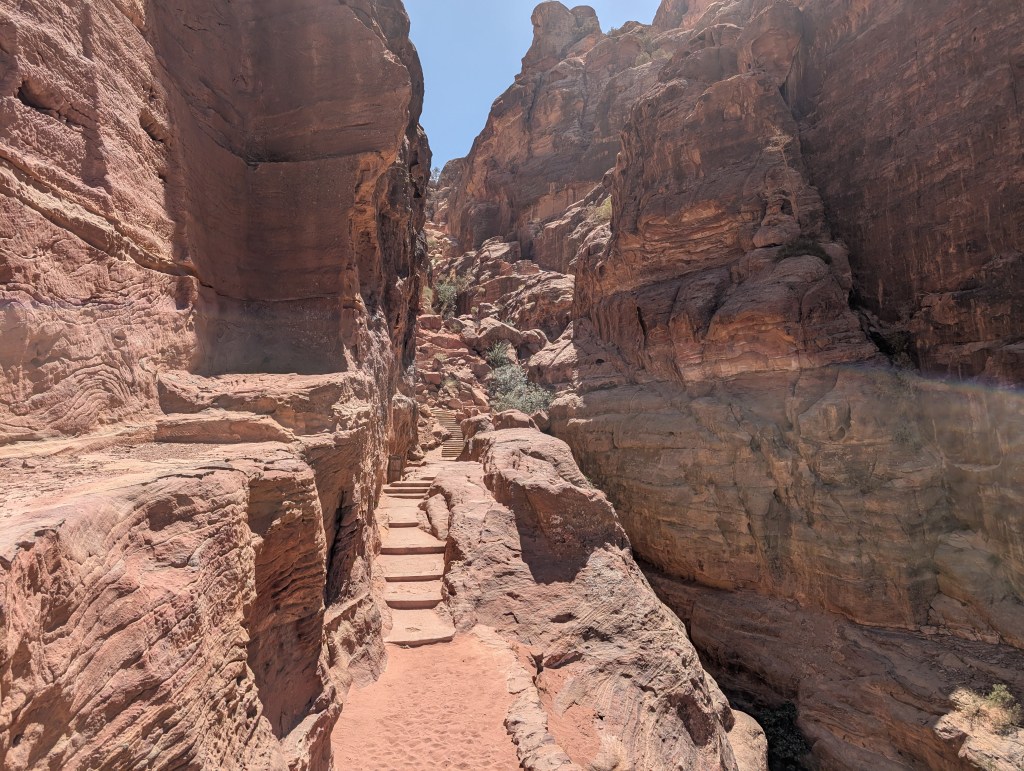
- The Monastery – possibly Petra’s most known hike up to its best monument
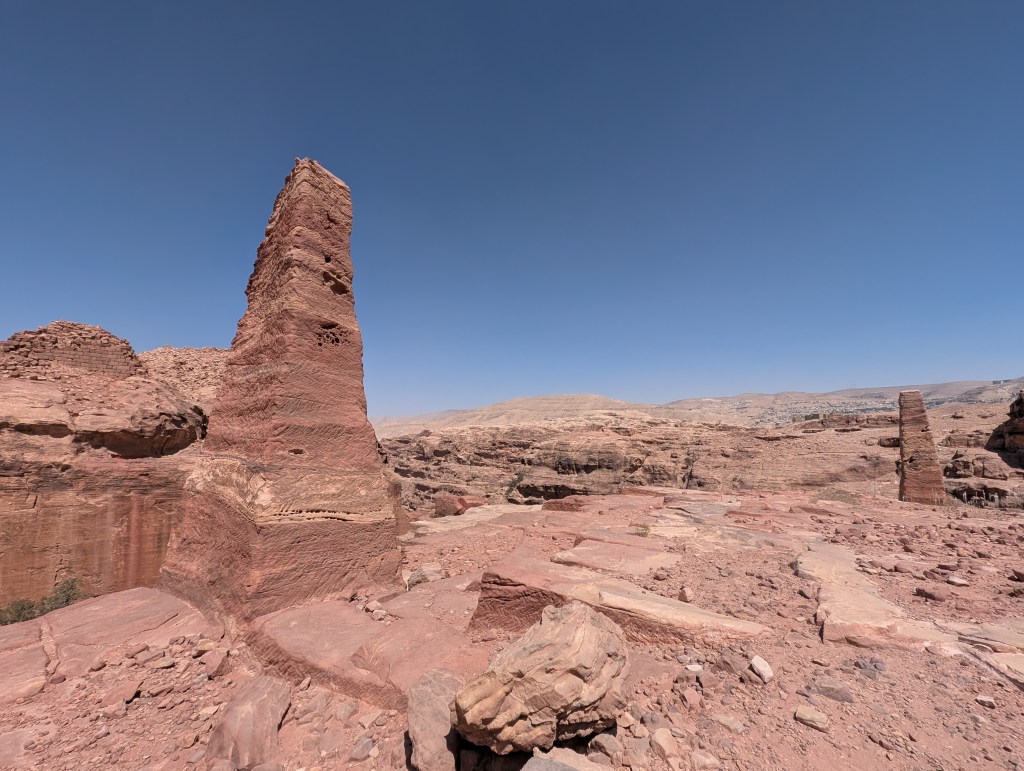
- The High Place of Sacrifice – ritual structures on top of the site’s tallest peak
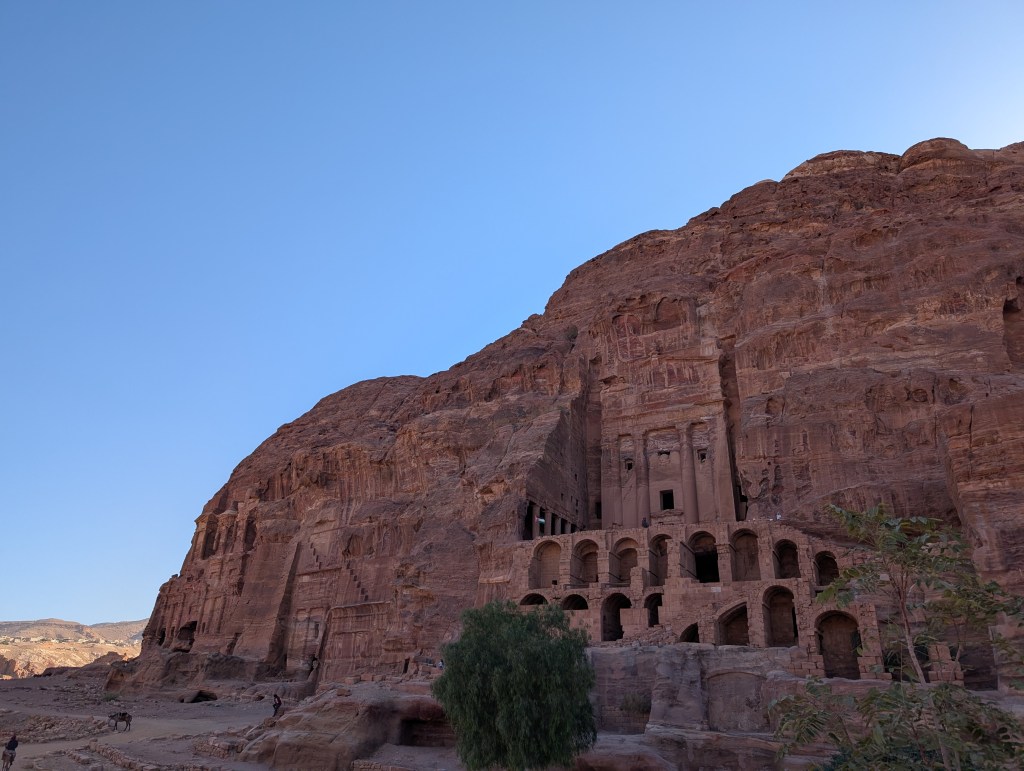
- The Royal Tombs – faded and eroded by the wind, but impressive in scale
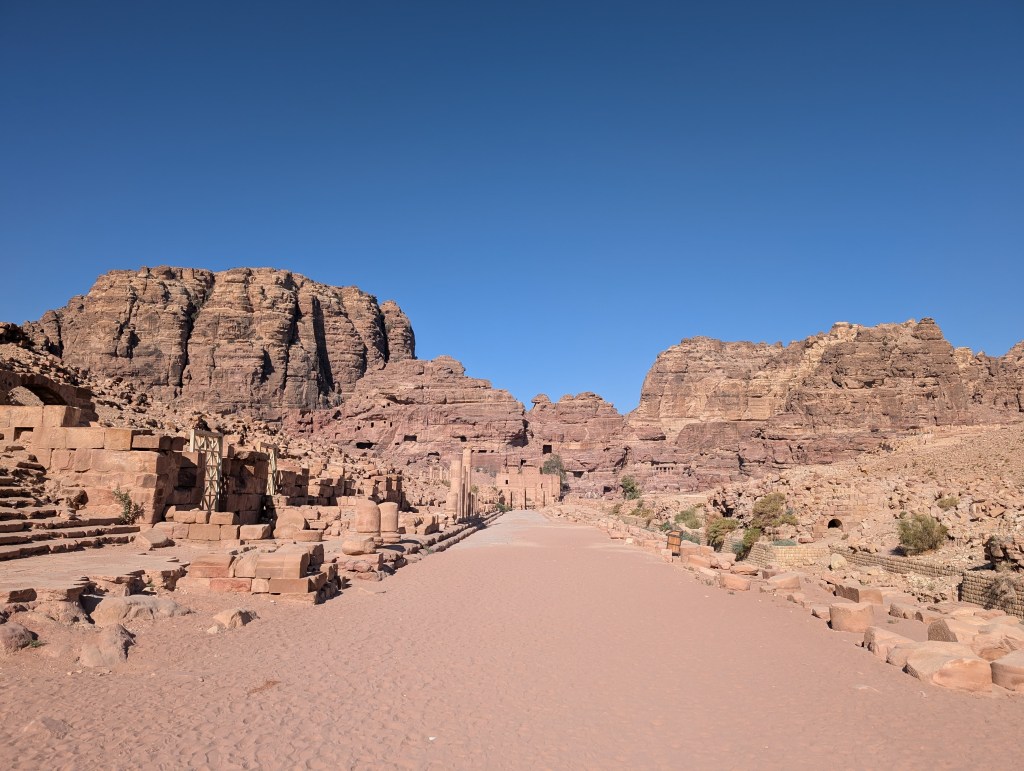
- The Basin – home to the site’s Roman ruins
- The Crusader Fortress – a quieter hike up another hill over the Basin
Getting Around
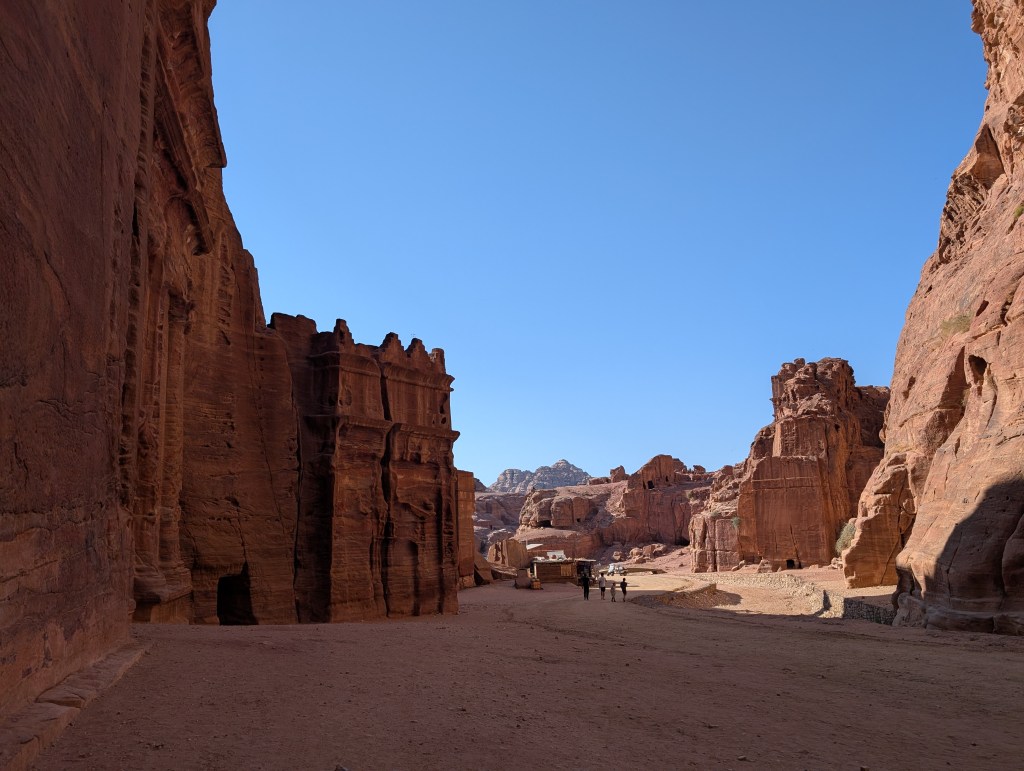
There are few options when it comes to getting around Petra beyond walking. From the entrance gate in Wadi Musa, the town where most people stay around Petra, there is an option to hire a golf cart to take you all the way down the Siq and to the Treasury or further. However, you will pay handsomely for the comfort and, in many ways, the Siq is better enjoyed on foot.
From the entrance gate to the start of the Siq, you will also be offered a horse ride “included in your ticket”. Though the ride is technically free, a hefty tip is always expected at the end.
Finally, when in the basin, you may be offered donkey rides. Not only are these likely to be expensive but animal welfare isn’t something often considered by the donkey owners as they are regularly left out in the sun, with temperatures reaching over 40oC. The same is often true for the horse rides at the entrance.
So (and to keep a long story short), bring a good pair of hiking boots and be prepared to walk miles.
Accommodation
You cannot actually stay in Petra itself. Instead, everybody stays in Wadi Musa. This is an extremely hilly town at the edge of the site. Any bus to Petra or hotel in Petra will actually be in Wadi Musa.
In terms of Wadi Musa accommodation, any number of options are available. Jordan generally doesn’t do hostels, though budget hotels such as Nomads Hotel (dorms available) or Twilight Hotel are good options. Bear in mind though that the less you pay, the further you’ll be from the entrance gate.
The alternative to these budget options is to splash out on one of the large, Western hotels just a stone’s throw from the entrance. While a budget hotel will set you back around £40 a night, the Mövenpick is more like £150 per night. That said, you’ll be able to see the entrance gate from your room’s balcony.
Money
The currency in Jordan is the dinar, which is worth just a little more than the pound at the time of writing. Though some touristy places or posh hotels will take card, many places ae still cash only.
You will need to get your dinar in Jordan as the currency isn’t easily available abroad. Luckily there are many banks and ATMs across the country, though these will charge commission on withdrawals. To minimise this cost, take out larger amounts at once and, if you can, make your withdrawals away from the main entrance to Petra – the commission will be smaller.
It is worth mentioning that there are no ATMs within the Petra site itself (though there are many in Wadi Musa). Make sure you have enough cash on you to last the day. It may also be worth carrying some US dollars as a back up option if needed.
Other Points
At this point, it is worth elaborating on the usefulness of the Jordan Pass. This not only includes your visa cost when entering the country as well as admission to many other historical sites, it also includes your Petra entrance ticket. These come in three flavours depending on how many days you want to explore Petra. If you have the time, the three day pass is well worth it – only this way will you get a sense of the scale of the site.
It may be tempting to hire a tour guide for your visit to Petra. However, unless you are determined to know about every inch of history that the city has stood through, this isn;t really necessary. Petra is a great place just to soak in the historic atmosphere and marvel at the ancient monuments surrounding you. If you want further information, the latest edition of the Lonely Planet guide for Jordan has some decent information as well.
Be aware that the food options in Petra itself are limited, expensive and often poor. Unless you go into the centre of Wadi Musa to a place like Mr Falafel or Al Wadi Restaurant, the options in town aren’t much better in the main tourist areas. Many hotels offer packed lunches for your day’s exploration – something which is often a better option over the tourist traps.
Many people also want the best shot of the Treasury, away from the crowds and before others have arrived. This is possible, though you will need to be in Petra either very early or very late. Midweek is also a much better option (bearing in mind that the Islamic weekend is Friday and Saturday) as fewer locals will be visiting. The best you can do is to be at the gates at 6am, when they open. Otherwise, if you fancy seclusion, look at some alternative trails such as up to the Crusader Fortress.
Bear in mind that, though Petra is by far Jordan’s most touristy spot, women will still be expected to dress modestly. At any rate, this is something which is also just a good idea to avoid the worst effects of the sun, as the almost complete lack of shade can become a perfect recipe for heatstroke if you don’t drink enough water and aren’t sufficiently covered up in the summer, regardless of gender.
Finally, go as soon as you can. At the time of writing, tourism numbers in Jordan have plummeted. First, this was due to the pandemic, then the war in Gaza and more recently the Iran War. As mentioned earlier, the FCDO deem it safe (at the time of writing), yet many are still too scared to visit. As such, your chances of seeing one of the Seven Wonders of the World almost alone is excellent as it stands.

 Into The Elsewhere