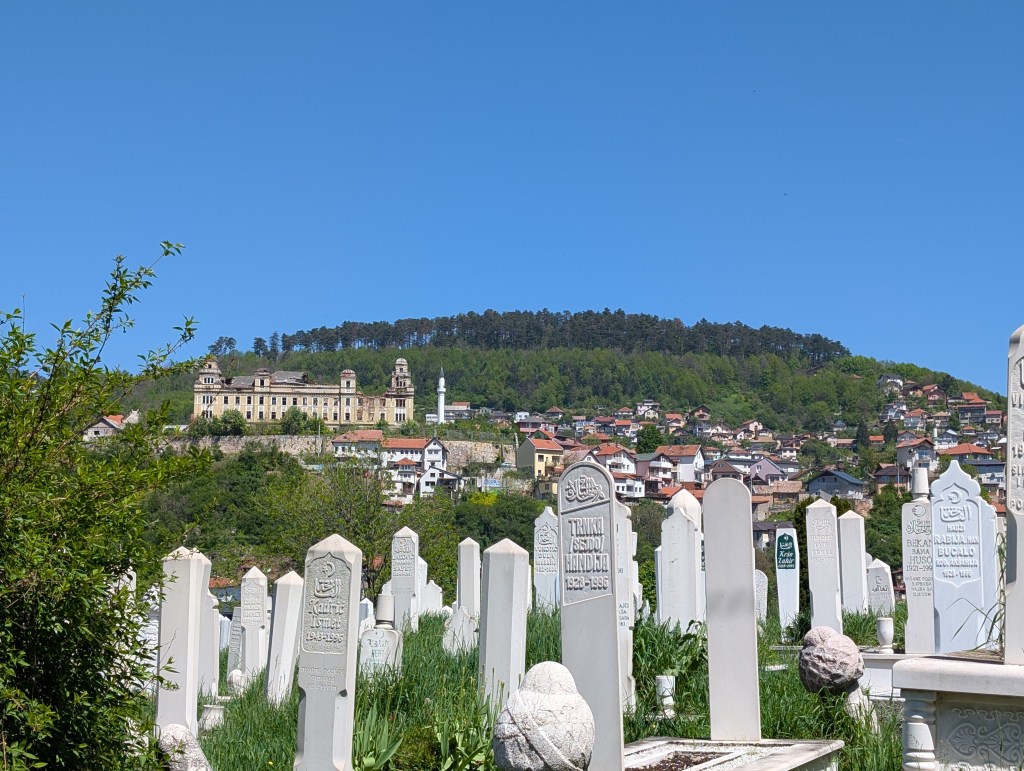
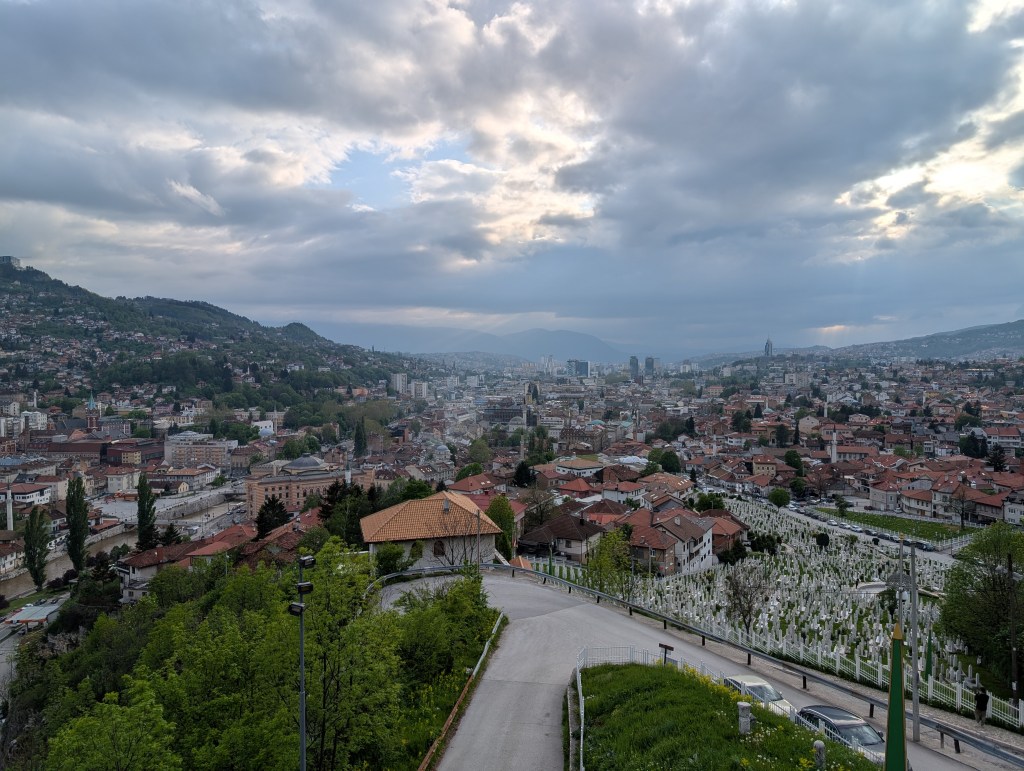
A city which, for so many, has connotations of war, suffering and even genocide. Fortunately, that was the 1990’s and, today, Sarajevo is a completely different place. Yes, the scars remain but what has been built in their place is a vibrant “east meets west” type city, where Ottoman architecture sits next door to something which would be more familiar in Vienna. It is a must visit city for anyone seeking an off-beat European city break.
Please note that these are all my personal recommendations and are not sponsored in any way.

Getting There
Sarajevo has a decent international airport close into the city centre. There is an extensive Wizz Air presence, serving large parts of Europe on a budget (alongside Ryanair), as well as flights to Frankfurt with Lufthansa or Istanbul with Turkish Airlines.
Further afield, the airport is also connected to Doha by Qatar Airways or Dubai with flydubai. Unfortunately, there are no direct connections to the US or further into Asia.
Many people also end up getting to Sarajevo overland. This is possible with a large number of bus connections from the city’s bus station. These include to places such as Zagreb, Vienna or even Berlin. Some trains also run to places such as Mostar from the main station.
There is no need for a visa for anyone visiting Bosnia and Herzegovina from the UK. According to the FCDO (at the time of writing), UK nationals can visit for up to 90 days in a 6 month period. The same is true for US citizens.
City Highlights
The highlights of Sarajevo include:
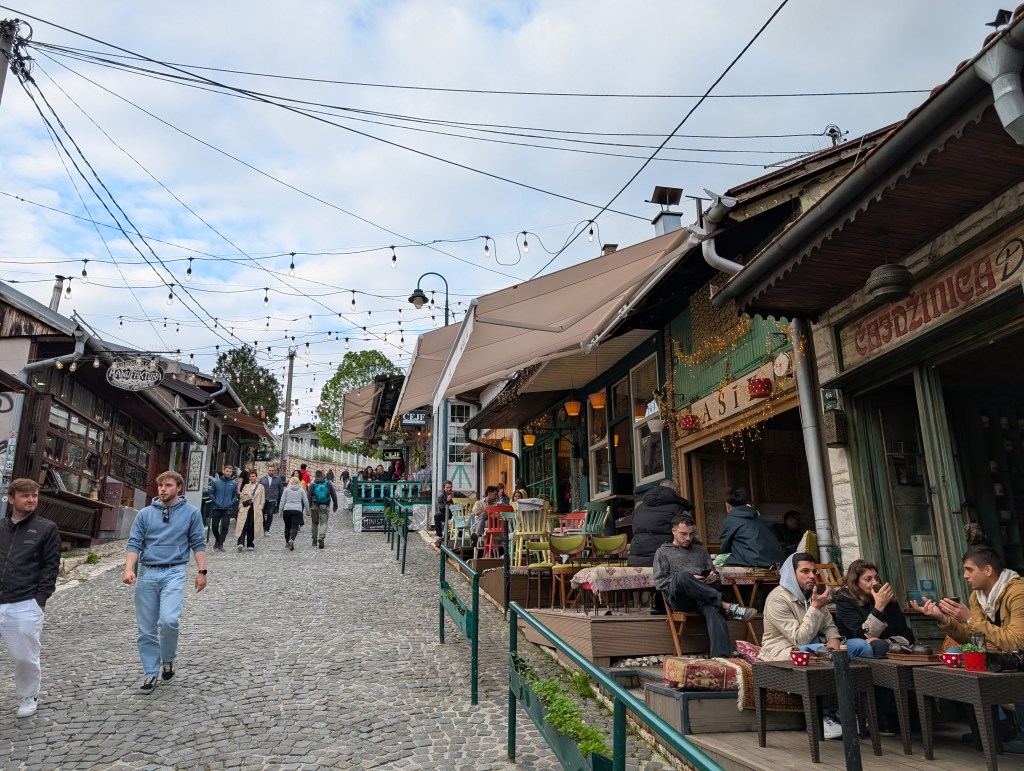
- The city centre – Ottoman bazaars meet Western European architecture
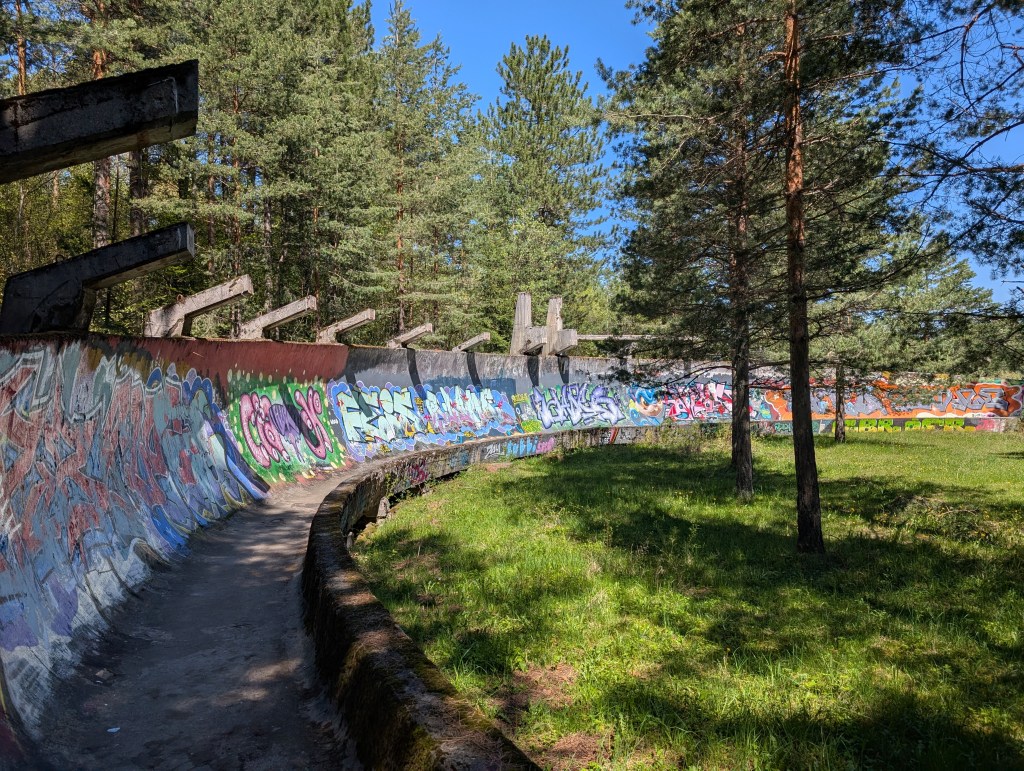
- The bobsled track – used in the 1984 Winter Olympics and now derelict
- Genocide museums – great places to understand the atrocities of the 90’s
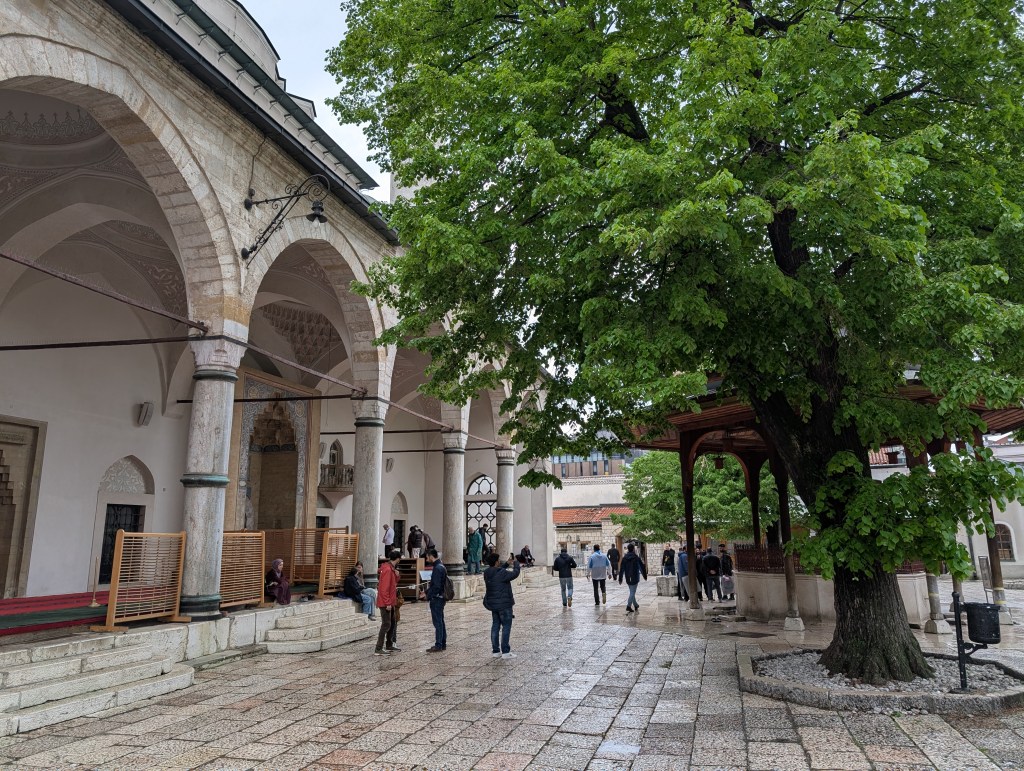
- Ferhadija Mosque – understated but with a beautifully painted interior
- Cafés – the ideal place to unwind and enjoy Bosnian coffee
Getting Around
Sarajevo is home to a fairly extensive tram network, which runs along the bottom of the valley that the city sits within. Though the quality of these trams is variable, from nice and modern to rattling and distinctly Yugoslav, they are a decent way of covering large distances. To use the trams, pay the driver upon boarding.
Getting from the airport to the city centre by bus can be a bit of a faff as you’ll be relying on buses run by a company called Centrotrans. To get your ticket, you’ll need to pay the driver in cash which you’ll probably have to withdraw from one of the airport ATMs.
There is an alternative in the form of the 107 bus, though this can only be caught after a bit of a walk away from the airport and a further walk once its dropped you off to get to the middle of the city. It is, however, significantly cheaper.
None of the traditional ride-hailing heavyweights operate in Bosnia and Herzegovina. As such, if you need a taxi you may well be best off haggling at the side of the road. Either that or download mojTaxi to your phone.
Accommodation
The best hostel in Sarajevo is Hostel Vagabond. While hostels can often be antisocial, especially with the advent of smartphones and the Internet, Vagabond bucks the trend with its warm, communal atmosphere and common area. It’s also in a great location and beds are around £15 per night.
Hotels are, as usual, vastly different in terms of what they offer and cost. More basic options cost around £40 per night whereas a night at the Mariott will set you back over £100 a night.
Money
The currency in Bosnia and Herzegovina is the mark, which isn’t likely to be available in any great quantity outside of the country and the wider Balkan region. However, you will need cash as many places haven’t yet converted to using card (not least the airport bus).
Fortunately, there are many ATMs in the city but most of these charge a high commission. Your best bet for escaping these fees is by finding a branch of MF Banka.
Other Points
Sarajevo (and, more widely, Bosnia and Herzegovina) most recently rose to fame for all the wrong reasons as war broke out in the 1990’s after the dissolution of Yugoslavia. This hit Sarajevo hard, as the city was beseiged and thousands died, particularly in grisly locations such as “snipers alley”. Most were ordinary citizens looking to get the bread they needed to survive the week. If you want to learn more about what happened, there are many museums devoted to the war within the city. The best are Galerija 11/07/95 and The War Childhood Museum. The town hall is also good for a broader overview.
Prior to the war, Sarajevo was also famous for being the place where Archduke Franz Ferdinand was assassinated, triggering World War One. Now, this is a pretty non-descript street corner, marked out by a plaque. To bring it to life, go on a free walking tour of the city, such as this one. Just remember that (cash) tips are expected at the end.
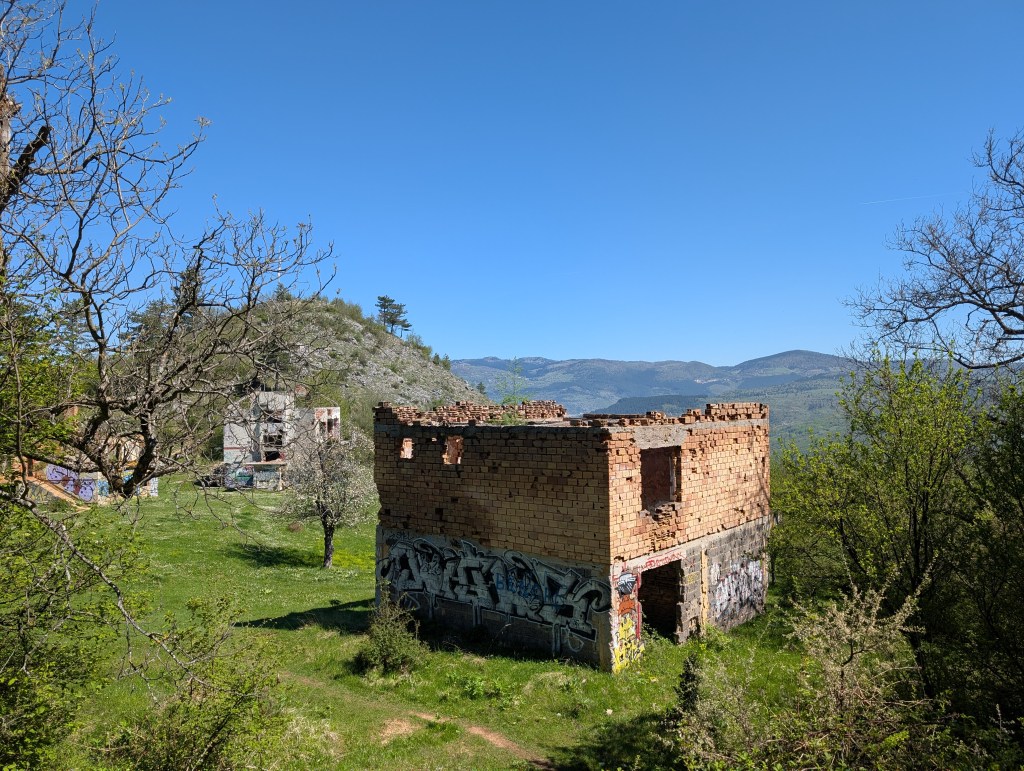
Sarajevo was also host to the 1984 Winter Olympics and the bobsled track above the city is now a major, if derelict, tourist attraction. To get there, take the cable car or, if you’re feeling brave, walk the impossibly steep roads to the top of the hill. The whole track is now covered in street art and is well worth a look, with tourists able to walk up and down the track without any issues.
Sarajevo is also home to some surprisingly decent food, as long as you aren’t vegetarian. The city is often cloaked in clouds of grill smoke from gently sizzling cevapi, a sort of small meat kofta served with a flatbread and onions. It may not sound like much but they are surprisingly addictive and delicious. Finding a good one isn’t hard – just wander round the city centre and go into a place that’s particularly full. Once you’ve eaten, you can wash your food down with Bosnian coffee and baklava, which everyone insists are different to Turkish equivalents even though the similarities are hard to ignore.
 Into The Elsewhere