
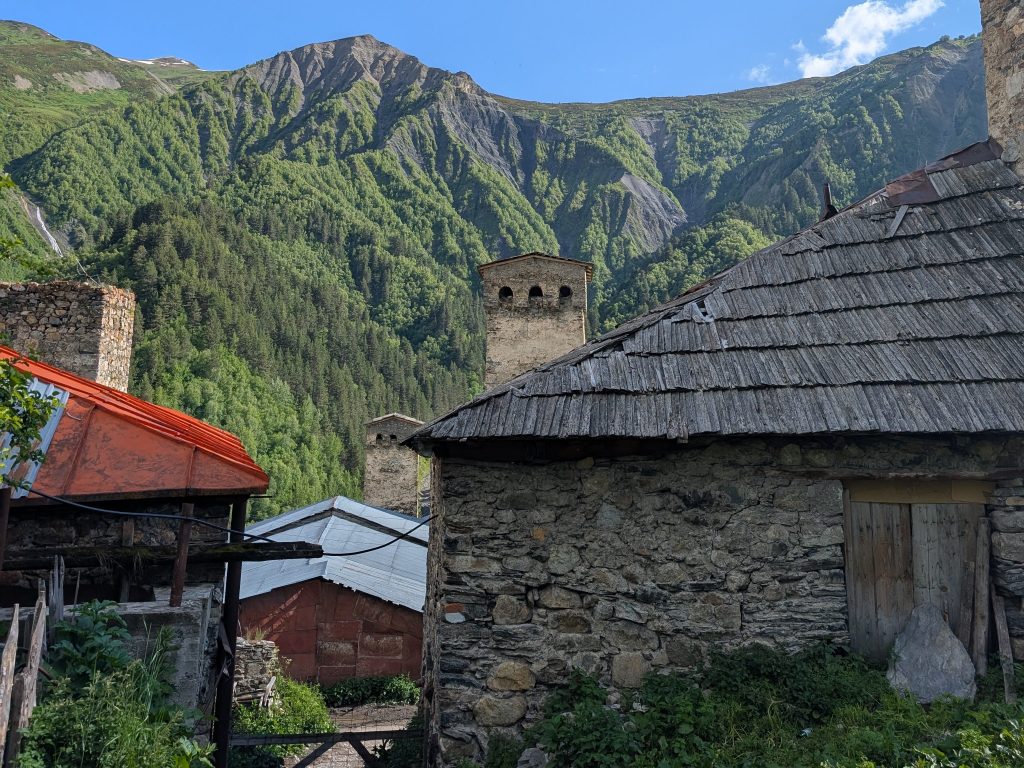
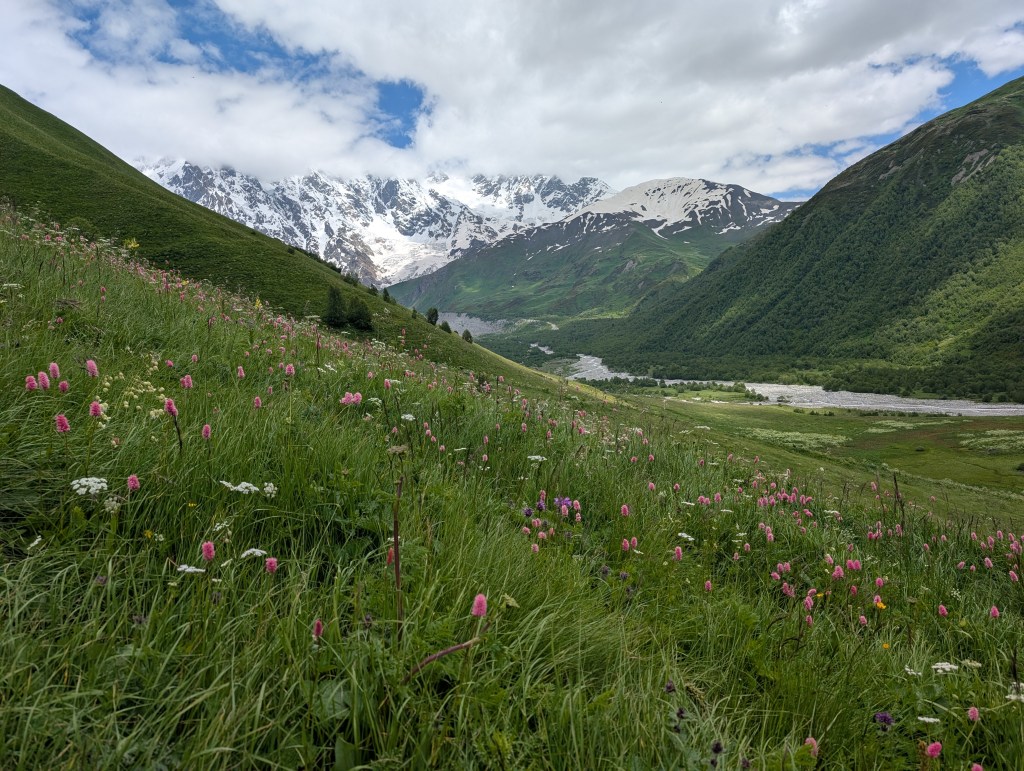
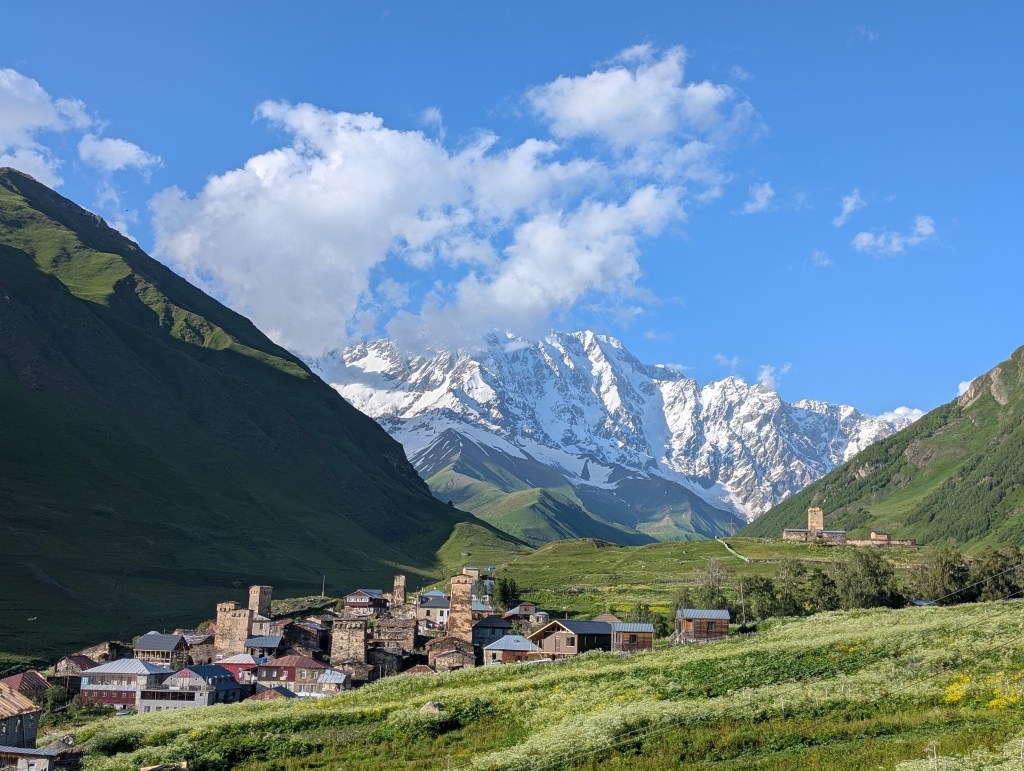
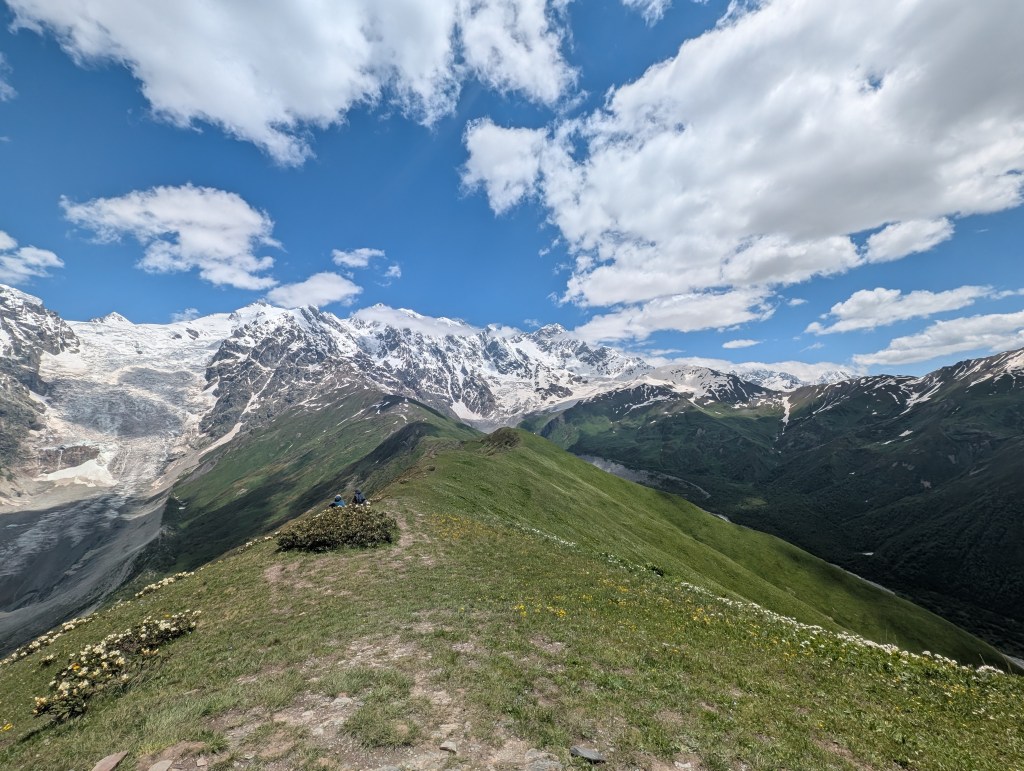
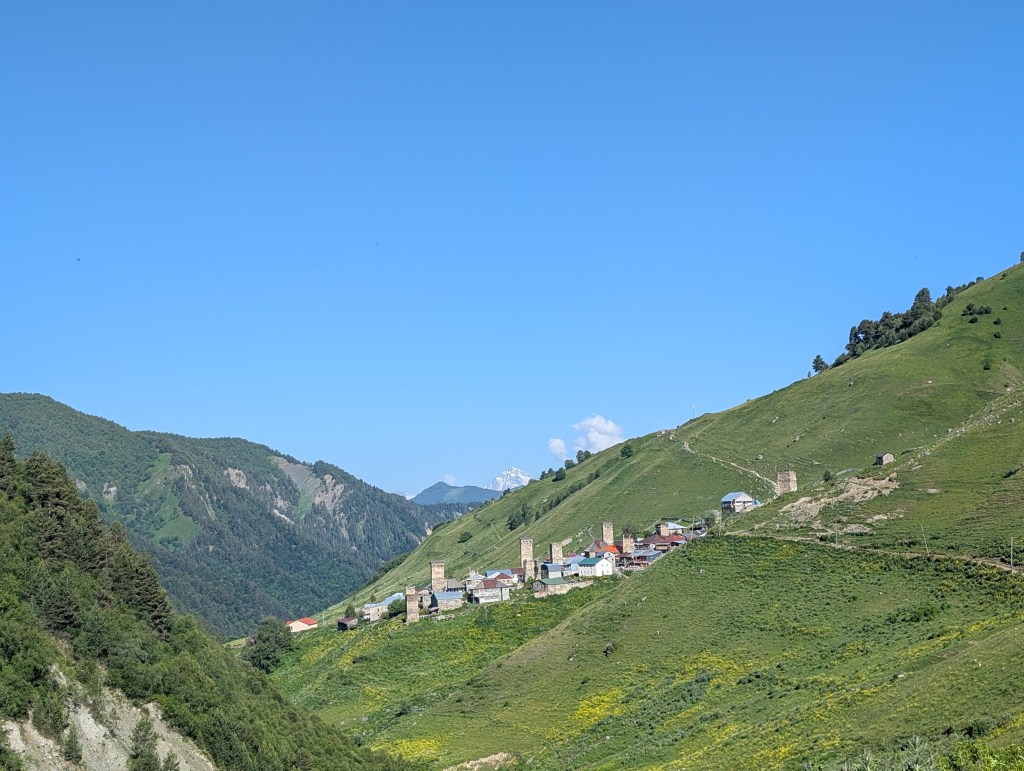
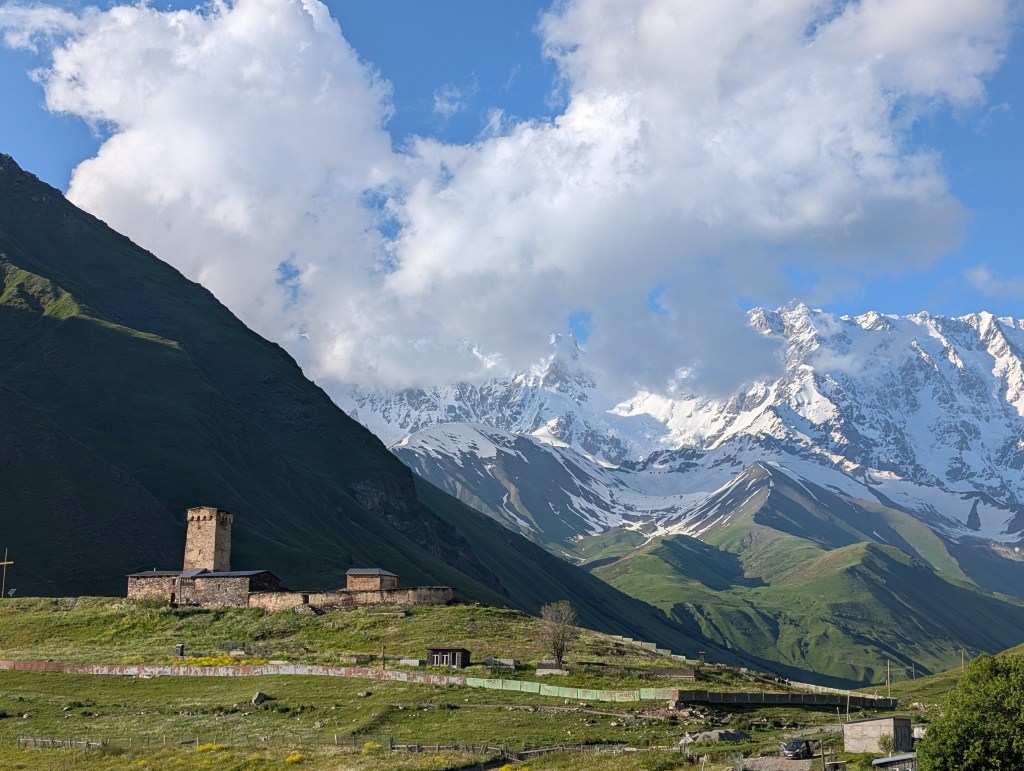
This is Georgia at its absolute, wild, stunning best. From soaring, snow-capped peaks to lush, technicolour wildflower meadows stuffed full of butterflies and some of the most interesting, remote and unique settlements in the whole of Europe, the Svaneti Trail is a criminally underrated and unknown corner of the continent. Yes, its not easy to get to and you’ll have to forego a lot of creature comforts on the way but the rewards are rich and make the trip well worth it.
Please note that these are all my personal recommendations and are not sponsored in any way.
Getting To Georgia
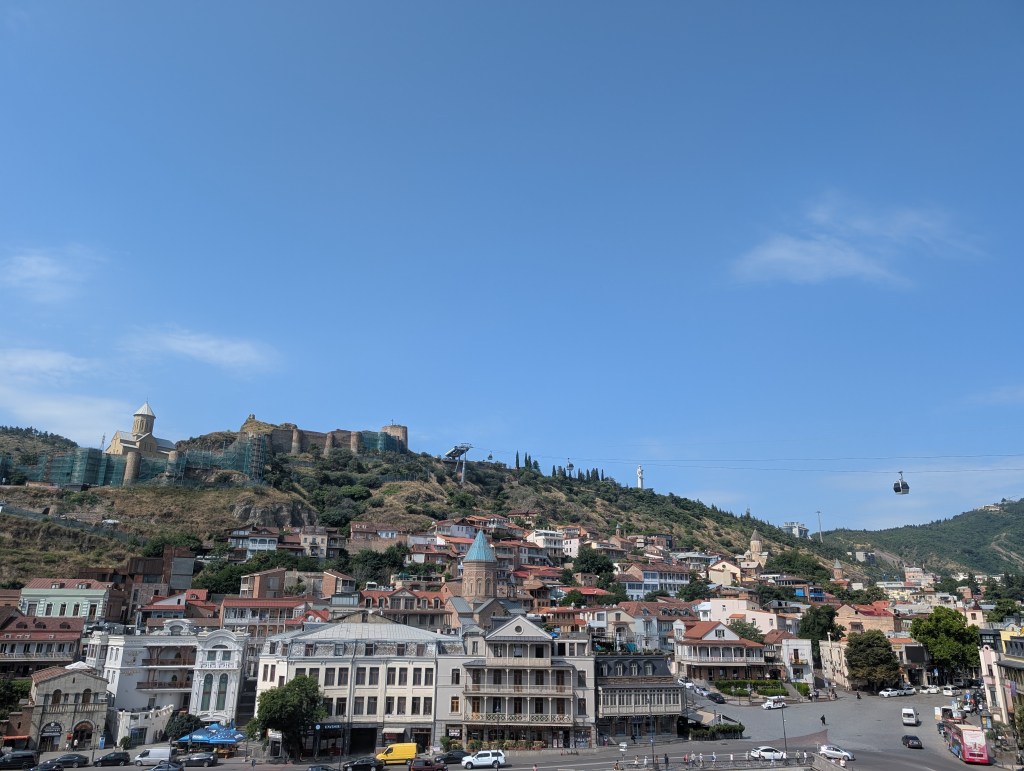
Getting to Georgia is relatively easy from the rest of Europe and the largest airport is in the capital, Tbilisi. From the UK, British Airways and easyJet both fly from London (Heathrow and Luton respectively). Elsewhere, there are flights available with airlines such as Lufthansa (from Munich) or LOT (from Warsaw) among many others. Georgian Airways also have a bit of a European network – though there’s no indication if this is any good or not.
Flights further afield go to Shanghai (with China Eastern), New Delhi (with IndiGo) and Qatar (with Qatar Airways and Georgian Airways). There are no flights direct to the US at the time of writing.
More budget options also fly into Kutaisi, which is also closer to the Svaneti region and therefore the trailhead. The airport is generally served by Wizz Air and has routes to Paris Beauvais, Frankfurt Hahn or Milan Malpensa among others. Unfortunately, there is no direct connection to the UK from Kutaisi at the time of writing.
For UK nationals, the FCDO lists entry requirements for Georgia. At the time of writing, it was possible to visit up to a year without a visa. Information for the USA can be found here.
Getting to Mestia
From either Tbilisi or Kutaisi, you’ll need to travel to Mestia. This is the capital of the Svaneti region and the starting point of the trail to Ushguli.
You have two options from both places. You can either take the train to Zugdidi and then a marshrutka or forget the train (either from Tbilisi station or Kutaisi Airport station) entirely and brave the marshrutka all the way.
The marshrutka is quicker but less comfortable and cannot be booked in advance. From Tbilisi, they depart from outside the train station whereas they leave from a parking lot outside a McDonalds in Kutaisi. Expect to pay the driver (or someone running a cartel on his behalf) in cash upon boarding and arrive early in the morming – there are no departures later than about 10am.
Alternatively, you can book a train ticket to the town of Zugdidi using TKT.GE. These are bookable in advance but only by three weeks. From there, marshrutka drivers sit, waiting for the train’s arrival in the station car park, to take you to Mestia.
You will inevitably end up on a marshrutka either way. It is worth mentioning that the driving standards can be extremely variable, from quite normal to totally maniacal. It’s total luck of the draw and there is no way of knowing what you’ll get until you depart.
The Route
The route most people take along the Svaneti Trail include:
- Day 1 – Mestia to Zhabeshi (16km)
- Day 2 – Zhabeshi to Adishi (11km)
- Day 3 – Adishi to Iprali (19km)
- Day 4 – Iprali to Ushguli (12km)
The first three days of the kike are truly special, though the final day typically just follows the main road between Mestia and Ushguli and is nothing particularly special. If you’re pressed for time, it may be able to coordinate a taxi from Adishi (through your guesthouse) to pick you up in Iprali and drive you directly to Ushguli, rather than walking.
There do seem to be some alternatives to walking along the road, most of which involve 2 GEL tolls at one point or another. An overall GPX of the route (including a detour to avoid the road on the final day) can be found on Komoot.
Unless you plan to walk along the road or trail back to Mestia, you’ll then end up getting a taxi back to the town from Ushguli. Typically, this costs up to 300 GEL for a private car, though waiting to share your ride and cut costs is always an option. Taxis depart from outside this restaurant.
Accommodation
Accommodation on the trail is extremely basic in nature. Expect guesthouses where enterprising locals have opened their doors to tourists to boost their income a bit. The houses have a distinctly homemade feeling and, though they aren’t necessarily comfortable (occasionally with outdoor bathrooms and the like), they are often charming.
Some are bookable in advance online via platforms such as Booking.com, though many still aren’t. During the summer months, they do tend to book up to an extent so advance booking may be a good idea. During shoulder seasons though you’ll find a bed easily without booking.
Money
The Georgian currency is the Lari and generally isn’t available outside of Georgia though Tbilisi, Kutaisi and Mestia have many ATMs. These tend to charge relatively large withdrawal fees so taking out large sums at once may be advisable. Otherwise, according to online sources, Cartu Bank and Basis Bank may offer free withdrawals.
You may also find it useful to take some US dollars with you as a back up plan. Some places within Tbilisi may also take cards, though cash is always preferred.
There are no ATMs on the Svaneti Trail itself or in Ushguli. When you leave Mestia, make sure you have enough cash to last you until you return back to Mestia.
Other Points
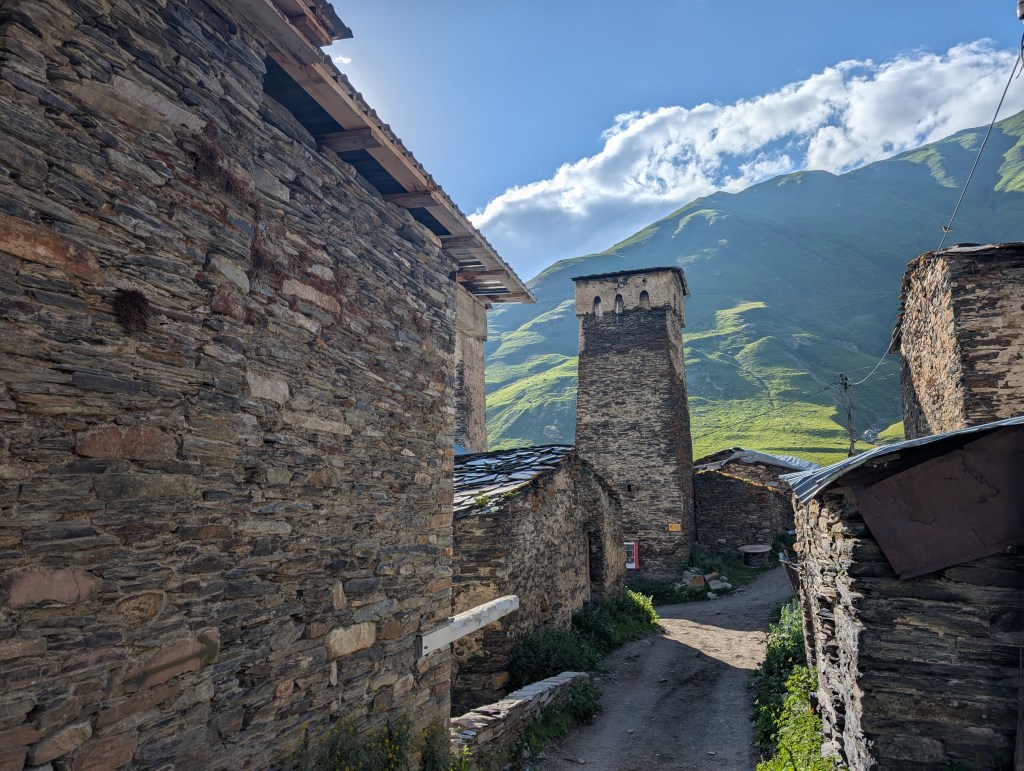
At the end of your hike, it is well worth staying an additional night in Ushguli to experience one of Georgia’s most stunning mountain villages. It is significantly larger and more developed than the other villages on the trail due to the road connection to Mestia but has lost little of its beauty and charm, which is still obvious as you wander between the ancient Svan towers on dirt tracks only wide enough for a horse.
Food usually provided by the guesthouse you end up staying at and will be a typical (normally delicious) Georgian meal each evening. Lunches are more complicated: on days one, two and four there are some places to stop and eat in other villages on the route but on day three there is absolutely nothing for miles. Snacks bought in Mestia are a must and guesthouses will often provide a packed lunch of leftovers from the night before if requested.
Another obstacle to negotiate on day three is the Adishi Glacier. Though it is extremely beautiful to look at, it also produces a year-round torrent of unbelievably cold water which all hikers must cross without the aid of a bridge. The locals know this and provide horses for a large fee (around 20 GEL) to cross without getting wet. However, if you’re feeling brave and know what you’re doing it is also possible to wade across, with the help of a stick or walking poles, about 50 metres further upstream (very much at your own risk).
The path does also, on occasion, reach altitudes of more than 2,000 metres above sea level. As such, altitude sickness is a very minor risk (as you’ll likely acclimatise before it’s an issue). Even so, NHS guidance on altitude sickness, including medication, can be found here. The more likely reality is that you’ll find yourself shorter of breath than usual up some of the steep climbs.
 Into The Elsewhere